


For anyone who knows their city well, it's easy to see that the short-term rental boom spurred by Airbnb's massive popularity is changing things. Figuring out what exactly is changing and how quickly is trickier. In New York, those changes have kept Airbnb and city regulators engaged in a multi-year war over what's really good for the city.
Everyone’s Mad at Airbnb. This Map Explains What We Should Blame Instead.
The real reason Airbnb clusters where it does - and 1,500 listings you can book guilt-free if the policymakers won't listen.
What we lose when we move from social to market exchange
Couchsurfing and Airbnb are websites that connect people with an extra guest room or couch with random strangers on the Internet who are…

From P2P to B2B: The next phase of the sharing economy
In the wake of Uber and Airbnb’s rapid growth and billion dollar valuations, everyone is talking about the sharing economy. Sharing marketplaces are experiencing tremendous growth, and today anyone who can rent out a room in their home, share their car, or even leverage their free time running errands can become a micro-entrepreneur.
Airbnb wants to give its hosts equity in its business | TechCrunch
Airbnb wants to give the homeowners who power its service the opportunity to own a piece of its business. That's why, as Axios reports, the

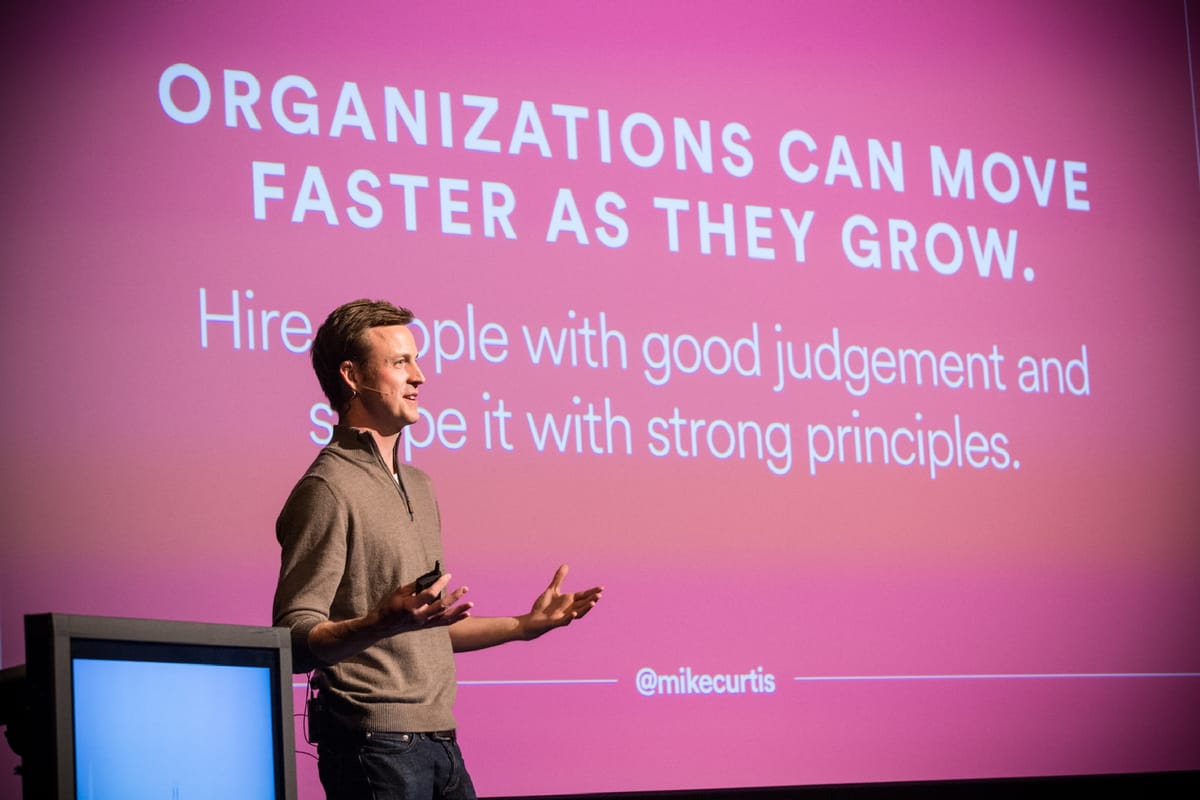
Bureaucracy Isn’t Inevitable — Here’s How Airbnb Beat It
Airbnb VP Engineering Mike Curtis on the practices and principles you can put in place to bust bureaucracy before it starts.
“Founder Mode” and the Art of Mythmaking
Brian Chesky takes 0 responsibility for creating Airbnb's problems, and ALL the credit for solving them. Unfortunately, there is actually some good advice buried under all the attitude.

Something big is happening in the housing market | Fortune
As data trickles in for April, it's becoming clear that the historically hot housing market has flipped trajectories.
Origin launches protocol for building cheaper decentralized Ubers & Airbnbs | TechCrunch
The sharing economy ends up sharing a ton of labor's earnings with middlemen like Uber and Airbnb, and $38 million-funded Origin wants the next great

CityLab - Bloomberg
Bloomberg CityLab reports on the world’s cities, communities, and neighborhoods: How they work, the challenges they face, and the solutions they need.
Two-bedroom apartments hit $6K for the first time in SF. The same apartment in Oakland is less than half that, but the clock is ticking.
While Oakland has long been a more affordable alternative, the rental gap between SF and Oakland is now at a staggering 128%. We break down why the East Bay deal might be changing as vacancy rates tighten.

Open Letter to the Airbnb Community About Building a 21st Century Company
Earlier today, Airbnb Co-Founder, CEO and Head of Community Brian Chesky sent the following message to the Airbnb Community outlining our vision to build a 21st Century Company.

The Last Gasps of the Rent Seeking Class
Over the past fifty years, the U.S. economy built a giant rent-extraction layer on top of human limitations: things take time, patience runs out, brand familiarity substitutes for diligence, and most people are willing to accept a bad price to avoid more clicks. Trillions of dollars of enterprise value depended on those constraints persisting. – Citrini Research
The Folk Economics of Housing
Why is housing supply so severely restricted in US cities and suburbs? Urban economists offer two primary hypotheses: homeowner self-interest and political fragmentation. Homeowners, who outnumber and have organizational advantages over renters, are said to lobby against development to protect their property values. The fragmentation hypothesis emphasizes that development's negative externalities are borne locally while most of the benefits accrue regionally or nationally, leading localities to block housing. This paper offers another explanation: ordinary people simply do not believe that adding more housing to the regional stock would reduce housing prices. Across three original surveys of urban and suburban residents, only a minority of respondents say that a large, positive, regional housing supply shock would reduce prices or rents. These beliefs are weakly held and unstable (suggesting people have given the issue little thought), but respondents do have stable views about who is to blame for high housing prices: developers and landlords. Large, bipartisan supermajorities support price controls, demand subsidies, and restrictions on putative bad actors, policies which they believe would be more effective than supply liberalization for widespread affordability. We discuss the implications of these findings for efforts to expand the supply of housing.
A City in Common: A Framework to Orchestrate Large-scale Citizen Engagement around Urban Issues
As part of the Digital Library's transition to Open Access, new features for researchers are available in the Premium Edition. Click here to learn more.

What's it like being a nonprofit in Y Combinator? | 80,000 Hours
Now the obligatory Tech Crunch article is out, I'm thrilled to announce we've been in Y Combinator (YC) since June. YC is widely regarded as the world's best startup accelerator, and has supported companies such as AirBnB, Reddit and Dropbox. It provides investment and intensive coaching over three months. I've had a lot of questions about YC over the last couple of days.
Google got it wrong. The open-office trend is destroying the workplace.
Workplaces need more walls, not fewer.
