


Abraham Lincoln famously said that “government of the people, by the people, for the people, shall not perish from the earth,” but looking around these
Liquid Democracy: True Democracy for the 21st Century
Liquid Democracy, a subset of Delegative Democracy, is a powerful voting model for collective decision making in large communities. Liquid…

The Tools We Need to Implement Liquid Democracy | HackerNoon
<em>“The state of men without civil society is nothing else but a mere war of all against all.” </em>Thomas Hobbes

What is Liquid Democracy?
Liquid democracy is a 21st-century upgrade for democratic decision making. It blends the best of direct and representative systems into a smarter and more accountable combination.
The rules to make the rules
My journey to understand blockchain political systems continues.

Liquid democracy
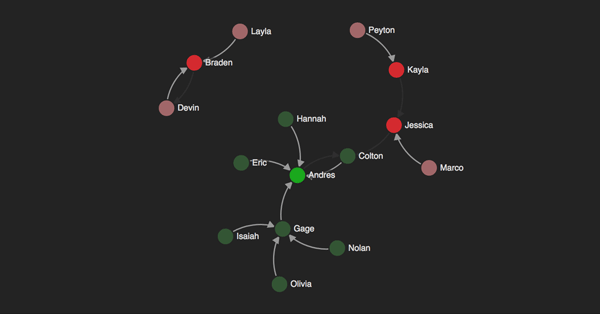
Liquid democracy is a form of proxy voting, whereby an electorate engages in collective decision-making through direct participation and dynamic representation. This democratic system uses elements of both direct and representative democracy. Voters in a liquid democracy have the right to vote directly on all policy issues à la direct democracy; voters also have the option to delegate their votes to someone who will vote on their behalf à la representative democracy. Any individual may be delegated votes and these proxies may in turn delegate their vote as well as any votes they have been delegated by others resulting in "metadelegation".

The problem with voting
I read, with great interest, Fred Ehrsam’s post on blockchain governance, as well as Vlad Zamfir and Vitalik Buterin’s responses.

Digital Democracy in Decentralised Autonomous Organisations
Decentralised autonomous organisations (DAOs) are institutional technologies that enable democratic governance innovation. They inherit key democratic principles such as procedural transparency and immutable records from being based on blockchain technology. This paper conducts a systematic literature review to examine governance mechanisms and challenges of digital democracy in DAOs. While issues like power concentration and coordination failures exist in current implementations, we argue that the concept of DAOs offers new opportunities for transparent governance and participatory decision-making. As testbeds for governance experiments, we find that DAOs have the potential to reshape democratic processes and foster innovative governance models in the digital era. Calling for interdisciplinary collaboration, further research is needed around Sybil-resistant voting mechanisms, ideological path dependencies and deliberation mechanisms.

Liquid democracy, its challenges and its forebears
Until today, particular decisions within software and product development have to be decided by privileged people. LiquidFeedback can democratize the decision-making process. An interview with the founders.
Data-owning Democracy or Digital Socialism?
This article contrasts two reform proposals articulated in recent debates about how to democratize the digital economy: data-owning democracy and digital socialism. A data-owning democracy is a political-economic regime character-ized by the
Notes on Blockchain Governance | HackerNoon
In which I argue that “tightly coupled” on-chain voting is overrated, the status quo of “informal governance” as practiced by Bitcoin, Bitcoin Cash, Ethereum, Zcash and similar systems is much less bad than commonly thought, that people who think that the purpose of blockchains is to completely expunge soft mushy human intuitions and feelings in favor of completely algorithmic governance (emphasis on “completely”) are absolutely crazy, and loosely coupled voting as done by Carbonvotes and similar systems is underrated, as well as describe what framework should be used when thinking about blockchain governance in the first place.See also: https://medium.com/@Vlad_Zamfir/against-on-chain-governance-a4ceacd040ca
David Dill: Why Online Voting Is a Danger to Democracy
A Stanford computer scientist says Internet voting would be "a complete disaster."

SimPolitics
For more than six decades, the public has been promised that computers will revolutionize politics, both nationally and internationally. In SimPolitics, Fenw...

We Need To Rethink Democracy
Turing-Complete Governance — The Collective Intelligence Project
It is fiendishly difficult to get lots of people to make decisions and work together both non-hierarchically and effectively. Because blockchain technology enables decentralized consensus at scale, the implications for human decision-making and coordination are immensely promising; if we can use it
Fix the internet, save democracy

The internet has evolved into a state that is actively hostile towards global democracy. A thesis is emerging that to save global democracy, you must fix the internet.

The IndieWeb Is Punk Manifesto

The Retweeting Class

Funding The Web: From Cartel to Covenant

Protocols, Not Platforms: A Technological Approach to Free Speech

The architecture of the internet creates risks for democracy