


When we think about designing our dream home, we don’t think of having a thousand roommates in the same room with no doors or walls. Yet in today’s
Distributed teams are rewriting the rules of office(less) politics | TechCrunch
When we think about designing our dream home, we don’t think of having a thousand roommates in the same room with no doors or walls. Yet in today’s
Remote Teams
I was recently tagged into a conversation on Twitter. The thread started with this summary of findings about open plan offices:

Google got it wrong. The open-office trend is destroying the workplace.
Workplaces need more walls, not fewer.

Home - Sococo | Online Workplace for Distributed Teams
Sococo is the online workplace where distributed teams come to work together each day, side-by-side. No matter where team members might be. Down the hall, across campus, or halfway around the world – working in your organization’s online office is even more productive than being on the same floor or in the same room.
Binding Chaos: Mass Collaboration on a Global Scale
The world is long overdue for a completely new system of governance. If there was ever a need for political representation or a paternalistic and opaque authority, it has been removed by technology. Every political system we have tried has proven incapable of protecting human rights and dignity. Every political system we have tried has devolved into oligarchy. To effect the change we require immediately, to give individuals control and responsibility, to bring regional systems under regional governance, allow global collaboration and protect the heritage of future generations, we need a new political model.
Roomy and community organizing for system change
Roomy is a group messaging app that gives online communities tools for autonomous collaboration — designable spaces not just for chat, but for cultivating a web of shared understanding together. We show how cheap, user-controlled, interoperable data on ATProto can enable online communities to channel impassioned mobilizing into sustained organizing in the shadow of Big Tech's empire.
Infrastructure for Interdependence: Building technology in service of collective power
[This document serves as a memo for investors]
Consensus Democracy | The Paper Pilot
The Paper Pilot's digital garden of thoughts on philosophy, politics, and sociology
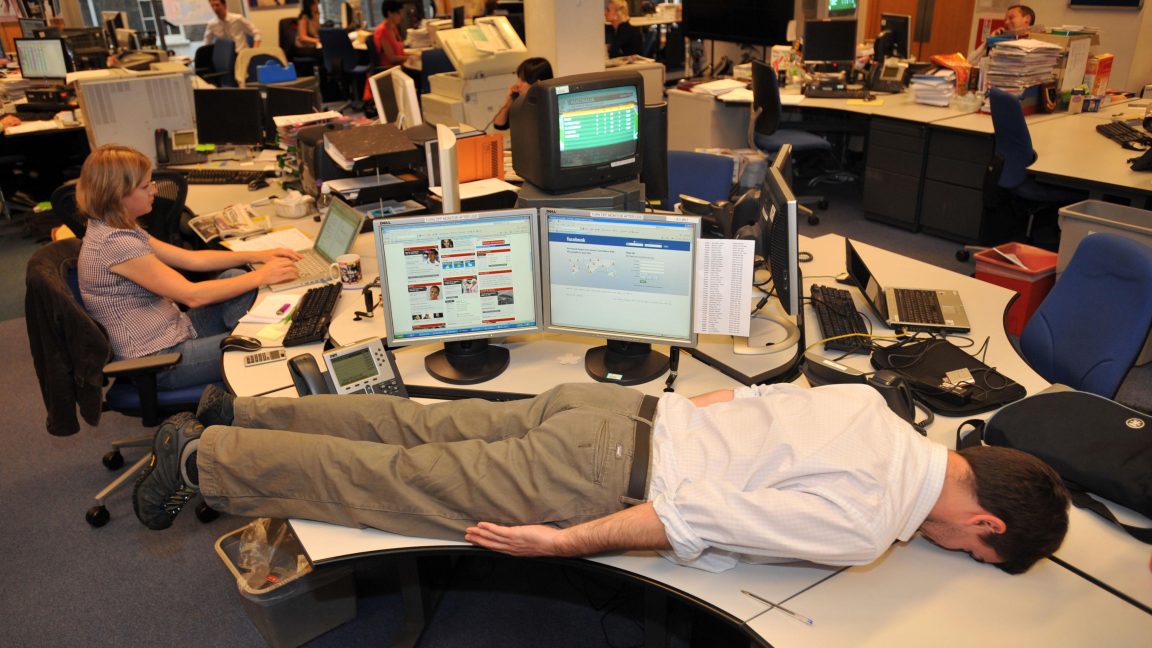
Open offices are as bad as they seem—they reduce face-to-face time by 70%
To encourage unbounded, collective intelligence, offices may need physical boundaries.
Redundancy Protects Human Collaborations from Failure
In the name of efficiency, organizations and governments around the world are increasingly trimming redundancy---personnel or overlapping capabilities beyond what routine operations require. Drawing on distributed computing and cognitive science, we challenge this view. Using queueing simulations and a preregistered multiplayer experiment (N = 832 in 187 teams of 3–6), we show that redundancy improves performance through two distinct routes. Adding collaborators to a team improves resilience, with larger teams completing more tasks when members became temporarily unable to contribute. Giving team members overlapping capabilities also improved efficiency, with teams in which collaborators could perform multiple roles completing substantially more work. These findings suggest that efforts to improve short-term efficiency by reducing redundancy may come at a cost, quietly eroding a team’s capacity to withstand unexpected failures.
TeamTopologies/Team-Topologies-Community-Materials
A list of materials relating to Team Topologies (articles, tools, canvases, etc.) generated by the community.
Habits of High-Functioning Teams
I often struggle to explain what it means to be part of a high-functioning software team. Sure, there are mountains of literature, and an entire genre of LinkedIn thought leadership that professes all kinds of guidelines and heuristics about what makes teams work, but in my experience, it’s hard to internalize these ideas and follow someone else’s model if you’ve never seen what good looks like.
What Good Is ‘Community’ When Someone Else Makes All the Rules? (Published 2018)
Life online can offer us a sense of belonging in any number of virtual villages. But the power to control those spaces isn’t very communal at all.

Network of shared purpose · Issue #369 · muni-town/roomy
Excerpted from Weird Web Pages. The Network is effectively a global jobs board, but for mutual collaborations rather than work-for-hire. Easiest way to prototype this might be with GitHub issues/di...
"Teams working across organizational boundaries, sharing structured data, and building on each other’s work with ease." I know it's called "adversarial interop", but it actually feels like "community interop", at least right now

Toni Schneider
Conference Takeaways I’m back from ATmosphereConf in Vancouver, and I'm processing what I saw and heard. The atproto developer community could not have been nicer and more welcoming. Here are some takeaways. ... toni.org/2026/04/03/conference-takeawa…
Politics is the defining aspect of networked technology. AT corresponds best to the kind of institutional structure that is key to large scale democracy. AP is a better match for smaller, village-style governance, which is very valid but not the problem I care about.

Ronen Tamari
Can everyone building on atproto please answer this question? 😇

