


Graph databases have always been useful to help find connections across a vast data set, and it turns out that capability is quite handy in artificial
Neo4j raises $325M as graph-based data analysis takes hold in enterprise
Databases run the world, but database products are often some of the most mature and venerable software in the modern tech stack. Designers will pixel

Neo4j Startup Program
Build, validate, and scale mission-critical AI with up to $16K in Aura credits on a production-ready graph database.
Home - GRAPHIA
Through the creation of the first comprehensive SSH Knowledge Graph enriched with AI and LLM applications, GRAPHIA will transform SSH data.

Dgraph Documentation
The only open, complete graph database used at terabyte-scale to power real-time use cases
Sigma.js
a JavaScript library aimed at visualizing graphs of thousands of nodes and edges
neodb-social/neodb
🧩 a self-hosted server tracking what you read/watch/listen/play, powering a global distributed community federating via ActivityPub and ATProto.
What is a knowledge graph? - Neo4j Graph Intelligence Platform
What is a knowledge graph? Learn about nodes, relationships, organizing principles, and ontologies, which comprise a knowledge graph.

Discover the Power of Knowledge Graphs with this n8n InfraNodus Node
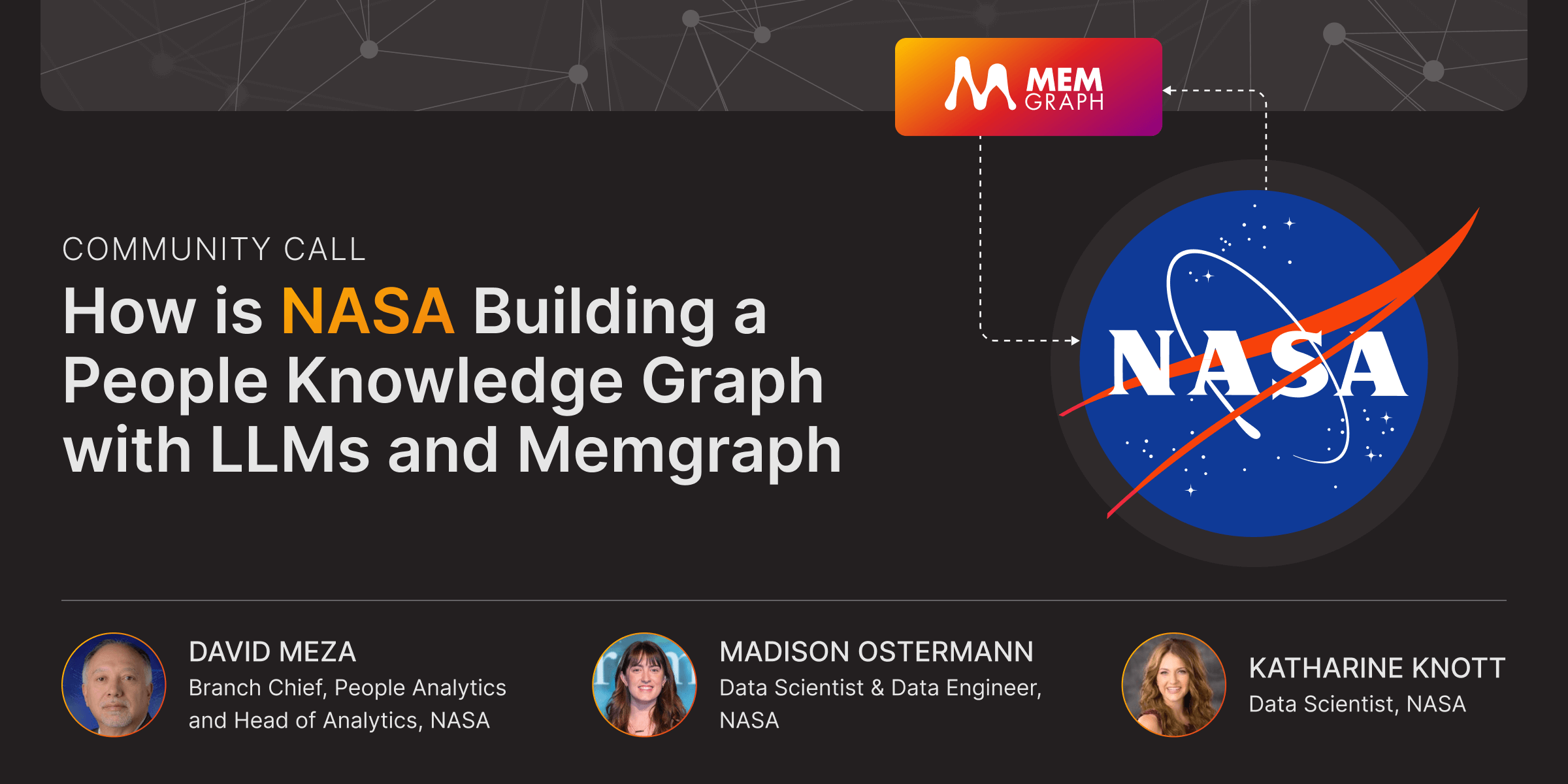
How NASA is Using Graph Technology and LLMs to Build a People Knowledge Graph
Missed NASA’s People Graph webinar? Catch the recap and see how graph technology and AI are shaping the future of workforce intelligence.
Your Data Fits in Memory (GraphD Part 1)
We need a fast way to query multiple potentially large sets of data on-demand at interactive speeds. Sometimes the easiest solution to a hard problem is to build the right tool for the job.
Developers should be aware of these two AI engineering approaches | daily.dev
Two emerging engineering practices for building reliable AI agentic systems are introduced: Graph Engineering, which breaks work into smaller connected tasks...

Tim Berners-Lee, Giant Global Graph (2007)
A new vision for the web where the users master their data and link them to everybody's benefit in a giant global graph.
#opensource | Andre Zayarni | 61 comments
We have a long history with MongoDB. Many years ago, when I was still writing code myself, NoSQL was a novel concept. I was sold on its simplicity and natural compatibility with the Node stack. I used Mongo for all my side projects. For work, we still preferred SQL DBs, though. Fast forward to the early days of Qdrant, MongoDB Ventures reached out, and we had several conversations; they considered investing in our seed round. Their product managers and engineers were reaching out and praising our solution. At some point, they revealed that they are going to add vectors to their Atlas search product just by using Lucene. So what, who cares? At Qdrant, we’re not retrofitting anything. We’re building a dedicated vector search engine - from the ground up. If someone wants to replicate what we do? Go ahead, we are #opensource. But here’s where it gets frustrating. We have put in the hard work building our community and attracting prominent people in the AI landscape to use our product and create content about it. We have built our Qdrant Stars program to engage with the community even closely. qdrant.tech/stars So, what does it have to do with Mongo? Well, they just made a clever shortcut and reached out to our Qdrant Stars program members and influencers from our community, making them an offer they could not decline. I do not blame the content creators, it is their daily work and it is an excellent opportunity for them, guys, I can totally understand you, no worries. But let's call it what it is: A multi-billion-dollar company is now trying to buy its way into a community built by an early-stage startup, not them. We don’t fear competition. But when the incumbents start copying your strategy and poaching your community, it says one thing loud and clear: We’re making the right people nervous. We’ll never outspend Mongo, and we don’t need to. We have something they can’t copy or buy: a fast-growing, mission-driven, technically superior open platform - and a community that sees through the noise. So to the engineers, researchers, and creators who believe in open innovation, performance that doesn’t compromise, and communities that are earned, not acquired: you know where to find us. And to the MongoDB marketing geniuses: take on Elastic, take on Redis, take on Oracle, and others of your calibre, but leave Qdrant and other startups like us alone. | 61 comments on LinkedIn

An entire Social Network in 1.6GB (GraphD Part 2)
Roaring Bitmaps offer an even more efficient way to store and query an entire social graph, fitting the entire network of 5.5M users and 164M+ follows into a ~1.6GB SQLite DB on disk.