

For decades, academia has operated on a convenient assumption: academic productivity is a reasonable proxy for academic quality.
AI is eating the academic publishing industry alive, but some good might come of it
In a publish-or-perish environment where numbers count much more than quality, artificial intelligence has become the great disruptor. But what this could ultimately lead to is universities rebuilding…

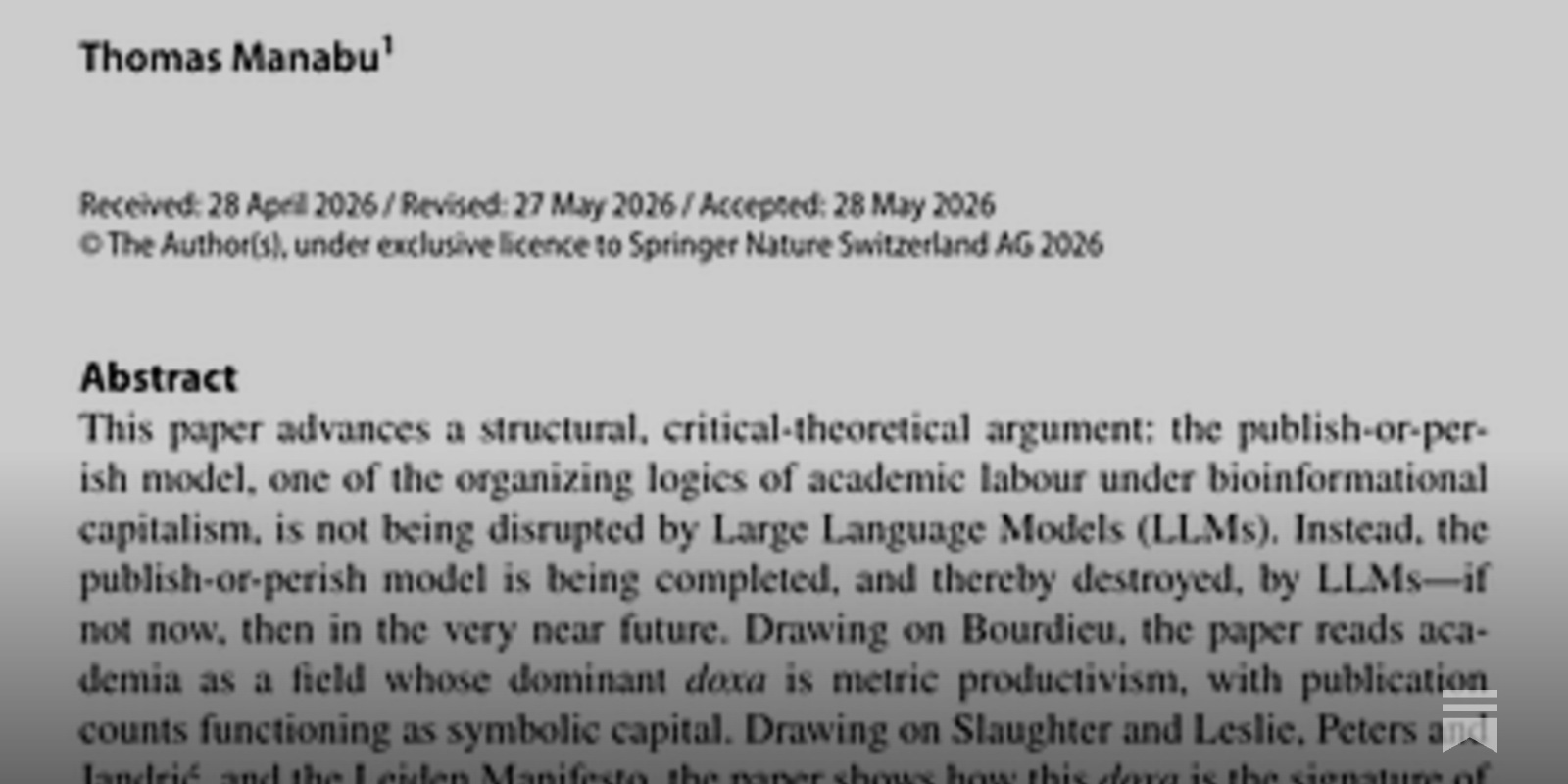
Why AI Will Not End Scholarly Publishing (and the Publish-or-Perish Institution)
The machine may not be consuming itself. It may be acquiring a much more efficient engine.
New Studies Confirm Today’s Academic Publishing System Is A Terrible Deal For Society · Techdirt
Walled Culture has just written about the possibility that recent AI breakthroughs might accelerate a move to open access, at least in the field of mathematics. It would be particularly welcome against a backdrop of relatively slow progress in the open access world. That is not because the need for different business models that provide...
AI in scientific publishing: Slower, worse, and more expensive
There’s a saying in the management world, popularized by NASA administrator Daniel Goldin in the 1990s, that the goal of technological improvements is to make products faster, better, and cheaper. Although this strategy had some success in the aerospace industry, the zealots of artificial intelligence (AI) have been making the same argument regarding how it will transform work, claiming that so little human effort will be required that humanity will enter an era of radical abundance, free from disease, drudgery, and danger, among other benefits, leaving society with more time for creative pursuits. But history tells a different story. When machines began to increase productivity during the second industrial revolution, American engineer Frederick Winslow Taylor’s The Principles of Scientific Management encouraged corporations to use surveillance to get employees to work harder and longer, an approach that exhausted and discouraged workers and led to the transfer of knowledge and any decision-making from workers to management, while enriching the profits for only those at the top. Yet, it remains foundational to the American economic enterprise. Indeed, scientific publishing is starting to experience some Taylorism with the insertion of AI. Rigorous human checking of AI-generated research papers is creating bottlenecks as publishers strive to maintain the integrity of the scientific record. The challenge is requiring even more human effort, making the whole endeavor slower and more expensive.

No. 014: Science's AI productivity paradox, Sakana clears peer review, AI proof search on open Erdős problems - The Hallway Track
The Hallway Track No. 014 - How AI is affecting the practice of science
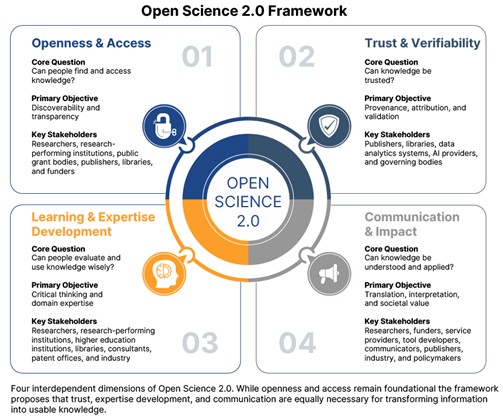
Open Science 2.0: Building Understanding in an AI-Mediated World - The Scholarly Kitchen
Open Science 2.0 must focus not only on access, but also on trust, interpretation, learning, and effective communication. The challenge facing the scholarly publishing ecosystem is ensuring that what is open is also trustworthy, understandable, and genuinely useful.
Artificial intelligence tools expand scientists’ impact but contract science’s focus
Developments in artificial intelligence (AI) have accelerated scientific discovery1. Alongside recent AI-oriented Nobel prizes2–9, these trends establish the role of AI tools in science10. This advancement raises questions about the influence of AI tools on scientists and science as a whole, and highlights a potential conflict between individual and collective benefits11. To evaluate these questions, we used a pretrained language model to identify AI-augmented research, with an F1-score of 0.875 in validation against expert-labelled data. Using a dataset of 41.3 million research papers across the natural sciences and covering distinct eras of AI, here we show an accelerated adoption of AI tools among scientists and consistent professional advantages associated with AI usage, but a collective narrowing of scientific focus. Scientists who engage in AI-augmented research publish 3.02 times more papers, receive 4.84 times more citations and become research project leaders 1.37 years earlier than those who do not. By contrast, AI adoption shrinks the collective volume of scientific topics studied by 4.63% and decreases scientists’ engagement with one another by 22%. By consequence, adoption of AI in science presents what seems to be a paradox: an expansion of individual scientists’ impact but a contraction in collective science’s reach, as AI-augmented work moves collectively towards areas richest in data. With reduced follow-on engagement, AI tools seem to automate established fields rather than explore new ones, highlighting a tension between personal advancement and collective scientific progress.

Governing the scholarly AI Commons – Open Future
New report explores how academic communities can shape AI governance in research and publishing, from regulation to community-led approaches.
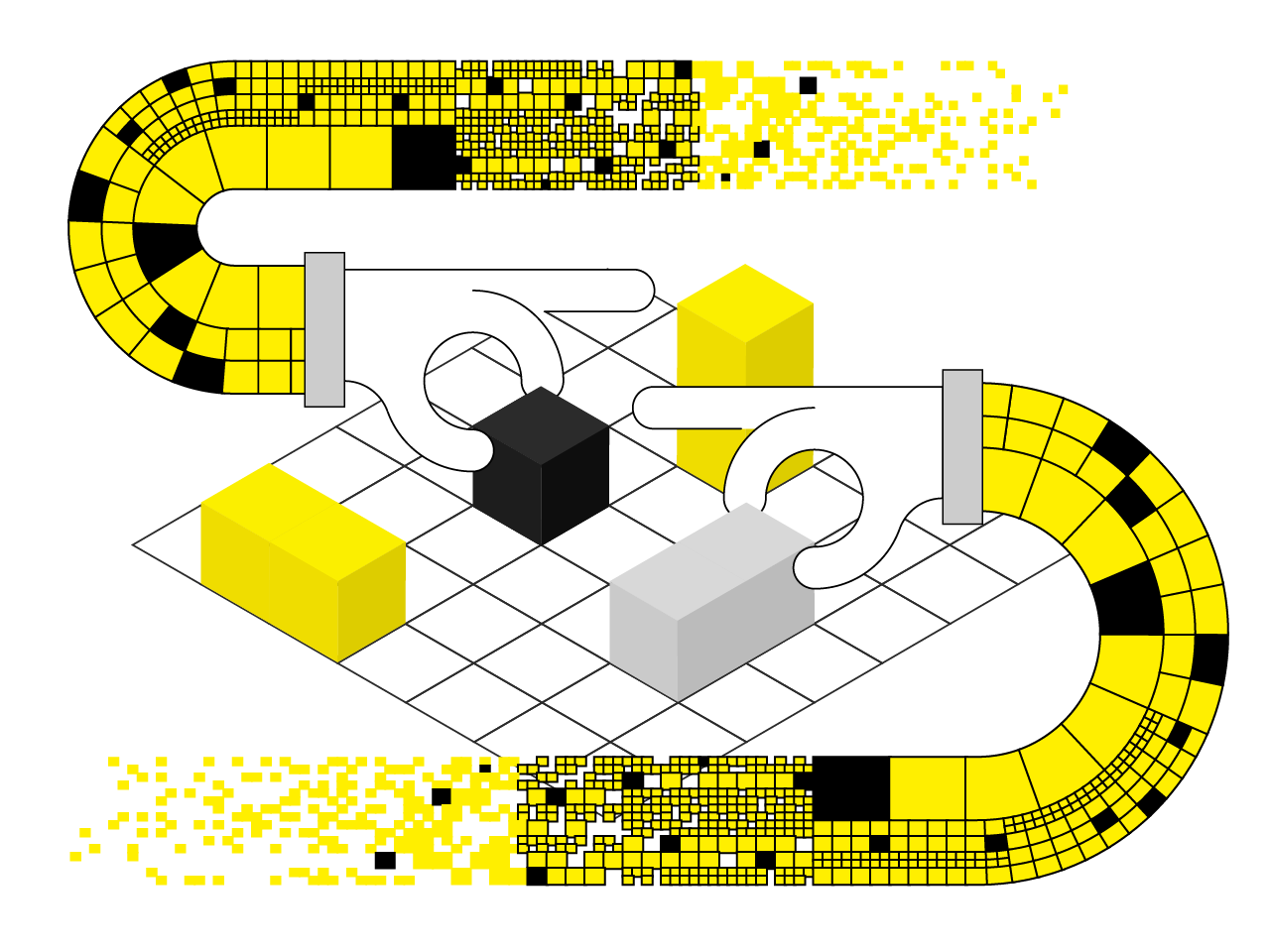
An inference cooperative for academic AI – Writings and rehearsals by Nathan Schneider
Universities, like other institutions, are currently being confronted with a dilemma: embrace the AI tools currently available from big-name tech companies, and be part of the future, or reject the miraculous machines and stick your head in the sand. This dilemma is a false one, on several counts. It is far from clear what role generative AI will have in the future of academic life, for one thing. And beyond rewording the choices, surely there are other options that this dilemma fails to consider.
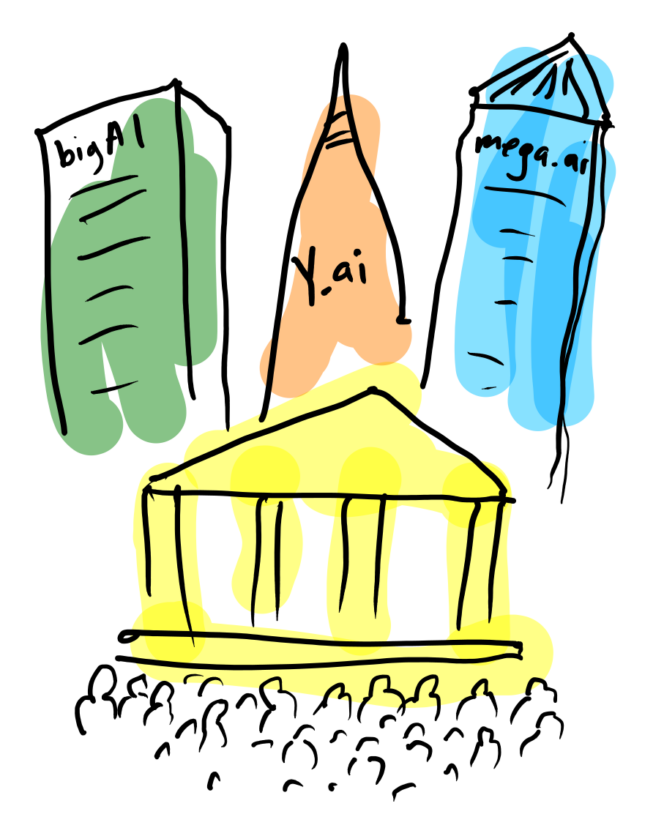
70 years of AI hype
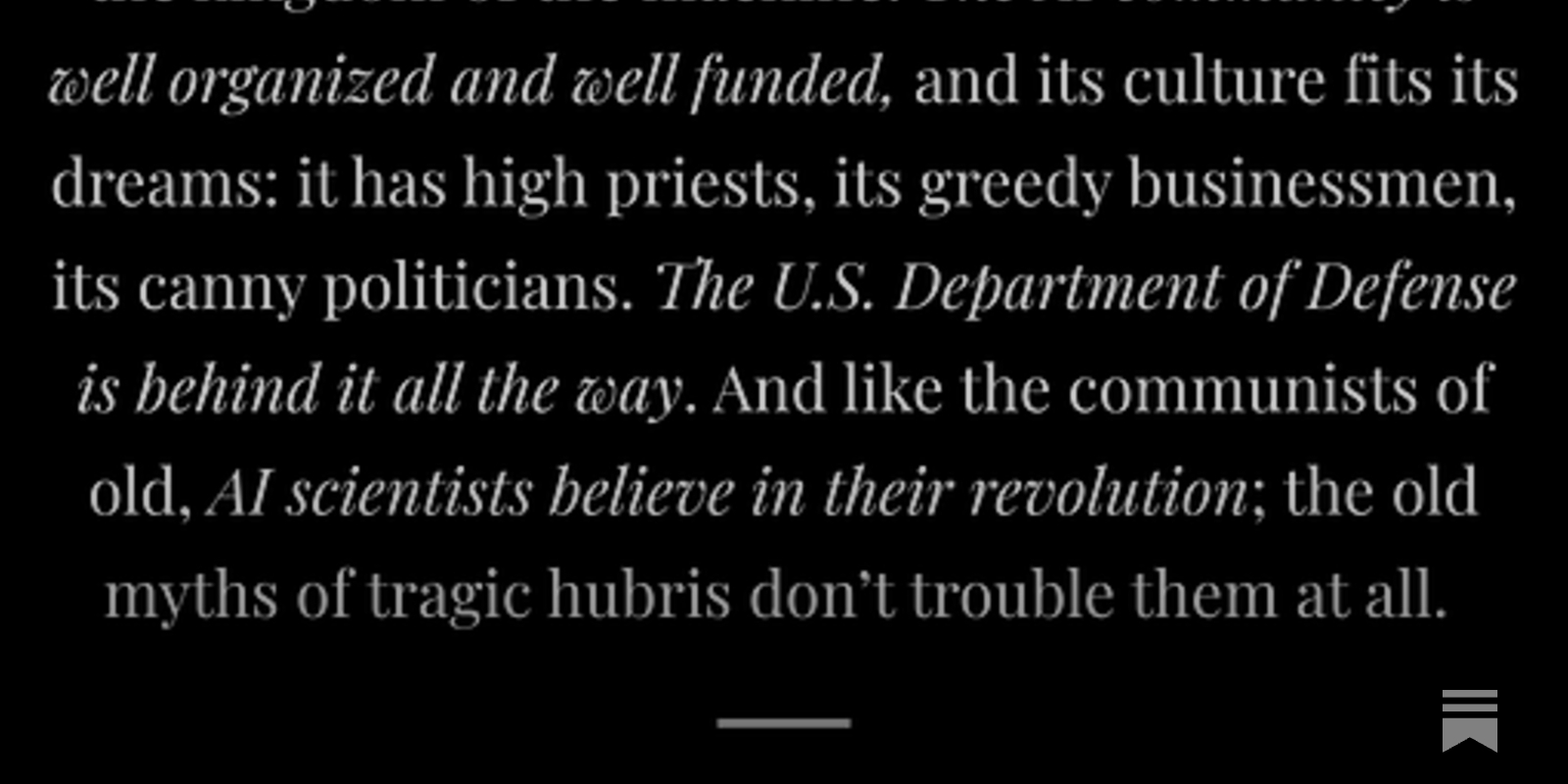
Quoting from Olivia Guest et al. (2025) "Against the Uncritical Adoption of AI Technologies in Academia."
A New Paradigm for Scientific Publishing, Peer Review, and Impact Assessment
Scientific publishing and peer review have evolved little in three centuries, while the demands placed on them have grown profoundly. The growing role of artificial intelligence has underscored deep, systemic shortcomings of an aging system that has largely evaded innovation, a system whose origins are appallingly closer to the invention of the printing press than to the internet. We can do better – much better. This article is intended as the beginning of a communal experiment: a living document that critically reviews the modern academic publishing and peer-review system and presents a concrete framework to address what bibliometrics experts¹ have characterized as "the pervasive misapplication of indicators to the evaluation of scientific performance". Building on the Leiden Manifesto, DORA, and a body of scholarship spanning many disciplines and decades, we present a community-governed, non-profit platform organized around three trust-weighted impact factors, for articles, authors, and reviewers, with full algorithmic transparency, an open development log, and structural decoupling of credibility scoring from content moderation and from monetization. We invite the community to discuss, critique, and help shape it.
Publish and Perish: How AI-Accelerated Writing Without...
Artificial intelligence tools are accelerating manuscript production far faster than peer review capacity can expand. Applying the theory of constraints from manufacturing science, we formalize...

Building Scholar-Ready AI: A Conversation with Todd Toler - The Scholarly Kitchen
A conversation on AI retrieval, the provenance problem, and the shared infrastructure scholarly publishing needs.

Beyond Publish or Perish
For over a century faculty have been forced to choose between scholarship and teaching to optimize scholarly output. AI shows why this is a false choice and dangerous for the liberal arts.

Where does the rigor go? Research software and the future of trustworthy science.
Generative AI now makes it dramatically easier to produce something that looks like research: analysis code, figures, literature reviews, even whole pap…
AI and the Future of Science