Semantic computing with IEML - Pierre Lévy, 2023
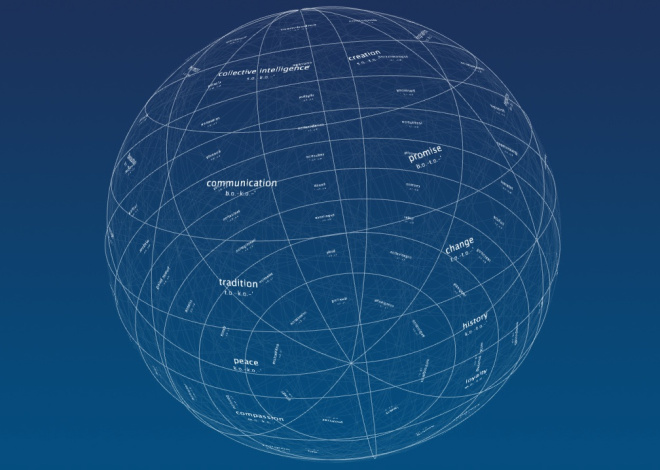
This paper presents IEML, Information Economy MetaLanguage, a constructed language with the same expressive power as a natural language and with computable sema...

IEML: The Information Economy MetaLanguage
IEML is an acronym for Information Economy MetaLanguage. IEML is intended to become a standard for expressing semantic metadata and for modelling complex human systems. Here is the definitive scien…
Regnestykker
Sheets with calculus exercises suitable for kids that are learning the first basic arithmetic operations.
TranslateGemma: A new suite of open translation models
TranslateGemma is a new family of open translation models built on Gemma 3.
GATlab: Modeling and Programming with Generalized Algebraic Theories
Categories and categorical structures are increasingly recognized as useful abstractions for modeling in science and engineering. To uniformly implement category-theoretic mathematical models in software, we introduce GATlab, a domain-specific language for algebraic specification embedded in a technical programming language. GATlab is based on generalized algebraic theories (GATs), a logical system extending algebraic theories with dependent types so as to encompass category theory. Using GATlab, the programmer can specify generalized algebraic theories and their models, including both free models, based on symbolic expressions, and computational models, defined by arbitrary code in the host language. Moreover, the programmer can define maps between theories and use them to declaratively migrate models of one theory to models of another. In short, GATlab aims to provide a unified environment for both computer algebra and software interface design with generalized algebraic theories. In this paper, we describe the design, implementation, and applications of GATlab.

ZML - Model to Metal
ZML is a production inference stack, purpose-built to decouple AI workloads from proprietary hardware.
HTML/SR Support lookup
TetraLogical Services Ltd. Company number 12951928. Content released under a GNU General Public License v3.0
Packrat parsing: | Proceedings of the seventh ACM SIGPLAN international conference on Functional programming
For decades we have been using Chomsky's generative system of grammars, particularly context-free grammars (CFGs) and regular expressions (REs), to express the syntax of programming languages and protocols. The power of generative grammars to express ...

Latexmk
This version of latexmk is also available from CTAN at CTAN at https://ctan.org/pkg/latexmk/, and is in the TeXLive and MiKTeX distributions.
Fidget
Fidget is a library for representing, compiling, and evaluating large-scale math expressions, i.e. hundreds or thousands of arithmetic clauses. It's mainly designed as a backend for implicit surfaces, but the library is flexible enough for many different uses!
The n-Category Café
Note:These pages make extensive use of the latest XHTML and CSS Standards. They ought to look great in any standards-compliant modern browser. Unfortunately, they will probably look horrible in older browsers, like Netscape 4.x and IE 4.x. Moreover, many posts use MathML, which is, currently only supported in Mozilla. My best suggestion (and you will thank me when surfing an ever-increasing number of sites on the web which have been crafted to use the new standards) is to upgrade to the latest version of your browser. If that's not possible, consider moving to the Standards-compliant and open-source Mozilla browser.
Bytebeat composer
Bytebeat player with a collection of many formulas from around the internet
KaTeX – The fastest math typesetting library for the web
Simple API, no dependencies – yet super fast on all major browsers.