

Understanding the potential of our novel general-purpose architecture requires understanding the underlying model of computation: interaction nets. So we will introduce interaction nets and their unique properties (specifically locality, parallelism, and linearity) and how they help to overcome some of the hardest challenges in hardware architecture design.
Introducing Frostbite: A new CPU architecture discovered, designed, and verified end-to-end by AI
Frostbite is a general-purpose CPU built around interaction nets, discovered, designed, and verified end-to-end by our AI systems, reaching 4.59x the performance-per-watt of a modern superscalar (dual-issue, in-order) CPU core.
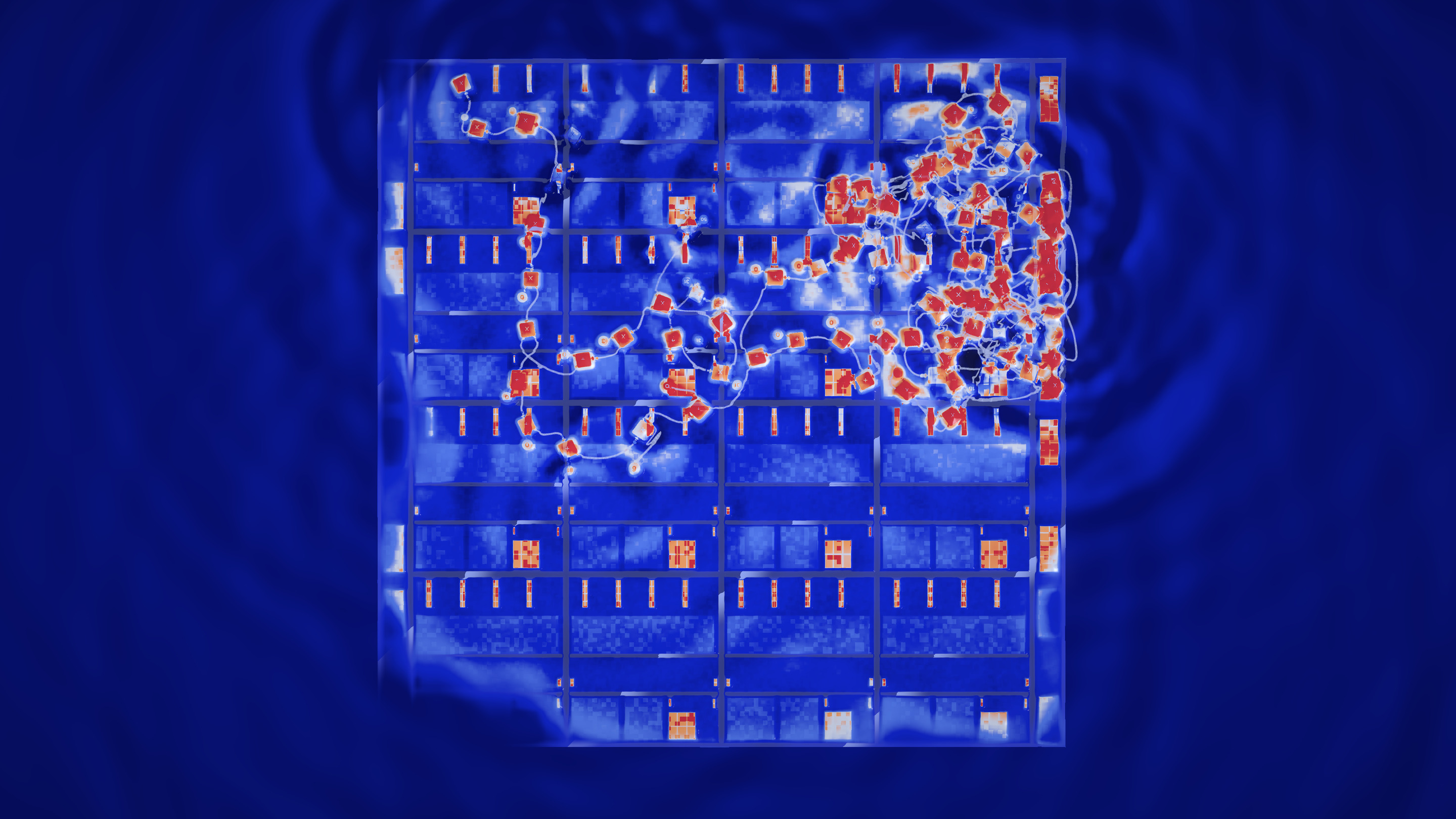
AI Chip Architectures
A look at AI Chip Architectures. NVIDIA, AMD, TPUs, Trainium, Groq, Cerebras.
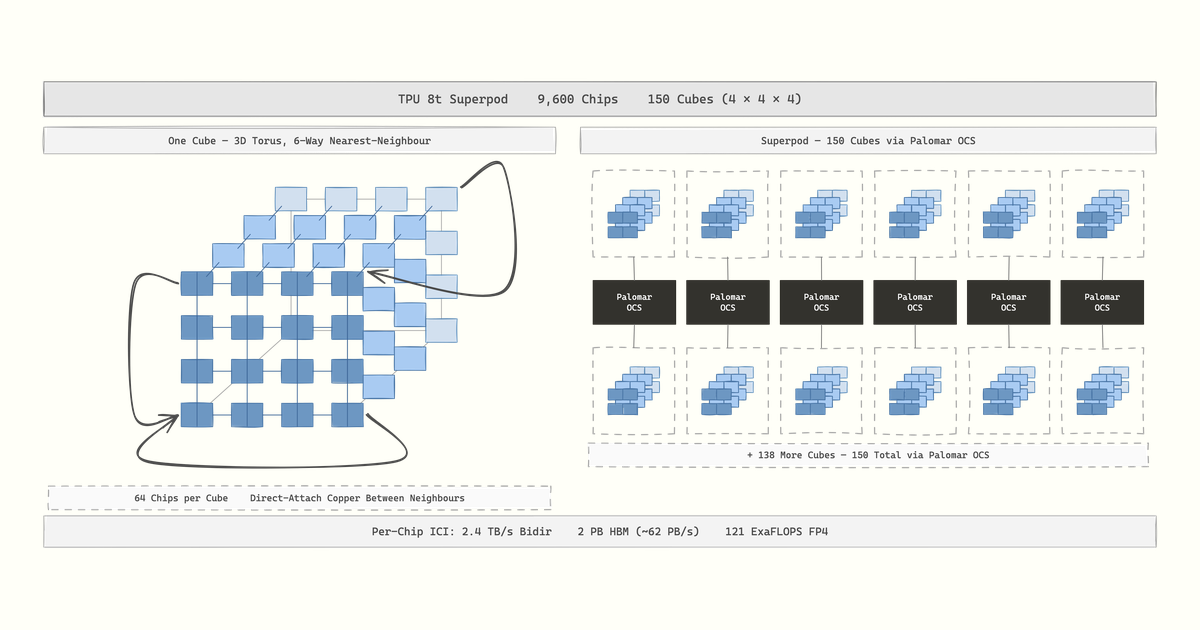
Feature-Driven Architecture: Designing Scalable Applications
Introduction In the first article of this series, we discussed Atomic Design as a method...

Automated Architecture Synthesis via Targeted Evolution | Liquid AI
Today, we report advances in automated neural network architecture design and customization. We developed algorithms for the synthesis of tailored architectures (STAR), based on evolutionary algorithms applied to a numerical representation for model architectures derived from a new design theory. STAR automates the process of architecture discovery and optimization, turning it into an end-to-end process. With these methods, we have been able to tailor architectures to custom tasks, metrics, and hardware. We used STAR to synthesize hundreds of different designs that outperform strong Transformer and hybrid architectures in quality, with smaller caches and number of parameters.
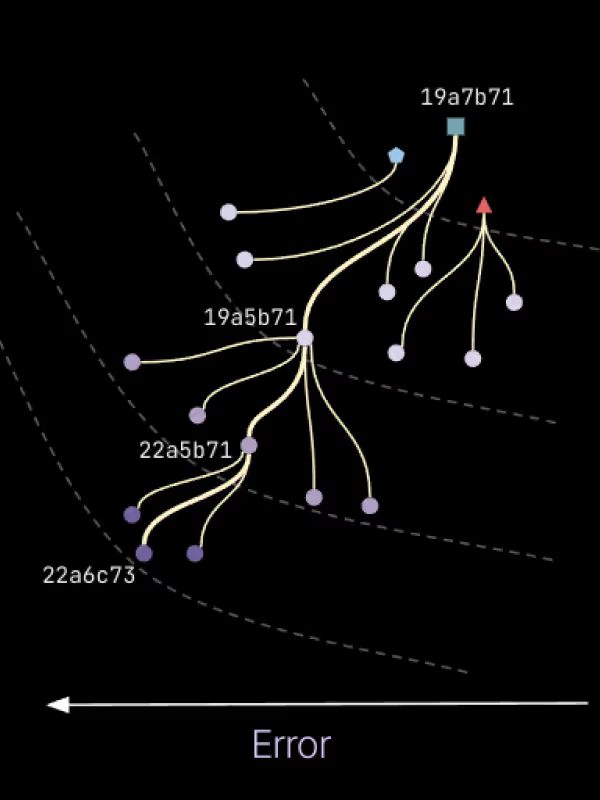
Why Futhark?
A high-performance and high-level purely functional data-parallel array programming language that can execute on the GPU and CPU.
Linear sent me down a local-first rabbit hole | Bytemash
A deep dive into local-first architecture, triggered by wondering why Linear feels so fast. Looking at the technical implementation, exploring tools like Jazz and Electric SQL, and explaining why my next app might not need API endpoints.
Our interfaces have lost their senses
We programmed them by punching cards, plugging in wires, and flipping switches. Programmers walked among banks of switches and cables, physically choreographing their logic. Being on a computer used to be a full-body experience.
Leveraging Rust and the GPU to render user interfaces at 120 FPS
From the Zed Blog: A deep-dive into the graphical underpinnings of GPUI, the hardware-accelerated framework that powers Zed's user interface.

The Universal Execution Layer for AI
Optimize any AI model on any engine, across all hardware. Dria’s topology-aware compiler and peer-to-peer runtime merge CPUs, GPUs, NPUs & chiplets into one fabric—maximising utilisation, cutting inference cost and ending vendor lock-in.

Don't Forget To Flush by Andrew Kelley
Interface Lineage
A free library of interface patterns and principles. Name the mechanism, prompt it to your AI, and invent new interfaces.

A Design Space Exploration of Async/Await
Many modern programming languages include some form of asynchronous programming. In particular, a growing number now have what we call straight-line asynchrony: attempts to provide asynchronous functions that look similar to synchronous functions, thereby enabling asynchrony without introducing complex control. These languages often share construct names like "async" and "await," which suggests that they have deep semantic similarities. Yet, a close examination reveals that these languages are quite different along several dimensions, often subtly. These differences have real semantic consequences: similar-looking programs can exhibit divergent behavior, confusing developers and language designers alike. This paper therefore presents a design space exploration of straight-line asynchrony. We dissect several existing languages, and show how no two of them agree as a whole on design decisions that affect the presence and ordering of execution. We articulate a design space with nine dimensions covering the full lifecycle of an asynchronous computation, covering questions such as: What precise guarantees does a language give upon calling an asynchronous function? What happens at the end of a task's life? How can a task handle being cancelled? We explore these questions through concrete examples, informal design discussion, and a formal semantics. Our ultimate goal is to help programmers, language designers, and language theorists all better understand the emerging landscape of straight-line asynchrony.


Alex Cheema on Twitter / X
This is why we need open benchmarks for local AI.Otherwise it turns into tribalism and name calling.We will be publishing the largest database of open benchmarks for local AI, tested on 1,000+ real hardware setups. Every device, every interconnect, different… https://t.co/ZsU3PCdSsZ— Alex Cheema (@alexocheema) March 9, 2026
Stanford Seminar - Generative, Malleable, and Personal User Interfaces
Experiences with recombinant computing: Exploring ad hoc interoperability in evolving digital networks
This article describes an infrastructure that supports the creation of interoperable systems while requiring only limited prior agreements about the specific forms of communication between these systems. Conceptually, our approach uses a set of “meta-interfaces”—agreements on how to exchange new behaviors necessary to achieve compatibility at runtime , rather than requiring that communication specifics be built in at development time —to allow devices on the network to interact with one another. While this approach to interoperability can remove many of the system-imposed constraints that prevent fluid, ad hoc use of devices now, it imposes its own limitations on the user experience of systems that use it. Most importantly, since devices may be expected to work with peers about which they have no detailed semantic knowledge, it is impossible to achieve the sort of tight semantic integration that can be obtained using other approaches today, despite the fact that these other approaches limit interoperability. Instead, under our model, users must be tasked with performing the sense-making and semantic arbitration necessary to determine how any set of devices will be used together. This article describes the motivation and details of our infrastructure, its implications on the user experience, and our experience in creating, deploying, and using applications built with it over a period of several years.
