Terrastories is a geostorytelling application built to enable indigenous and other local communities to locate and map their oral storytelling traditions.

Home Page
We are an international community of communities bound by a common interest in persistent infrastructure. So far, we have welcomed agencies that manage communities spanning entertainment, standards, the built environment, natural history collections, scholarly communications, and research data.
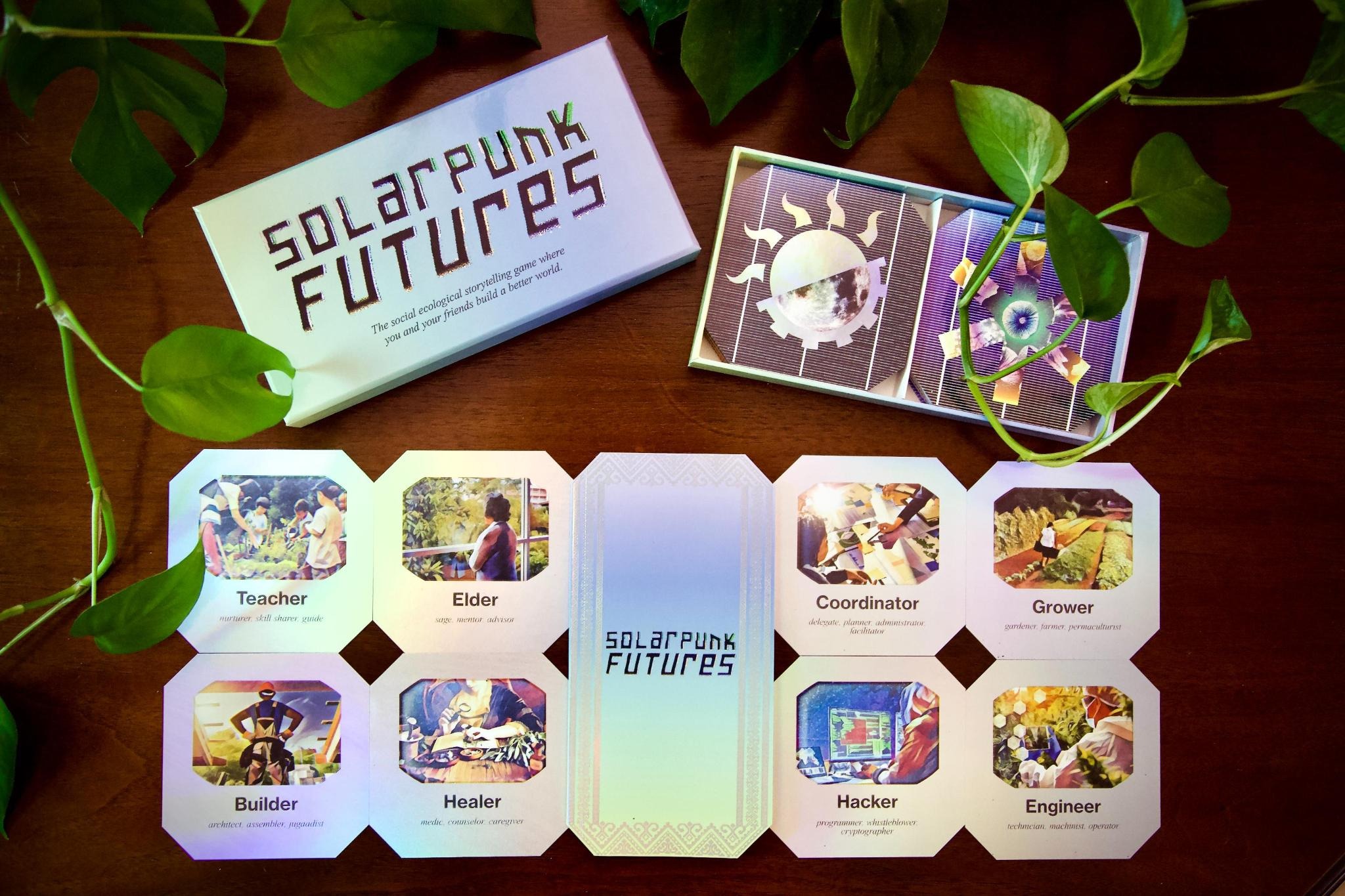
Solarpunk Futures
The social ecological storytelling game where you and your friends build a better world.
Weaving Narratives into Procedural Worlds
Examining the value, characteristics, and methods of integrating static narratives into otherwise procedurally generated environments.
Home - The ArQuives
Keeping Our Stories Alive The ArQuives was established to aid in the recovery and preservation of our histories. Its mandate is to: Acquire, organize, and preserve materials in any medium by and about 2SLGBTQIA+ people in Canada; and Provide public programming and access to information to promote greater awareness of 2SLGBTQIA+ histories and scholarship. The

EARTHKIN WILD
At Earthkin Wilderness School we hold that a deep relationship with nature, community, and self is essential to discovering one’s unique gifts so that cultural transformation rooted in earth-based ways can take place. We offer ancestral skills training, immersive experiences in the wild, deep nature connection programs, and primal movement practices for those looking for land-based learning and reconnection in the coast mountains of BC.
Food, foragers, and folklore: the role of narrative in human subsistence
Narrative is a species-typical, reliably developing, complex cognitive process whose design is unlikely to have emerged by chance. Moreover, the folklore record indicates that narrative content is consistent across widely divergent cultures. I have argued elsewhere that a storyteller may use narrative to manipulate an audience's representations of the social and/or physical environment to serve his or her own fitness ends. However, my subsequent research suggests that such manipulation results from a broader selection pressure which narrative effectively alleviates: information acquisition. By substituting verbal representations for potentially costly first-hand experience, narrative enables an individual to safely and efficiently acquire information pertinent to the pursuit of fitness in local habitats. If this hypothesis is true, narrative should be rich with information useful to the pursuit of fitness. One class of information integral to the accomplishment of this task is foraging knowledge. In this paper, then, I present evidence that foraging peoples use narrative to transmit subsistence information: specifically, I demonstrate how various narrative devices (e.g., setting, description, mimicry, anthropomorphism) are used to communicate foraging knowledge.
Cameron's World
🌍 A web-collage of text and images excavated from the buried neighbourhoods of GeoCities.
Narrative strands & memetic lineages in community social data using Community Archive - - ATmospher
epistemic garden - mapping how ideas spread online
We're building tools to help communities understand their information landscape and protect against harmful coordinated narratives.
Neighbourhoods
Neighbourhoods is a web3 framework for groupware and socials that helps communities design and select custom cultural patterns using Holochain.

A spatial overview of the global importance of Indigenous lands for conservation
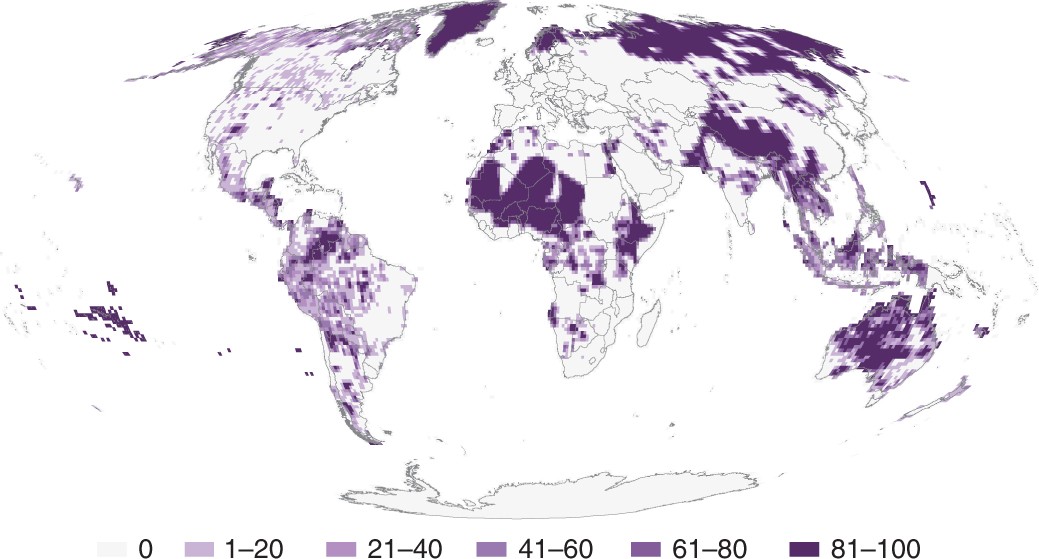
Understanding the scale, location and nature conservation values of the lands over which Indigenous Peoples exercise traditional rights is central to implementation of several global conservation and climate agreements. However, spatial information on Indigenous lands has never been aggregated globally. Here, using publicly available geospatial resources, we show that Indigenous Peoples manage or have tenure rights over at least ~38 million km2 in 87 countries or politically distinct areas on all inhabited continents. This represents over a quarter of the world’s land surface, and intersects about 40% of all terrestrial protected areas and ecologically intact landscapes (for example, boreal and tropical primary forests, savannas and marshes). Our results add to growing evidence that recognizing Indigenous Peoples’ rights to land, benefit sharing and institutions is essential to meeting local and global conservation goals. The geospatial analysis presented here indicates that collaborative partnerships involving conservation practitioners, Indigenous Peoples and governments would yield significant benefits for conservation of ecologically valuable landscapes, ecosystems and genes for future generations.
Personal Digital Habitats
A Personal Digital Habitat is a federated multi-device information environment within which a person routinely dwells.