

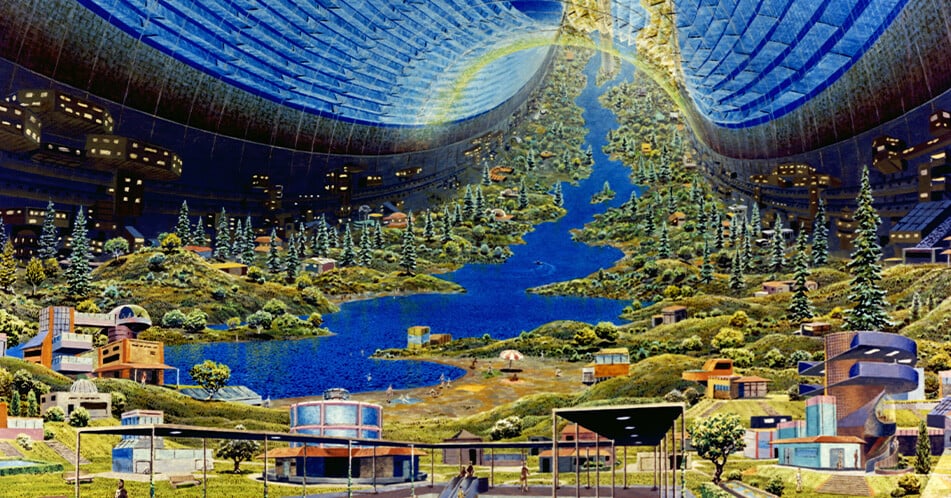
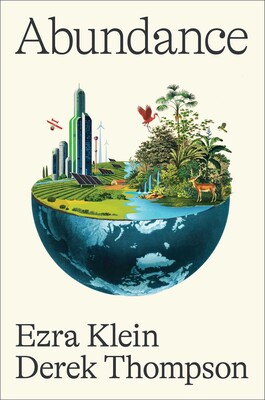
“Abundance” by Ezra Klein and Derek Thompson is new packaging for a tried-and-failed attempt to escape from history on a rocket ship.
Abundance by Ezra Klein, Derek Thompson
From bestselling authors and journalistic titans Ezra Klein and Derek Thompson, Abundance is a on...
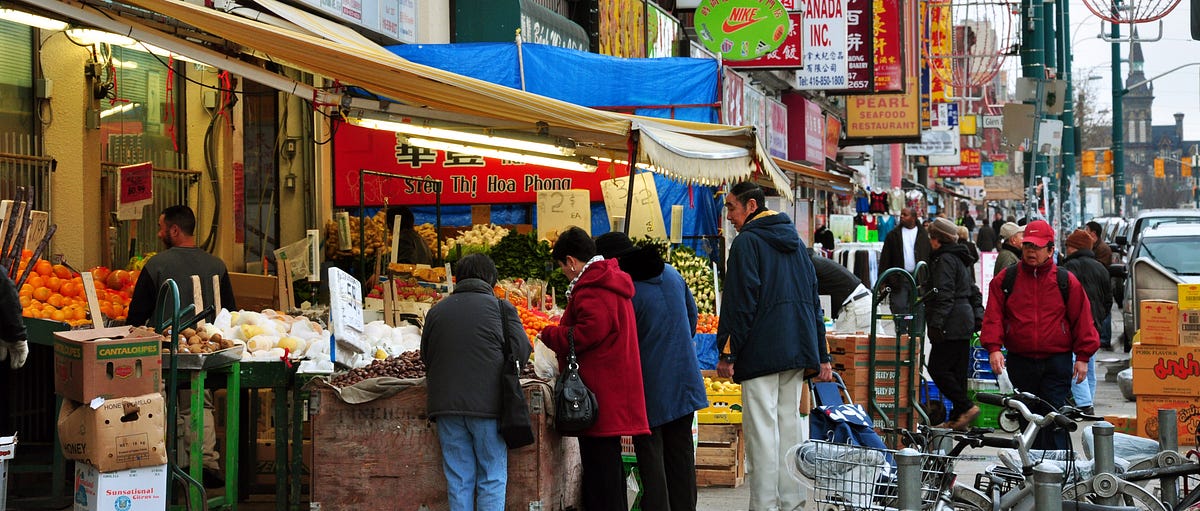
Understanding Abundance, part 1: It’s Caused by Consumers
Hello! If you’re coming here for the first time, thanks for checking out my writing on Medium. I don’t publish much here anymore — I’ve…
Rationality: What It Is, Why It Seems Scarce, Why It Matters by Steven Pinker
In the twenty-first century, humanity is reaching new heights of scientific understanding—and at ...
Seven Key Elements of an Economy of Abundance
Our present economy is an economy of scarcity – only scarce commodities have economic value. Therefore there are strong incentives to make everything into a scarce commodity - first by making it into a commodity, and then by assuring that the demand for that commodity exceeds its supply, either by controlling supplies or by inflating demand, or doing both at the same time. This economy of scarcity leads to environmental destruction because the natural environment is treated as a “free” good to consume or pollute until it becomes scarce enough to commodify and monopolize. It also leads to social inequality because the major avenue to wealth is to control key assets and then make them scarce for everyone else, thus extracting profits.
Ordinary Abundance
A walk through a modern apartment, through the eyes of the people for whom everything in it was new.

Ordinary Abundance
A walk through a modern apartment, through the eyes of the people for whom everything in it was new.
Sense of abundance
Expansive, curious, open, unfearful, unhurried. The opposite of Scarcity mindset .NoteLink.Active { background-color: rgba(10, 132, 255, 0.15); } .
Ponomareva, The Human Factor in Space Exploration
by Valentina Ponomareva in Vladimir Orel, ed., Institut istorii estestvoznaniia i tekhinki. Godichnaia nauchnaia konferentsiia, 1998 [Proceedings of the 1998 annual conference of the Institute for the History of Natural Science and Technology], Moscow, pp. 614-18.
Abundance
#1 NEW YORK TIMES BESTSELLER • ONE OF BARACK OBAMA’S FAVORITE BOOKS OF 2025 • NEW YORK TIMES 100 NOTABLE BOOKS OF 2025 • KIRKUS REVIEWS BEST BOOKS ...
Why do we collect things?
Desire, nostalgia, loss, and completeness in the personal collections of Joseph Cornell, Peter Blake, and Vladimir Nabokov

Craigslist, Wikipedia, and the Abundance Economy
You’ve heard it before. Maybe you’ve even said it. “There’s no such thing as a free lunch.” “You can’t get something for nothing.” “Somebody has to pay.” People recite these sayings with confidence, as though they were quoting Newton’s Laws of Motion...

On Taste, Effort & Curiosity - again
When AI collapses how long it takes to ship, what’s left is judgment, experimentation, and knowing what not to build.
All Those Metrics Bleed Your Obsessions - Aaron Ross Powell
The internet once encouraged us to build entire identities around our weirdest, deepest fascinations. Then metrics and distribution flattened those obsessions into fungible content.
What we want is a hunter gatherer lifestyle with space age tools
Those who are convinced that there is more to things spend their time chasing it and not finding it often as not, and those who are convinced there isn't find themselves frustrated at the abyss.

The future is made of energy | Orca Notes
A megatrend way bigger than decarbonization is probably the key to abundance and sustainability both.
Wrote up some thoughts on new *atmospheric generatives* Things that can generate value even in environments where everything can be copied, like: contextualization • fluidity • aggregation • relationality Riffing on a @kevinkelly.bsky.social piece from years ago; extending for the atmosphere!

On atmospheric generatives…
scraps.schlage.town