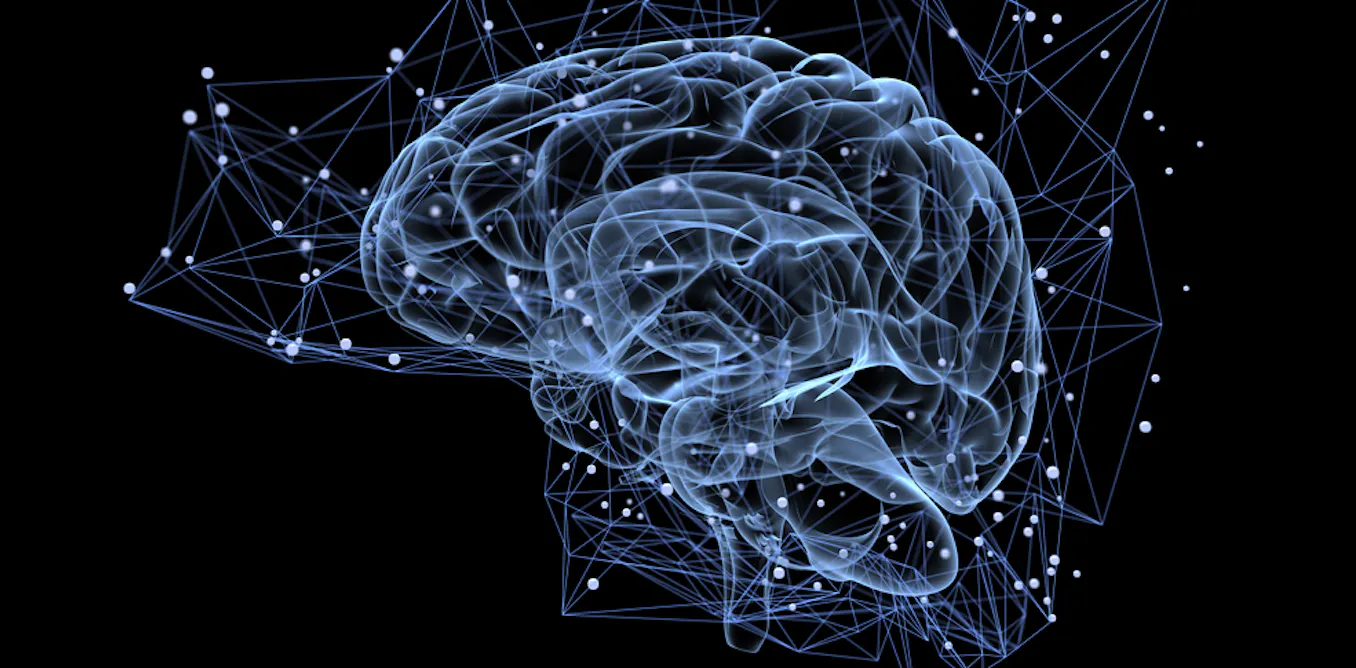
The symptoms of ‘schizophrenia’ are very real, but experts are looking for a better way to define them.
[Article] The complex lived experience of schizophrenia diagnosis: a thematic analysis of online forum posts
109K subscribers in the schizophrenia community. Welcome! This is a community meant for a discussion of schizophrenia spectrum disorders, and related…
Retraction Note: The complex lived experience of schizophrenia diagnosis: a thematic analysis of online forum posts
Current Psychology -

Legion's Take on Treating Mental Illness Is a Unique One
Despite the fact that schizophrenia is often very difficult to diagnose and is widely considered to be a very uncommon mental condition, it’s one of the

What’s Schizophrenia Like? A Woman Who Hears Voices Explains It Beautifully.
Eleanor Longden began hearing voices in her head when she was a young college student. Her experiences are both horrifying and hopeful. In this talk, Eleanor starts by detailing the long, dark struggle she endured after a schizophrenia diagnosis. Then, at 5:39, her doctor makes a shocking assessment of her illness and her likelihood of being cured. At 7:26, she explains how the voices in her head actually provided the insight she needed to solve her problems. And at 10:08, she shares how the voices in her head might have technically helped her cheat on an exam and later go on to be an extraordinary academic and use her experiences to help others.

Schizophrenic. Killer. My Cousin.
It's insanity to kill your father with a kitchen knife. It's also insanity to close hospitals, fire therapists, and leave families to face mental illness on their own.

Stanford researcher: Hallucinatory ‘voices’ shaped by local culture
Stanford anthropologist Tanya Luhrmann found that voice-hearing experiences of people with serious psychotic disorders are shaped by local culture – in the United States, the voices are harsh and threatening; in Africa and India, they are more benign and playful. This may have clinical implications for how to treat people with schizophrenia, she suggests.

Pluralistic: Three more AI psychoses (12 Mar 2026) – Pluralistic: Daily links from Cory Doctorow
"AI psychosis" is one of those terms that is incredibly useful and also almost certainly going to be deprecated in smart circles in short order because it is: a) useful; b) easily colloquialized to describe related phenomena; and c) adjacent to medical issues, and there's a group of people who feel very strongly any metaphor that implicates human health is intrinsically stigmatizing and must be replaced with an awkward, lengthy phrase that no one can remember and only insiders understand.
Pluralistic: AI psychosis and the warped mirror (18 Sep 2025) – Pluralistic: Daily links from Cory Doctorow
"AI psychosis" is the pop-psych diagnosis in a recent string of horrible and horrifying cases in which vulnerable people were lured by chatbots into harming themselves and others, including a murder-suicide:
What Are Psychedelic Entities?
The beings people often meet while using psychedelics resist tidy explanations.
People who are blind from birth never develop schizophrenia – what this tells us about the psychiatric condition
Understanding why people born blind never develop schizophrenia could transform how we think about and treat one of medicine’s most baffling conditions.

Avatar Therapy Successfully Treats Schizophrenic Patients Suffering from Auditory Hallucinations
Researchers found that avatar therapy was more effective at reducing hallucinations than counseling.

Brain's "Brakes" Suppress Unwanted Thoughts
Researchers identify a new target for disorders such as PTSD and schizophrenia
People Experience 'New Dimensions of Reality' When Dying, Groundbreaking Study Reports - Slashdot
An anonymous reader quotes a report from Motherboard: Scientists have witnessed brain patterns in dying patients that may correlate to commonly reported "near-death" experiences (NDEs) such as lucid visions, out-of-body sensations, a review of one's own life, and other "dimensions of reality," repor...


Apophenia
Apophenia is the tendency to perceive meaningful connections between unrelated things. The term was coined by psychiatrist Klaus Conrad in his 1958 publication on the beginning stages of schizophrenia. He defined it as "unmotivated seeing of connections [accompanied by] a specific feeling of abnormal meaningfulness". He described the early stages of delusional thought as self-referential over-interpretations of actual sensory perceptions, as opposed to hallucinations. Apophenia has also come to describe a human propensity to unreasonably seek definite patterns in random information, which can occur in gambling.

The New Wounded
This book addresses the issue of trauma and psychic wounds to stage a confrontation between psychoanalysis and contemporary neurobiology. In so doing, it reevaluates the brain as an organ that is not separated from psychic life but rather appears as its very locus. A philosophical approach of the “new wounded” (brain lesion patients) forms the matter of the confrontation.