


The Convivial Society: Vol. 3, No. 9
Simulacra and Simulation
Simulacra and Simulation is a 1981 philosophical essay by the philosopher and cultural theorist Jean Baudrillard, in which he seeks to examine the relationships between reality, symbols, and society, in particular the significations and symbolism of culture and media involved in constructing an understanding of shared existence.

Will Wright on Designing User Interfaces to Simulation Games (1996) (2023 Video Update)
A summary of Will Wright’s talk to Terry Winograd’s User Interface Class at Stanford, written in 1996 by Don Hopkins, before they worked…
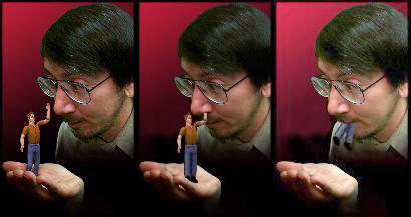
The thing about the Kobayashi Maru
“The thing about the Kobayashi Maru,” said Jim, “is you have to remember it’s a simulation.”

Keynote: Reproducibility and replicability of computer simulations | Canal U
Since the early days of the reproducibility crisis, much progress has been made in understanding and improving computational reproducibility and replicability (R and R)...

Physicists To Test If Universe Is A Computer Simulation

Society Is Made Of Narrative. Realizing This Is Awakening From The Matrix.
In the movie The Matrix, humans are imprisoned in a virtual world by a powerful artificial intelligence system in a dystopian future. What…
» The Life and Times of Maxis, Part 3: The Sims The Digital Antiquarian
I don’t think people realize how much tactical and strategic forethought goes into their daily lives. There’s a whole subconscious time-efficiency layer in our lives. In essence, real-time strategy is our lives.

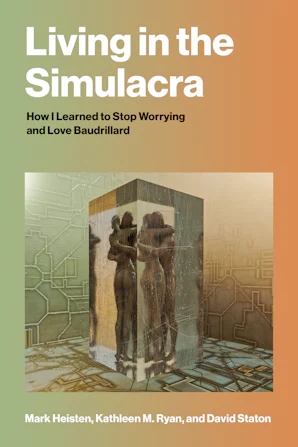
Living in the Simulacra
Despite a twenty-first-century plethora of images and our collective understanding that digital tools may alter the truth, human beings have a strong belief ...
AdVenture Capitalist
Welcome, eager young investor, to AdVenture Capitalist! Arguably the world's greatest Capitalism simulator!
The Math That Shows Humans Could Live Ten Times Longer
A new model shows that evolution has programmed us to die—and that reprogramming isn’t off the table.

How are we writing the future of humanity?
Consciousness spinning

We speak often of AI as if it were a future event. But it is already here in the fabric of our being. What Karl Ove Knausgaard captures with devastating clarity in his recent essay ‘The Reenchanted… | Kenneth Mikkelsen | 19 comments
We speak often of AI as if it were a future event. But it is already here in the fabric of our being. What Karl Ove Knausgaard captures with devastating clarity in his recent essay ‘The Reenchanted World’ is the departure of the real. “We live in a virtual world, as if the world had been lifted out of itself, into the air, like a giant roof suspended above the ground,” he writes. It is an existential condition. Across philosophy, from Heidegger to Baudrillard, from Don DeLillo to Debord, a singular thread weaves: the world, once our shelter from the self, has become self-referential. Where once we encountered beings in our Zuhandensein—ready-to-hand, intimate, meaningful—we now face a procession of Vorhandensein: inert, objectified, mediated. Simulation replaces encounter. Perception is swallowed by spectacle. And the digital era, in Knausgaard’s terms, “distances culture from the body”. “It is not just the body that disappears—it is the awareness that we are dying,” he writes. What we face is not merely technological change, but what I would call existential dissonance: the erosion of resonance between our inner world, our social world, and the material world. It is the tension that arises when the way one lives, acts, and relates is misaligned with one’s deeper sense of meaning, reality, and value. It manifests itself as a disturbance in being — an unease that is not merely emotional, but rooted in a felt gap between one’s existence as it is and as it could or should be. It is the voice of the self calling from within the noise of the world. This is why Knausgaard’s essay matters for anyone working in, with, or around AI. Because the question isn’t: What can these systems do? It is: What do they undo? “We can explain everything. But we understand nothing,” he writes. Manipulated constructions of truth, in such a time, becomes a currency. As shown in recent events—from Francesca Gino’s research fraud at Harvard to Bezos’ all-female crew venture into space, and Trump’s detention camp —truth is no longer that which corresponds with reality, but that which performs and sells. As Baudrillard warned, the simulation no longer hides the real—it becomes it. And yet, something remains. Knausgaard writes not to despair, but to stay. In the body. In death. In silence. In the concrete. If you seek to understand what is happening—not just in AI, but in the very metaphysics of modern life—I suggest we begin not with data, but with dissonance. With the feeling that something vital is slipping from view, and that “being in the world” now requires resistance. “We are surrounded by mystery. And yet we act as if everything were known,” he writes. AI will never understand this. But we must. Knausgaard’s full essay from Harper’s Magazine can be read via link in comments. | 19 comments on LinkedIn

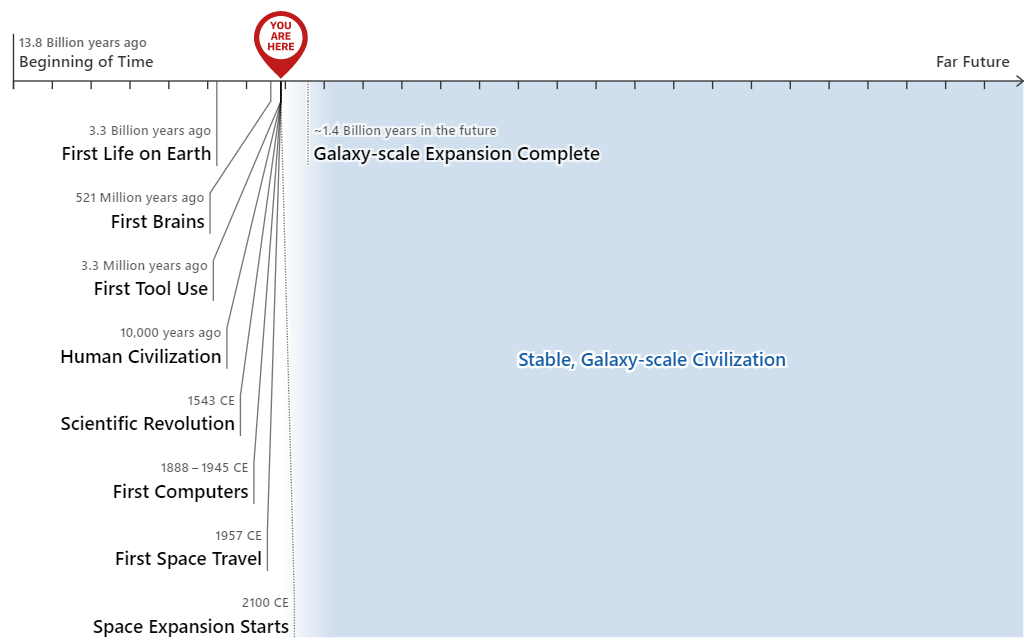
All Possible Views About Humanity's Future Are Wild
If humans will eventually spread out across the galaxy, then we are among the earliest living beings, with remarkable opportunities to shape the future
Engine-Simulator/engine-sim-community-edition
Combustion engine simulation game that generates realistic audio.
Introducing Persimmon | humans&
A model of human behavior, and new ways to measure how faithfully AI can simulate people.
