


One of the things I am enjoying at the moment is the way a lot of things are coming together conceptually. It happens like this when you develop or
The Shape of Knowing - The Cynefin Co
We evolved to make sense of a world that does not come with explanations attached. This is the third in a series on the trialectics. For an introduction

Descriptions Aren’t Prescriptions
When we look at a representation of reality, we can choose to either see it as descriptive, meaning it tells us what the world is currently like, or as prescriptive, meaning it tells us how the world should be. Descriptions teach us, but they also give us room to innovate. Prescriptions can get us stuck. One place this tension shows up is in language.

Category: The Essence of Composition
I was overwhelmed by the positive response to my previous post, the Preface to Category Theory for Programmers. At the same time, it scared the heck out of me because I realized what high expectati…


Thoughts on thinking | Hacker News
The process of forming expressions just is the process of conceptual and rational articulation (as per Brandom). Those who misunderstand this -- believing that concepts are ready made, then encoded and decoded from permutations of tokens, or, worse, who have no room to think of reasoning or conceptualization at all -- they will be automated away.
Cyclomatic complexity
Cyclomatic complexity is a software metric used to indicate the complexity of a program. It is a quantitative measure of the number of linearly independent paths through a program's source code. It was developed by Thomas J. McCabe, Sr. in 1976.
Pluralistic: Model collapse (12 Aug 2026) – Pluralistic: Daily links from Cory Doctorow
One of my favorite rhetorical and analytical moves is joining things together (showing that two different, seemingly unrelated ideas are aspects of the same phenomenon) and taking them apart (resolving a paradox by demonstrating that what appears to be one, contradictory thing is actually two different things that have been lumped together).
What Makes a Concept Good? A Criterial Framework for Understanding Concept Formation in the Social Sciences
Nowhere in the broad and heterogeneous work on concept formation has the question of conceptual utility been satisfactorily addressed. Goodness in concept formation, I argue, cannot be reduced to 'clarity,' to empirical or theoretical relevance, to a set of rules, or to the methodology particular to a given study. Rather, I argue that conceptual adequacy should be perceived as an attempt to respond to a standard set of criteria, whose demands are felt in the formation and use of all social science concepts: (1) familiarity, (2) resonance, (3) parsimony, (4) coherence, (5) differentiation, (6) depth, (7) theoretical utility, and (8) field utility. The significance of this study is to be found not simply in answering this important question, but also in providing a complete and reasonably concise framework for explaining the process of concept formation within the social sciences. Rather than conceiving of concept formation as a method (with a fixed set of rules and a definite outcome), I view it as a highly variable process involving trade-offs among these eight demands.
Complexity Explorables
A collection of interactive explorable explanations of complex systems in biology, physics, mathematics, social sciences, epidemiology, ecology and other fields....
The Art of Writing One-Sentence Product Descriptions
A look back at early interviews with Facebook and Uber CEOs illustrates an ingenious way to communicate hard-to-describe products.

The Alien Space of Science: Sampling Coherent but Cognitively...
Scientific discovery is constrained not only by what is true, but by what is cognitively available to the researchers currently exploring a field. Many directions are coherent in light of the...

Finding Fulfillment
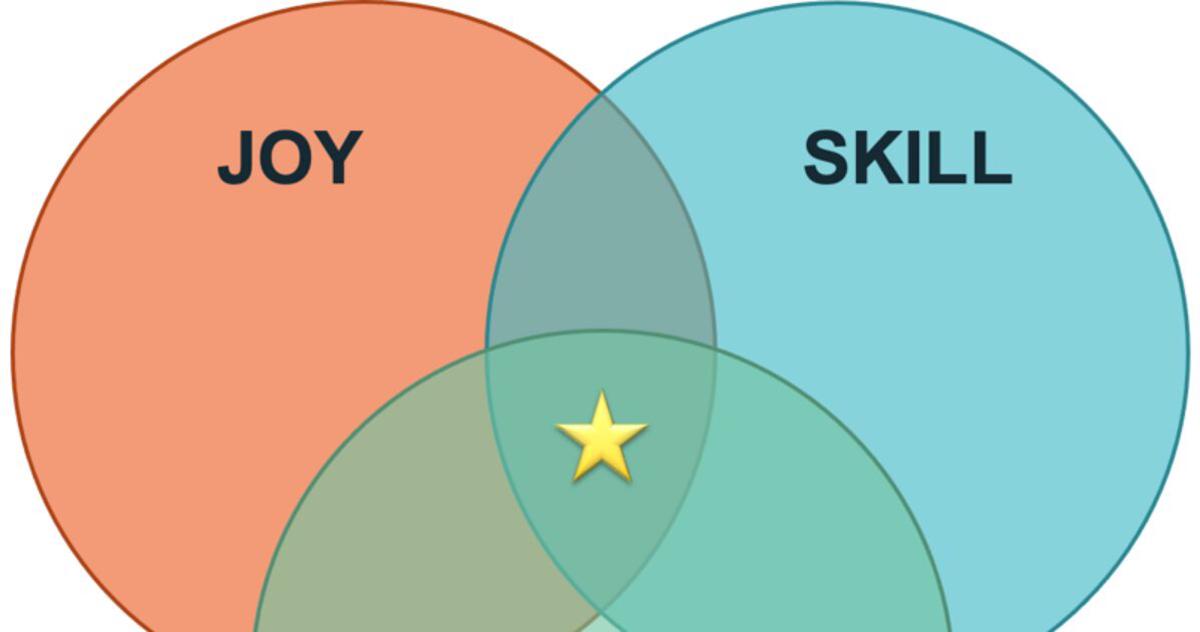
What creates a fulfilling existence? Exploration leads to a framework I've used for years for myself and the people around me. I hope it helps you too.
#ATProto is giving Major Evolutionary Transition vibes: "(1) a new form of cooperation with almost total interdependence among individuals ... that creates a new functional entity, and (2) a ... new form of communication to support this cooperation." en.wikipedia.org/wiki/The_Major_Transitions_in…

𝕮
ATProto is a post-app protocol trapped in a world of apps. I can feel it all around the edges of the network.
Something I’ve been thinking about recently: A lot of useful discoveries come from “the process” - understanding a system, seeing its behavior, getting curious, playing with it, the surprising finds along the way. I’m concerned that by “abstracting” the process we’ll significantly harm that
"There is a contrast between my biological development, confidently realizing its in-built norm, and my fumbling psychological development, realizing partially..one among many apparently possible orders .. Learning what to want is the most radical, the most painful and the most creative art of life"


