The theory of constraints is a systems-based methodology that identifies and addresses the weakest link in a process or system.

A beautiful constraint – summary
A beautiful constraint. How to transform your limitations into advantages. By Adam Morgan & Mark Barden. Summarised by paul_arnold@me.com – Strategic facilitator, planner and trainer. Th…

Viability theory
Viability theory is an area of mathematics that studies the evolution of dynamical systems under constraints on the system state.[1][2] It was developed to formalize problems arising in the study of various natural and social phenomena, and has close ties to the theories of optimal control and set-valued analysis.
Institutions: abstract model theory for specification and programming | Journal of the ACM
There is a population explosion among the logical systems used in computing science. Examples include first-order logic, equational logic, Horn-clause logic, higher-order logic, infinitary logic, dynamic logic, intuitionistic logic, order-sorted logic, ...

Finite-Choice Logic Programming | Proceedings of the ACM on Programming Languages
Logic programming, as exemplified by datalog, defines the meaning of a program as its unique smallest model: the deductive closure of its inference rules. However, many problems call for an enumeration of models that vary along some set of choices while ...

Requisite Variety - gordonbrander.com
If a system is to be stable, the number of states of its control mechanism must be greater than or equal to the number of states in the system being controlled.
The Value Chain Constraint
Companies succeed or fail not based on technology but rather according to their ability to integrate within their value chains.

The Architect of Constraints: Why Context Engineering Is the Human Skill That Matters
“If I had an hour to solve a problem, I’d spend 55 minutes defining the problem and 5 minutes solving it.” — Albert Einstein

Complexity Explorables
A collection of interactive explorable explanations of complex systems in biology, physics, mathematics, social sciences, epidemiology, ecology and other fields....

DIKW pyramid
The DIKW pyramid is a model describing relationships between data, information, knowledge and wisdom sometimes also stylized as a chain, refer to models of possible structural and functional relationships between a set of components—often four: data, information, knowledge, and wisdom. The concept has roots predating the 1980s. In the latter years of that decade, interest in the models grew after explicit presentations and discussions, including from Milan Zeleny, Russell Ackoff, and Robert W. Lucky. Subsequent important discussions extended along theoretical and practical lines into the coming decades.

Laws of Software Engineering
A collection of principles and patterns that shape software systems, teams, and decisions.

Against optimization
One of the most inescapable edicts when leading a team is the order to optimize the system towards the organization’s goals.

Leverage Points: Places to Intervene in a System
By Donella Meadows~ Folks who do systems analysis have a great belief in “leverage points.” These are places within a complex system (a corporation, an economy, a living body, a city, an ecosystem) where a small shift in one thing can produce big changes in everything. This idea is not unique to systems analysis — […]
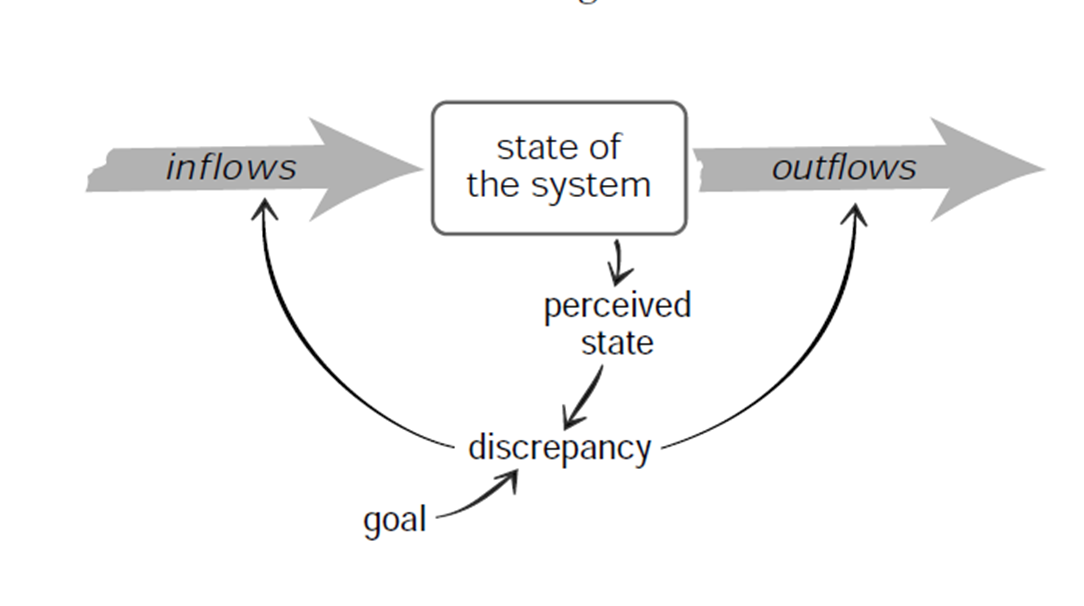
Leverage Points: Places to Intervene in a System
By Donella Meadows~ Folks who do systems analysis have a great belief in “leverage points.” These are places within a complex system (a corporation, an economy, a living body, a city, an ecosystem) where a small shift in one thing can produce big changes in everything. This idea is not unique to systems analysis — […]