


A new study just published by researchers at Western Washington University (WWU) reports concentrations of up to 162 chemical contaminants in three species of…
Chemical contaminant levels in edible seaweeds of the Salish Sea and implications for their consumption
Despite growing interest in edible seaweeds, there is limited information on seaweed chemical contaminant levels in the Salish Sea. Without this knowledge, health-based consumption advisories can not be determined for consumers that include Tribes and First Nations, Asian and Pacific Islander community members, and recreational harvesters. We measured contaminant concentrations in edible seaweeds (Fucus distichus, F. spiralis, and Nereocystis luetkeana) from 43 locations in the Salish Sea. Metals were analyzed in all samples, and 94 persistent organic pollutants (POPs) (i.e. 40 PCBs, 15 PBDEs, 17 PCDD/Fs, and 22 organochlorine pesticides) and 51 PAHs were analyzed in Fucus spp. We compared concentrations of contaminants to human health-based screening levels calculated from the USEPA and to international limits. We then worked with six focal contaminants that either exceeded screening levels or international limits (Cd, total Hg, Pb, benzo[a]pyrene [BaP], and PCBs) or are of regional interest (total As). USEPA cancer-based screening levels were exceeded in 30 samples for the PCBs and two samples for BaP. Cadmium concentrations did not exceed the USEPA noncancer-based screening level but did exceed international limits at all sites. Lead exceeded international limits at three sites. Because there are no screening levels for total Hg and total As, and to be conservative, we made comparisons to methyl Hg and inorganic As screening levels. All samples were below the methyl Hg and above the inorganic As screening levels. Without knowledge of the As speciation, we cannot assess the health risk associated with the As. While seaweed was the focus, we did not consider contaminant exposure from consuming other foods. Other chemicals, such as contaminants of emerging concern (e.g., PFAS, pharmaceuticals and personal care products), should also be considered. Additionally, although we focused on toxicological aspects, there are cultural and health benefits of seaweed use that may affect consumer choice.
Food safety hazards in the European seaweed chain
Abstract Seaweed is a source of protein that can help overcome the anticipated challenges of a growing world population and the current challenges for finding alternatives for animal proteins in the Western diet. Thus far, data on the safety of seaweed for feed and food purposes in the Western world are scattered. This study aimed to review the available knowledge on the presence of food safety hazards in seaweed, including factors influencing their presence, and to prioritize the hazards that may pose a risk to human health. Given current knowledge from the literature, data from the Rapid Alert System for Food and Feed, and results from a stakeholder survey, 22 food safety hazards were ranked into major (4), moderate (5), and minor (13) hazards. Arsenic, cadmium, iodine, and Salmonella were identified as major hazards. Hazards, where data gaps exist, should be carefully assessed. These include pesticide residues, dioxins and polychlorinated biphenyls, brominated flame retardants, polycyclic aromatic hydrocarbons, pharmaceuticals, marine biotoxins, allergens, micro‐ and nanoplastics, other pathogenic bacteria, norovirus, and hepatitis E virus. It is recommended to collect more data on these hazards in future studies. Many factors can affect the presence of hazards including seaweed type, physiology, season, harvest and cultivation environment, geography including the location of cultivation, alongside further processing. Moreover, when seaweed is cultivated near industrialized or anthropogenic activities, these activities may negatively influence water quality, which can increase the likelihood of hazards in seaweed. Results of the ranking prioritized hazards can be used to prioritize monitoring programs and adjusted given future additional knowledge covering the data gaps.

QuantitativeAnalysis of Selected Plastics in High-Commercial-ValueAustralian Seafood by Pyrolysis Gas Chromatography Mass Spectrometry
Abstract Microplastic contamination of the marine environment is widespread, but the extent to which the marine food web is contaminated is not yet known. The aims of this study were to go beyond visual identification techniques and develop and apply a simple seafood sample cleanup, extraction, and quantitative analysis method using pyrolysis gas chromatography mass spectrometry to improve the detection of plastic contamination. This method allows the identification and quantification of polystyrene, polyethylene, polyvinyl chloride, polypropylene, and poly(methyl methacrylate) in the edible portion of five different seafood organisms: oysters, prawns, squid, crabs, and sardines. Polyvinyl chloride was detected in all samples and polyethylene at the highest total concentration of between 0.04 and 2.4 mg g–1 of tissue. Sardines contained the highest total plastic mass concentration (0.3 mg g–1 tissue) and squid the lowest (0.04 mg g–1 tissue). Our findings show that the total concentration of plastics is highly variable among species and that microplastic concentration differs between organisms of the same species. The sources of microplastic exposure, such as packaging and handling with consequent transference and adherence to the tissues, are discussed. This method is a major development in the standardization of plastic quantification techniques used in seafood.
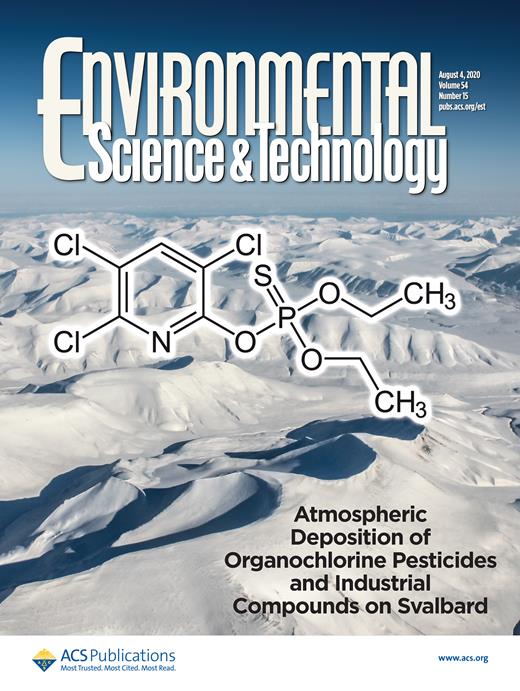
Uptake of hydrophobic organic compounds, including organochlorine pesticides, polybrominated diphenyl ethers, and perfluoroalkyl acids in fish and blue crabs of the lower Passaic River, New Jersey, USA
Abstract . The bioavailability and bioaccumulation of sedimentary hydrophobic organic compounds (HOCs) is of concern at contaminated sites. Passive sampler
A Model for Methylmercury Uptake and Trophic Transfer by Marine Plankton
Abstract. Methylmercury (MeHg) concentrations can increase by 100 000 times between seawater and marine phytoplankton, but levels vary across sites. To bet
Latest News from Cascadia Seaweed — Cascadia Seaweed
Stay current on Cascadia Seaweed's latest milestones and innovations, and project updates from Cascadia Nature-based Solutions (CNbS).

Development and Evaluation of Aquatic and Terrestrial Food Web Bioaccumulation Models for Per- and Polyfluoroalkyl Substances
Abstract. There is a need for reliable models to predict the food web bioaccumulation and assess ecological and human health risks of per- and polyfluoroal
Climate change and overfishing increase neurotoxicant in marine predators
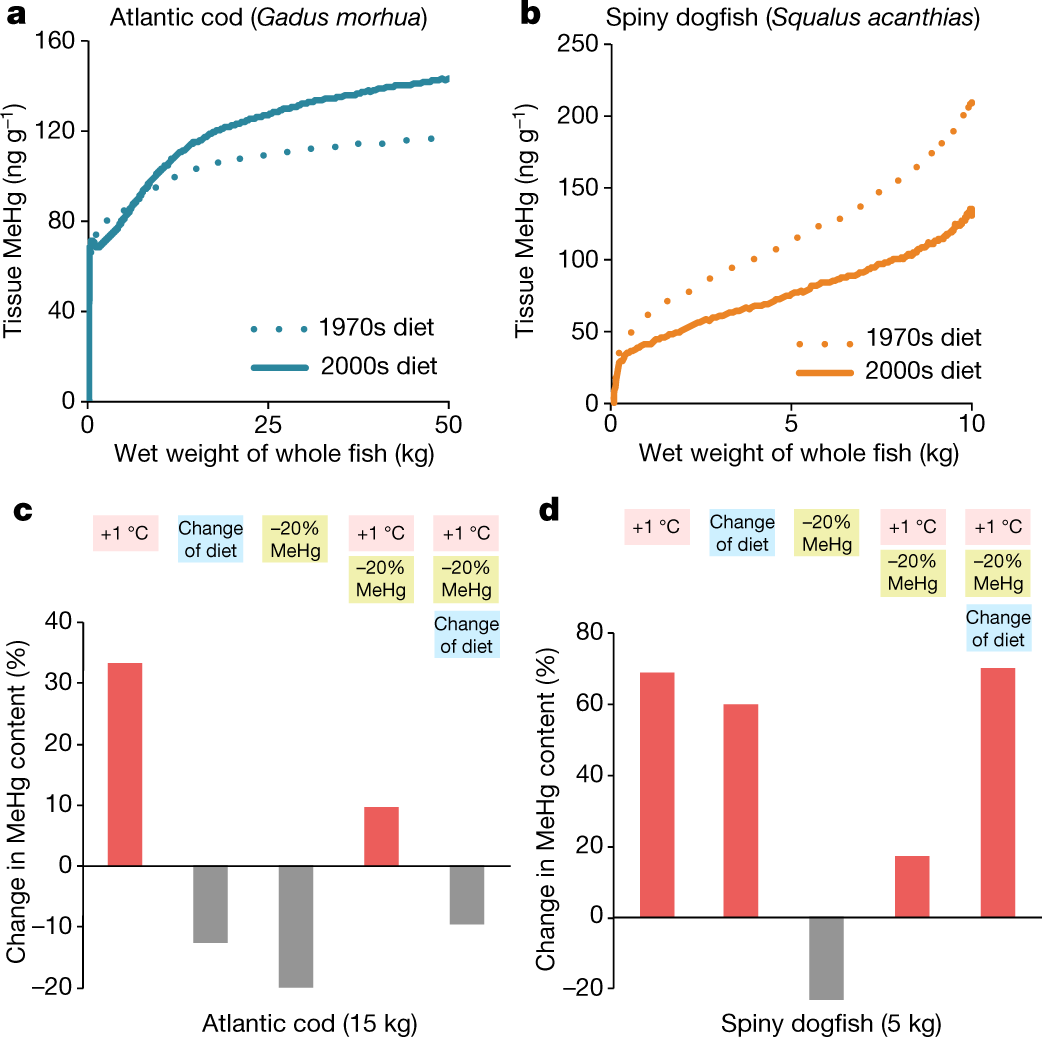
More than three billion people rely on seafood for nutrition. However, fish are the predominant source of human exposure to methylmercury (MeHg), a potent neurotoxic substance. In the United States, 82% of population-wide exposure to MeHg is from the consumption of marine seafood and almost 40% is from fresh and canned tuna alone1. Around 80% of the inorganic mercury (Hg) that is emitted to the atmosphere from natural and human sources is deposited in the ocean2, where some is converted by microorganisms to MeHg. In predatory fish, environmental MeHg concentrations are amplified by a million times or more. Human exposure to MeHg has been associated with long-term neurocognitive deficits in children that persist into adulthood, with global costs to society that exceed US$20 billion3. The first global treaty on reductions in anthropogenic Hg emissions (the Minamata Convention on Mercury) entered into force in 2017. However, effects of ongoing changes in marine ecosystems on bioaccumulation of MeHg in marine predators that are frequently consumed by humans (for example, tuna, cod and swordfish) have not been considered when setting global policy targets. Here we use more than 30 years of data and ecosystem modelling to show that MeHg concentrations in Atlantic cod (Gadus morhua) increased by up to 23% between the 1970s and 2000s as a result of dietary shifts initiated by overfishing. Our model also predicts an estimated 56% increase in tissue MeHg concentrations in Atlantic bluefin tuna (Thunnus thynnus) due to increases in seawater temperature between a low point in 1969 and recent peak levels—which is consistent with 2017 observations. This estimated increase in tissue MeHg exceeds the modelled 22% reduction that was achieved in the late 1990s and 2000s as a result of decreased seawater MeHg concentrations. The recently reported plateau in global anthropogenic Hg emissions4 suggests that ocean warming and fisheries management programmes will be major drivers of future MeHg concentrations in marine predators.
Beyond sushi: 'Nature's Chef' shares tips, recipes for cooking with seaweed | CBC News
Personal chef Tom Kral shares his tips and recipes for cooking with seaweed.

Aquatic plants - Province of British Columbia
Find out more about requirements for the commercial harvest of seaweed. Aquatic plants include all species of plants found in B.C. waters.
Characterizing the Areal Extent of PFAS Contamination in Fish Species Downgradient of AFFF Source Zones
Dataset of targeted PFAS and extractable organofluorine concentrations in water, sediment, and biological tissue samples that support data included in two papers: "Characterizing the Areal Extent of PFAS Contamination in Fish Species Downgradient of AFFF Source Zones" and "Bioaccumulation of Perfluoroalkyl Sulfonamides (FASA)"
Uptake of Per- and Polyfluoroalkyl Substances by Fish, Mussel, and Passive Samplers in Mobile Laboratory Exposures using Groundwater from a Contamination Plume at a Historical Fire Training Area, Cape Cod, Massachusetts - Chemical and Biological Data from August to September 2018
This data release presents chemical and biological results from an investigation of the uptake of per- and polyfluoroalkyl substances (PFAS) from groundwater contaminated by fire training activities on Cape Cod, Massachusetts. Exposure experiments were conducted from August 29 to September 21, 2018 using groundwater from a relatively uncontaminated reference site and a fire training area contaminated site. To assess the uptake characteristics of the PFAS mixtures present in the 2 groundwater sources, 21-day mobile laboratory exposure experiments were conducted using fathead minnows (Pimephales promelas), polar organic chemical integrative samplers, and polyethylene tube samplers. Freshwater mussel (Ligumia subrostrata) exposure experiments were conducted for 14 days, beginning on day 7 of the fish and passive sampler exposures. Groundwater samples were collected daily (with a few exceptions). Samples for male fish and passive samplers were collected on days 0, 4, 7, 14, and 21. Samples for female fish were collected on days 0, 7, 14, and 21. The 14 day mussel exposures began on day 7 of the fish and passive sampler exposures, and mussel samples were collected on days 7, 11, 14, and 21. Groundwater site locations and well characteristics are presented in Table 1. Information on the various PFAS and co-occurring contaminants measured in the different media are presented in Table 2. Quality assurance results for PFAS analysis of the different media are presented in Table 3. Results for PFAS in groundwater are presented in Table 4. Results for co-occurring contaminants in groundwater are presented in Table 5. Results for fish biomarkers are presented in Table 6. Results for PFAS in male and female fish tissue are presented in Table 7. Results for PFAS in mussel tissue are presented in Table 8. Results for PFAS in polar organic chemical integrative samplers are presented in Table 9. Results for PFAS in polyethylene tube samplers are presented in Table 10.
How microplastics are infiltrating the food you eat
Plastic pollution is one of the defining legacies of our modern way of life, but it is now so widespread it is even finding its way into fruit and vegetables as they grow.

Could seaweed be the 'fastest and least expensive' tool to fight climate change?
A wave of startups say seaweed is a multi-pronged solution to climate change: It can absorb carbon, curb the effects of cattle's methane burps, and feed biofuels—not to mention the world.

Seaweed Kelp Recipes by BC Kelp
Easy, tasty, healthy, wild, edible kelp and seaweed recipes by BC Kelp BC Canada.
Human Health and Ocean Pollution
Background: Pollution – unwanted waste released to air, water, and land by human activity – is the largest environmental cause of disease in the world today. It is responsible for an estimated nine million premature deaths per year, enormous economic losses, erosion of human capital, and degradation of ecosystems. Ocean pollution is an important, but insufficiently recognized and inadequately controlled component of global pollution. It poses serious threats to human health and well-being. The nature and magnitude of these impacts are only beginning to be understood.Goals: (1) Broadly examine the known and potential impacts of ocean pollution on human health. (2) Inform policy makers, government leaders, international organizations, civil society, and the global public of these threats. (3) Propose priorities for interventions to control and prevent pollution of the seas and safeguard human health.Methods: Topic-focused reviews that examine the effects of ocean pollution on human health, identify gaps in knowledge, project future trends, and offer evidence-based guidance for effective intervention.Environmental Findings: Pollution of the oceans is widespread, worsening, and in most countries poorly controlled. It is a complex mixture of toxic metals, plastics, manufactured chemicals, petroleum, urban and industrial wastes, pesticides, fertilizers, pharmaceutical chemicals, agricultural runoff, and sewage. More than 80% arises from land-based sources. It reaches the oceans through rivers, runoff, atmospheric deposition and direct discharges. It is often heaviest near the coasts and most highly concentrated along the coasts of low- and middle-income countries. Plastic is a rapidly increasing and highly visible component of ocean pollution, and an estimated 10 million metric tons of plastic waste enter the seas each year. Mercury is the metal pollutant of greatest concern in the oceans; it is released from two main sources – coal combustion and small-scale gold mining. Global spread of industrialized agriculture with increasing use of chemical fertilizer leads to extension of Harmful Algal Blooms (HABs) to previously unaffected regions. Chemical pollutants are ubiquitous and contaminate seas and marine organisms from the high Arctic to the abyssal depths.Ecosystem Findings: Ocean pollution has multiple negative impacts on marine ecosystems, and these impacts are exacerbated by global climate change. Petroleum-based pollutants reduce photosynthesis in marine microorganisms that generate oxygen. Increasing absorption of carbon dioxide into the seas causes ocean acidification, which destroys coral reefs, impairs shellfish development, dissolves calcium-containing microorganisms at the base of the marine food web, and increases the toxicity of some pollutants. Plastic pollution threatens marine mammals, fish, and seabirds and accumulates in large mid-ocean gyres. It breaks down into microplastic and nanoplastic particles containing multiple manufactured chemicals that can enter the tissues of marine organisms, including species consumed by humans. Industrial releases, runoff, and sewage increase frequency and severity of HABs, bacterial pollution, and anti-microbial resistance. Pollution and sea surface warming are triggering poleward migration of dangerous pathogens such as the Vibrio species. Industrial discharges, pharmaceutical wastes, pesticides, and sewage contribute to global declines in fish stocks.Human Health Findings: Methylmercury and PCBs are the ocean pollutants whose human health effects are best understood. Exposures of infants in utero to these pollutants through maternal consumption of contaminated seafood can damage developing brains, reduce IQ and increase children’s risks for autism, ADHD and learning disorders. Adult exposures to methylmercury increase risks for cardiovascular disease and dementia. Manufactured chemicals – phthalates, bisphenol A, flame retardants, and perfluorinated chemicals, many of them released into the seas from plastic waste – can disrupt endocrine signaling, reduce male fertility, damage the nervous system, and increase risk of cancer. HABs produce potent toxins that accumulate in fish and shellfish. When ingested, these toxins can cause severe neurological impairment and rapid death. HAB toxins can also become airborne and cause respiratory disease. Pathogenic marine bacteria cause gastrointestinal diseases and deep wound infections. With climate change and increasing pollution, risk is high that Vibrio infections, including cholera, will increase in frequency and extend to new areas. All of the health impacts of ocean pollution fall disproportionately on vulnerable populations in the Global South – environmental injustice on a planetary scale.Conclusions: Ocean pollution is a global problem. It arises from multiple sources and crosses national boundaries. It is the consequence of reckless, shortsighted, and unsustainable exploitation of the earth’s resources. It endangers marine ecosystems. It impedes the production of atmospheric oxygen. Its threats to human health are great and growing, but still incompletely understood. Its economic costs are only beginning to be counted.Ocean pollution can be prevented. Like all forms of pollution, ocean pollution can be controlled by deploying data-driven strategies based on law, policy, technology, and enforcement that target priority pollution sources. Many countries have used these tools to control air and water pollution and are now applying them to ocean pollution. Successes achieved to date demonstrate that broader control is feasible. Heavily polluted harbors have been cleaned, estuaries rejuvenated, and coral reefs restored.Prevention of ocean pollution creates many benefits. It boosts economies, increases tourism, helps restore fisheries, and improves human health and well-being. It advances the Sustainable Development Goals (SDG). These benefits will last for centuries.Recommendations: World leaders who recognize the gravity of ocean pollution, acknowledge its growing dangers, engage civil society and the global public, and take bold, evidence-based action to stop pollution at source will be critical to preventing ocean pollution and safeguarding human health.Prevention of pollution from land-based sources is key. Eliminating coal combustion and banning all uses of mercury will reduce mercury pollution. Bans on single-use plastic and better management of plastic waste reduce plastic pollution. Bans on persistent organic pollutants (POPs) have reduced pollution by PCBs and DDT. Control of industrial discharges, treatment of sewage, and reduced applications of fertilizers have mitigated coastal pollution and are reducing frequency of HABs. National, regional and international marine pollution control programs that are adequately funded and backed by strong enforcement have been shown to be effective. Robust monitoring is essential to track progress.Further interventions that hold great promise include wide-scale transition to renewable fuels; transition to a circular economy that creates little waste and focuses on equity rather than on endless growth; embracing the principles of green chemistry; and building scientific capacity in all countries.Designation of Marine Protected Areas (MPAs) will safeguard critical ecosystems, protect vulnerable fish stocks, and enhance human health and well-being. Creation of MPAs is an important manifestation of national and international commitment to protecting the health of the seas.
