In her Introduction to When Old Technologies Were New: Thinking About Electric Communication in the Late Nineteenth Century (1988), historian Carolyn Marvin makes some instructive comments about he…
The Mythos of the Electronic Revolution
JAMES W. CAREY, JOHN J. QUIRK, The Mythos of the Electronic Revolution, The American Scholar, Vol. 39, No. 2 (Spring, 1970), pp. 219-241
The Mythos of the Electronic Revolution
JAMES W. CAREY, JOHN J. QUIRK, The Mythos of the Electronic Revolution, The American Scholar, Vol. 39, No. 3 (Summer, 1970), pp. 395-424
Operation Voder: AT&T, Bell Labs, and the Labor of Techno-Utopia at the 1939 New York World’s Fair
This article explores the labor demands of the Voder, the electrical speech synthesis machine developed by Bell Labs for AT&T’s 1939 New York World’s Fair exhibit. The article situates the Voder within the historical context of the fair, with the United States emerging from the Great Depression and political tensions escalating across the globe. By examining the decision to incorporate the machine’s young female operators into the exhibit, the article argues that AT&T executives used Voder operators to normalize a new vision of technological utopia that relied heavily and conspicuously on the infrastructural labor of women. Moreover, the article highlights the previously unacknowledged engineering contributions of Voder operators in the years before the fair, writing women into the origin story of a machine that laid critical groundwork for speech recognition and voice encryption technology.
Future Histories of Other Networks – Lori Emerson
Joanna Russ- SF and Technology as Mystification
Talk about technology, long familiar to science-fiction readers and writers, is getting popular in Academia too. Particularly interesting to humanists is the connection between technology and whatever their own particular subject happens to be; I've attended three such formal symposia in the last five years, six including SF conventions, and including informal discussions among students, in writing classes, SF classes, and elsewhere, somewhere between fifty and sixty.
Topics — Real Life
ABOUT TOPICS: Since we began Real Life in the summer of 2016, we’ve run many essays across a range of topics, with a particular focus on the personal and cultural implications of living with technology. Our aim is not to track the news cycle so much as the longstanding social issues that inform and transcend it. We wanted to make it easier to read and explore Real Life beyond our chronological archive, so we’ve created these Topics to gather in one place the work we’ve published on some key themes. More Topics will be added to this page over time.

A Mathematical Theory of Communication
"A Mathematical Theory of Communication" is an article by mathematician Claude Shannon published in Bell System Technical Journal in 1948. It was renamed The Mathematical Theory of Communication in the 1949 book of the same name, a small but significant title change after realizing the generality of this work. It has tens of thousands of citations, being one of the most influential and cited scientific papers of all time, as it gave rise to the field of information theory, with Scientific American referring to the paper as the "Magna Carta of the Information Age", while the electrical engineer Robert G. Gallager called the paper a "blueprint for the digital era". Historian James Gleick rated the paper as the most important development of 1948, placing the transistor second in the same time period, with Gleick emphasizing that the paper by Shannon was "even more profound and more fundamental" than the transistor.

Wired women : gender and new realities in cyberspace
Come in, CQ: the body on the wire / Ellen Ullman -- The memoirs of a token: an aging Berkeley feminist examines Wired / Paulina Borsook -- How hard can it be? / Karen Coyle -- Closure was never a goal in this piece / Judy Malloy and Cathy Marshall -- Estrogen brigades and "big tits" threads: media fandom online and off / Susan Clerc -- Elites, lamers, narcs and whores: exploring the computer underground / Netta "grayarea" Gilboa -- We are geeks, and we are not guys: the systers mailing list / L. Jean Camp -- Not for the faint of heart: contemplations on Usenet / Judy Anderson "yduJ" -- The price of admission: harassment and free speech in the wild, wild West / Stephanie Brail -- Sex, fear and condescension on campus: cybercensorship at Carnegie Mellon / Donna M. Riley -- Cocktails and thumbtacks in the old West: what would Emily Post say? / Laurel A. Sutton -- "So please stop, thank you": girls online / Michele Evard -- MUDder? I hardly know 'er: adventures of a feminist MUDder / Lori Kendall -- Like magic, only real / Tari Lin Fanderclai -- Coming apart at the seams: sex, text and the virtual body / Shannon McRae; Includes bibliographical references; Ellen Ullman shares an email courtship - Paulina Borsook exposes gender attitudes at the digerati's magazine of record - Karen Coyle on overcoming macho stereotypes - Judy Malloy and Cathy Marshall reflect on their art/research collaboration - Susan Clerc and the zeal of media fandom - Netta Gilboa explores hackers' attitudes toward women - Jean Camp on the Internet's safe havens - Judy Anderson's advice on dodging Usenet flames - Stephanie Brail seeks the line between free speech and harassment - Donna Riley reveals the story of the Clitoral Hoods - Laurel Sutton and the nuances of netiquette - Michele Evard takes news-groups to the fifth grade - Lori Kendall wonders if gender is meaningless online - Tari Lin Fanderclai on MUDs as a powerful teaching tool - Shannon McRae takes a look at "virtual sex"

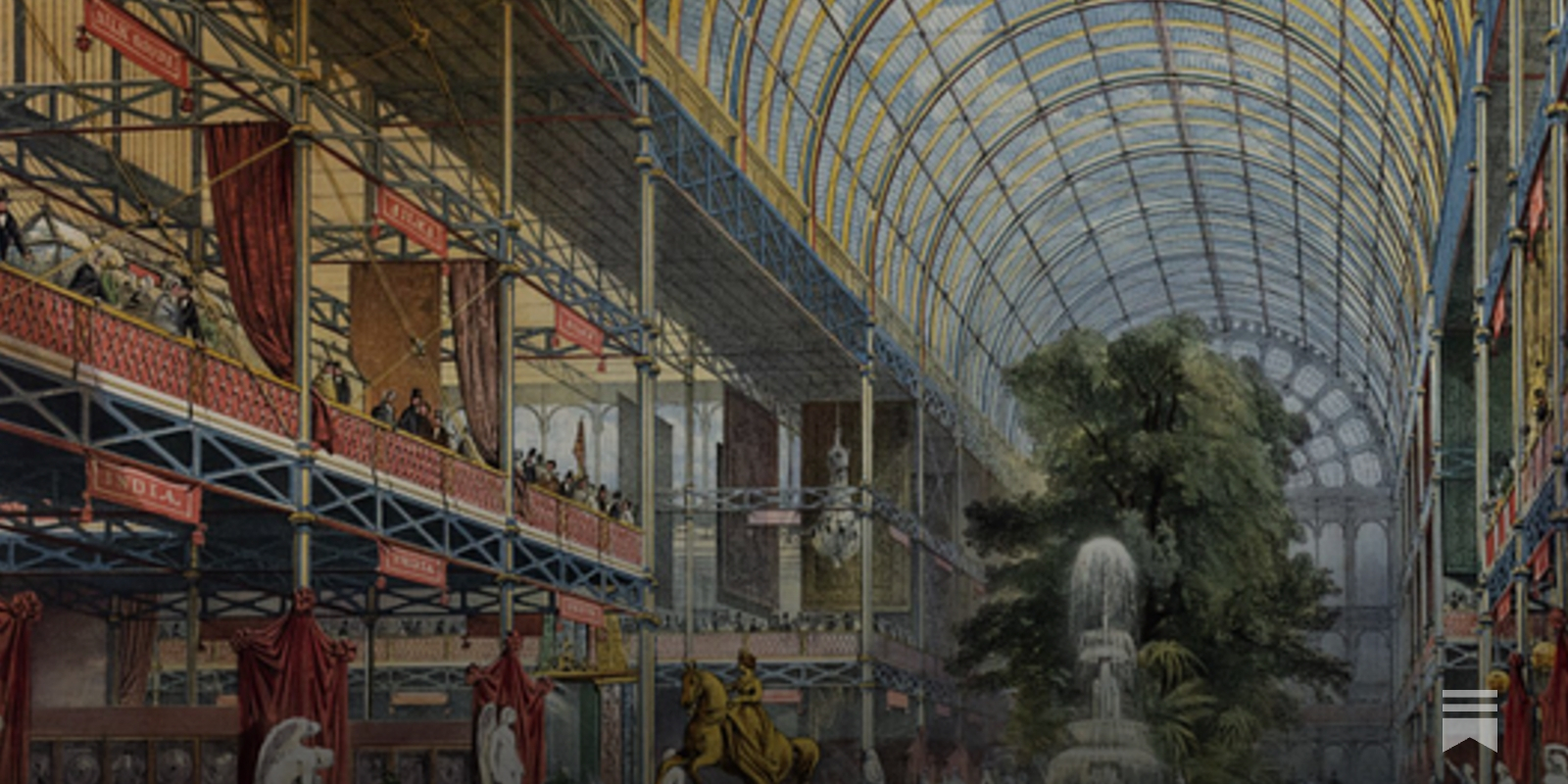
Age of Invention: The Industry of All Nations
The spirit of the nineteenth-century exhibitions of industry, and how we might organise a Great Exhibition for the modern day.
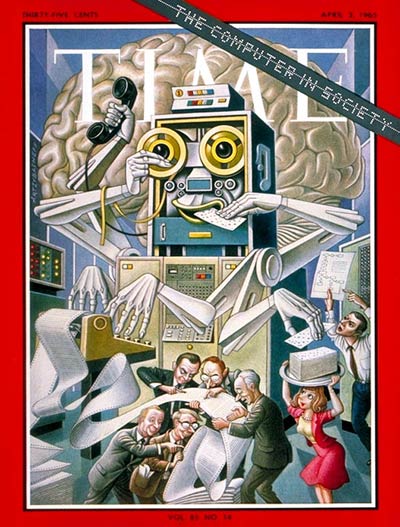
TIME Magazine Cover: Computer in Society - Apr. 2, 1965
TIME Magazine Cover: Computer in Society
mai ishikawa sutton
My work lies at the intersection of technology and the solidarity economy. I’m passionate about strengthening the digital commons, in which people control and steward communication technologies as collective goods.
Technopoly: The Surrender of Culture to Technology
A witty, often terrifying that chronicles our transform…

Electric Vehicles | The Paper Pilot
The Paper Pilot's digital garden of thoughts on philosophy, politics, and sociology
Technology and Ideology: The Case of the Telegraph
In one of the most famous paragraphs of our most famous autobiography, Henry Adams located the precise moment when “eighteenth century troglodytic Boston” joined industrial America: “the opening of the Boston and Albany Railroad; the appearance of the first Cunard Steamers in the bay; and the telegraphic messages which carried from Baltimore to Washington the news that Henry Clay and James K. Polk were nominated for the presidency. This was May, 1844.”