


Nikole Hannah-Jones's reflection on her daughter’s public school education sparks a larger debate about Black parents, opportunity and community.
In Fighting for Every Black Child, Did I Betray My Own?
A decade ago, I made a decision about my daughter’s education that I hoped would challenge New York City’s separate and unequal school system. Now 16, she thinks I made the wrong choice.

In Fighting for Every Black Child, Did I Betray My Own?
A decade ago, I made a decision about my daughter’s education that I hoped would challenge New York City’s separate and unequal school system. Now 16, she thinks I made the wrong choice.
Academia: Thoughtfulness With--and Without--Writing
Thursday’s Child Has Far To Go

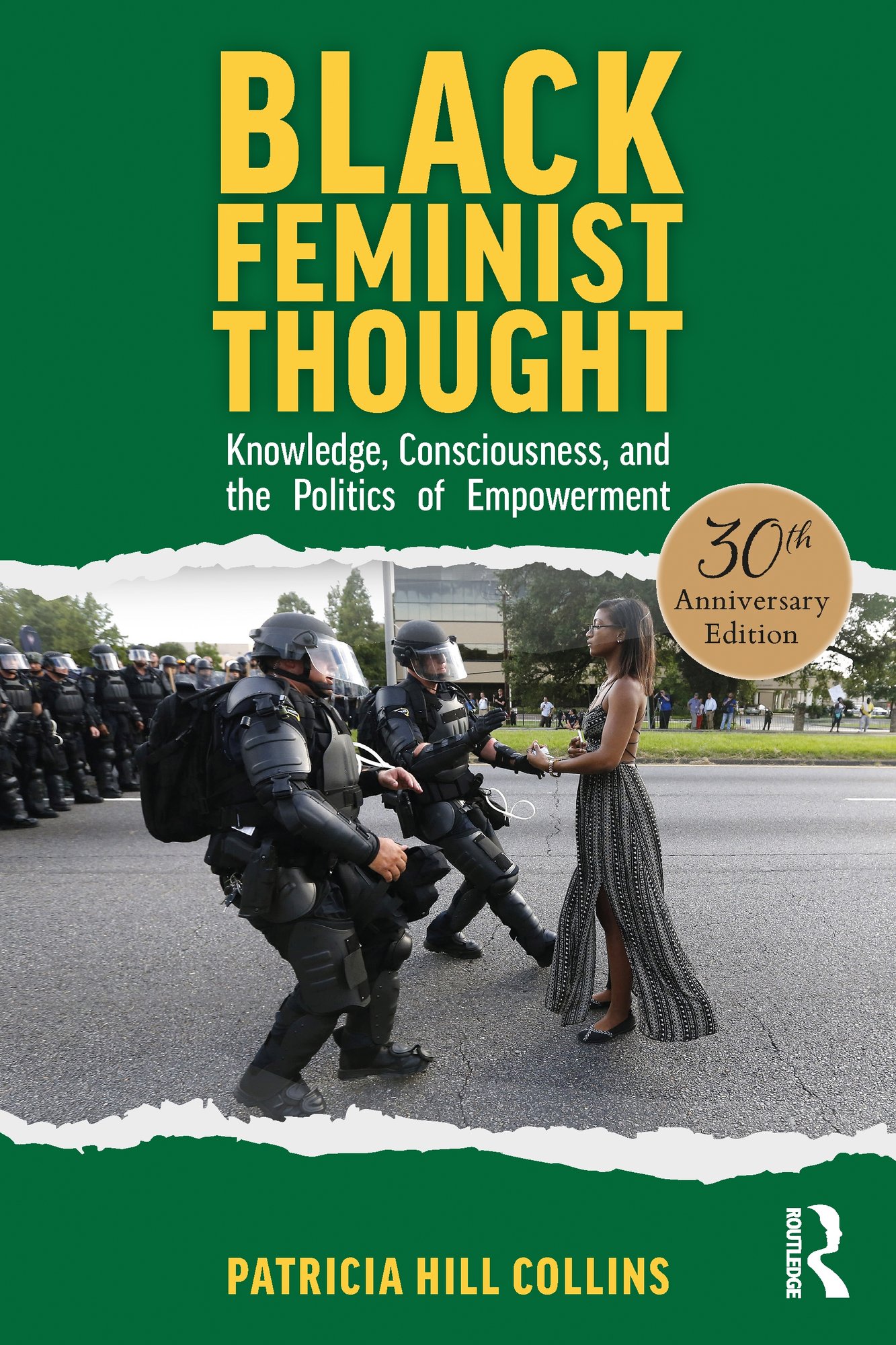
Black Feminist Thought, 30th Anniversary Edition: Knowledge, Consciousness, and the Politics of Empowerment
Knowledge, Consciousness, and the Politics of Empowerment

Eyes on the Prize - Chicago Reader
Over more than two decades, Haki and Safisha Madhubuti have proved that African-centered education can amount to more than a black version of history. It can also be a springboard to a bright future.


Take Your Place: Rhetorical Healing and Black Womanhood in Tyler Perry’s Films
The unparalleled commercial sucessess that gospel-playwright-turned-screenwriter Tyler Perry has attained through converting his stage plays into films that depict black women overcoming personal crises raises questions about the intent behind his seemingly feminist-inspired representations of black womanhood. Through an analysis of the rhetoric of healing in Perry’s first two films, this essay reveals one of the suppressive pedagogical functions of Perry’s representation of black womanhood. Rhetorics of healing are a series of persuasive messages, performances, and literacy acts that writers deploy in order to convince readers that redressing or preventing crises requires them to follow the curriculum for ideological, communicative, and behavioral transformation that the writer considers essential to wellness. In Diary of a Mad Black Woman and Madea’s Family Reunion, Perry’s representation of rhetorical healing constructs black Christian women as students who must learn prescribed attitudes and behaviors to achieve, or remain in, states of wellness, and these lessons reinforce conservative gender ideologies and reify patriarchal constructions of the family and home. Given black women’s historically tenuous relationships with representations of themselves and their families in mainstream film, and given the ways in which their labor in the home is simultaneously desired and exploited, the popularity of Perry’s films does not suggest that his representations of healing foster black women’s self-empowerment. Rather, his popularity points to a moment where black women’s pain is a commodity and their instructive journeys to wellness are an exploited site where writers can carry out their own agendas.

Anarchism and Education
Judith Suissa Anarchism and Education A Philosophical Perspective 2006

What "Parents' Rights" REALLY Means
Parent Dictated Education | The Paper Pilot
The Paper Pilot's digital garden of thoughts on philosophy, politics, and sociology
Toward an Anti-Racist Music Education: A Critical Pedagogy of Popular Music Teacher Education
In this article, we propose a framework for a critical pedagogy of popular music for teacher education to better prepare music teachers to enact anti-racist praxis within their classrooms. Although a growing body of literature in music education addresses issues of racism within the field, fewer scholars have studied this within teacher education. Drawing from critical pedagogy, our framework centers popular music as a means for music teacher educators to interrogate issues of identity and power and (re)contextualize pedagogy, considering the socio-political contexts and communities from which music practices originate. These processes facilitate reflection on how racisms shape taken-for-granted practices within music education by centering the socio-political contexts of popular music. Through our framework, music teacher educators could prompt pre-service music educators to consider the multiple racialized epistemologies of musical value students and teachers bring to the classroom, working toward the possibility of enacting a multicentric approach to music education.

KFF/The Washington Post Survey of Parents: Polling Insights on the MAHA Movement | KFF
These findings from the KFF/Washington Post Survey of Parents shed light on parents who support the Make America Healthy Again movement, including the issues they see as top concerns for their children's wellbeing and their attitudes when it comes to vaccines and government regulations on food.
NYT Misses What’s True and Important About an Anti-Trans School Resolution
Like most New York Times articles about trans politics that FAIR has analyzed, the piece marginalized the voices of those most impacted.

I've spent a lot of time inside classrooms of very poor schools, including working with well-resourced parents like @nhannahjones.bsky.social who opted for those schools out of social obligation. Her experience - and agony - is common and wrenching. She's just one of (very few) willing to be honest.

In Fighting for Every Black Child, Did I Betray My Own?
www.nytimes.com