


Los Angeles Mayor Karen Bass’s campaign slammed her rival, the progressive candidate Nithya Raman, quickly Sunday after Raman was projected to advance to a runoff election for the mayoral position.…
Los Angeles city attorney appears ousted in primary, while city controller glides toward victory
Los Angeles City Atty. Hydee Feldstein Soto all but conceded defeat in her reelection bid Wednesday. City Controller Kenneth Mejia holds a commanding lead over his opponent.

The Color of Power — Oakland Public Library
The Color of Power — Douzet, Frédérick — <p></p><p> <i>The Color of Power </i>is a fascinating examination of the changing politics of race in Oakland, California. Oakland has been at the forefront of California’s multicultural changes for decades. Since the 1960s, the city has been a shining example of a fruitful liberal black-and-white political partnership and the successful incorporation of black politicians into the political landscape. But over the past forty years, the balance of power has changed as a consequence of dramatic demographic trends and economic circumstances. The city’s formerly dominant biracial political machine has been challenged by the demands of new multiracial interests.</p><p></p><p>The city, once governed by a succession of black mayors and majority black city councils, must now accommodate rapidly growing Asian and Latino communities. While the black-led coalition still relies on white progressive support, this alliance has weakened due to a shift in the progressives’ agenda and the voting habits of the black community, the rise of a Hispanic-Asian coalition, and a strong demographic decline of the African American population. With similar demographic changes taking place across the nation, Oakland’s experience provides insight in to the multiracial future of other American cities.</p><p></p><p> <i>The Color of Power</i> investigates Oakland’s contemporary racial politics with a detailed study of conflicts over issues like education, elections and political representation, and crime. Trained as a journalist, a political scientist, and a geographer, the author provides a unique perspective supported by numerous maps and extensive interviews.</p><p>Winner of awards from the French Society of Geography and the French National Academy of Sciences</p><br/>Trained as a journalist, a political scientist, and a geographer, the author provides a unique perspective supported by numerous maps and extensive interviews.<p>Winner of awards from the French Society of Geography and the French National Academy of Sciences</p>
San Francisco Progressives Declare War on Affordable Housing
Opposition to high-density housing is the ultimate in misguided Nimbyism.

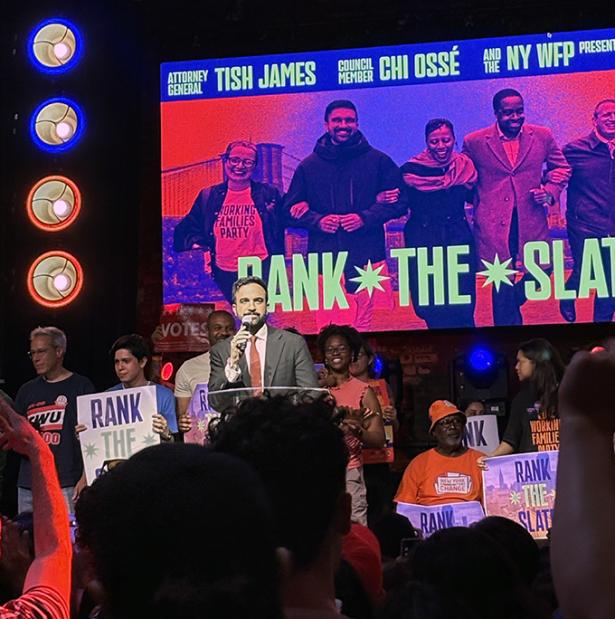
Zohran Mamdani’s Electrifying Upset in NYC:#RankTheSlate – “Don’t Rank Cuomo” | Portside
So much ink (literal and virtual) has been spilled on the electrifying upset in the NYC mayoral primary race. Zohran Mamdani wins and Andrew Cuomo, the former disgraced NY governor, had to concede on election night. Every media outlet has weighed in from NY Times, to every substack, and every celebrity who supported Mamdani. This is not an analysis of Zohran’s mighty win but just a few observations from a New York City resident and more precisely someone living in Central Harlem.
Thank you for supporting Keisha Lance Bottoms for Governor!
Keisha is ready to roll up her sleeves and get to work to deliver for Georgia. Pitch in today!

beehiiv's CEO backs a MAGA candidate but don't pack your bags just yet.
Tyler Denk, CEO of beehiiv, endorsed MAGA candidate Spencer Pratt in the LA mayor race on Instagram. We knew this was coming. But it's not anything like what's happening at Substack.

Nationals 'fighting' to win Bendigo as Jacinta Allan exits politics
Nationals members say they are "fighting very hard" to win Bendigo as former Victorian premier Jacinta Allan leaves politics.
Arizona’s Democratic Governor Set to Pick a Republican Running Mate
Gov. Katie Hobbs, locked in a competitive re-election battle, plans to tap a moderate former mayor of Mesa, Ariz., John Giles, to serve as her lieutenant governor if she wins in November.

Has Olivia Chow Been an Effective Mayor? | The Local
I followed Olivia Chow over a summer of announcements and events to try to understand how she's fared as a leader. I came back with a more fundamental question about what it means to be mayor of Toronto when real power lies elsewhere.

Trump-backed Mike Lindell loses primary for Minnesota governor to Lisa Demuth
Lindell had President Trump's endorsement but he lost to Lisa Demuth, the speaker of the state house. She'll face Democratic Sen. Amy Klobuchar in the fall for governor.

Brady Rogers
I was born in Williams Lake and raised in Kelowna since I was 10. These are the streets I biked every day, the cars I threw crab apples at (sorry), and the parks I played in. Seeing this city grow has been cool, but with growth has come a whole new spectrum of challenges. Running for council is the last thing I saw myself doing this year. I don’t like meetings, I don’t like having to be certain places at certain times, and I’m allergic to stuffy offices. But unfortunately, I happen to like Kelowna, and think I can help do some good.
Who is Natalie Harp? Trump's aide explained
Trump's executive assistant is drawing fresh attention after remarks by Democratic Sen. Jon Ossoff during a Georgia rally.

SEE IT: Hasan Piker PRESSED by MS NOW in FIERY interview
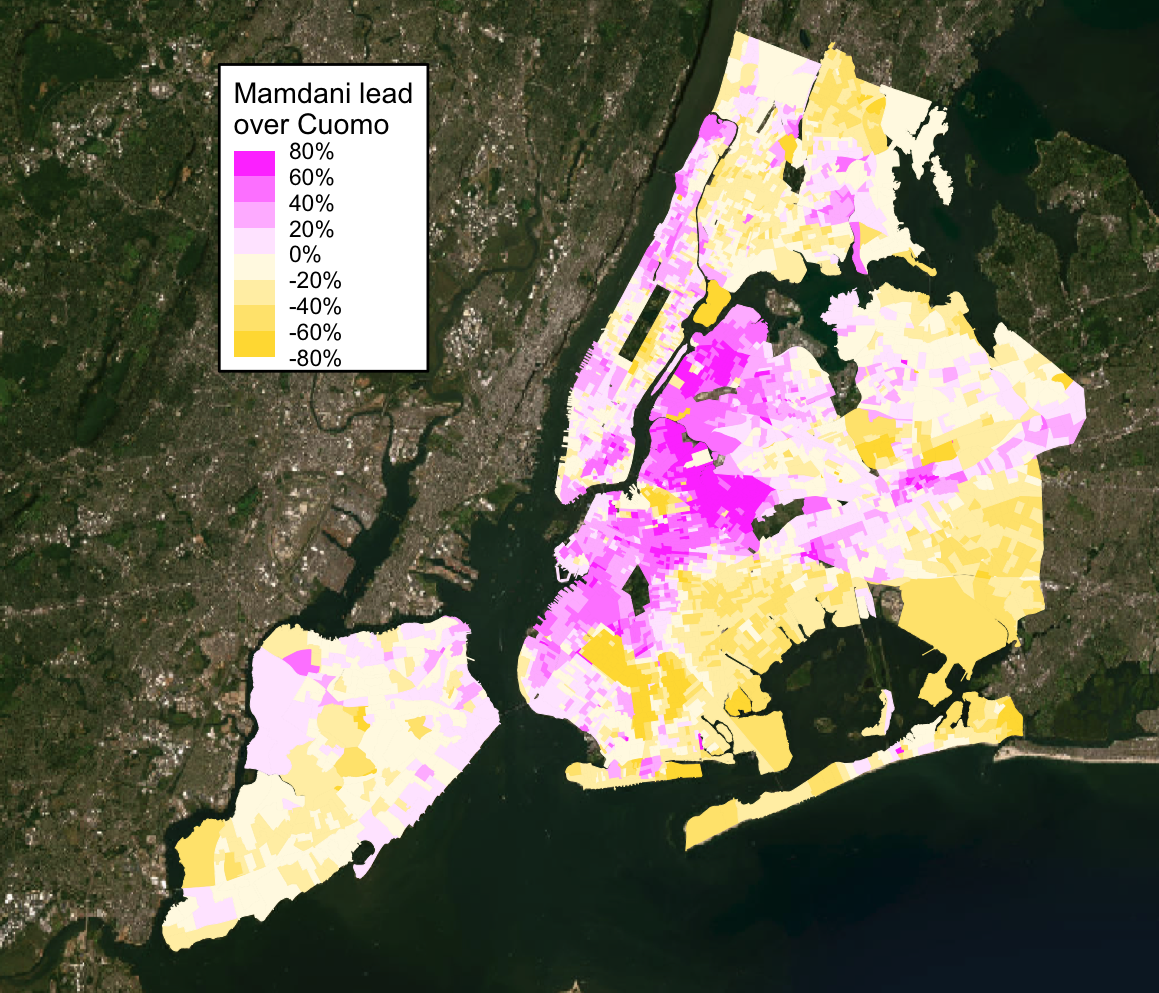
Who voted for Zohran Mamdani?
Zohram Mamdani’s triumph over Andrew Cuomo in the New York City Democratic primary signals a shift towards the progressive wing of the party. Mamdani excelled among younger, Hispanic, and Asi…
Michigan Senate debate: Fact-checks of El-Sayed, Rogers
Abdul El-Sayed, the Democratic nominee for Senate in Michigan, and his Republican opponent Mike Rogers, a former U.S. House representative, met for the first time in an Oct. 8 debate, with each candidate trying to drag down the other through a series of personal attacks that have become the trademark of their nasty campaign. In […]

Photo by @nicolehester.bsky.social for The Tennesseean tennessean.com/picture-gallery/news/politics…

singlecatlady23.bsky.social
The Sargent at Arms blocks Representative Justin Pearson from Memphis from entering a committee meeting about redrawing the map specifically for the district he represents.
