Profiting from wars abroad, too, has an expiration date and soon will become impossible
Weirding Diary: 8
Elections in India and EU, and the US-China trade war, have sparked a fresh round of prognostications in my feeds, on the expected length of the global…

Exocapitalism: economies with absolutely no limits
There is a touch of destiny with this one. We have real…

Imperialist appropriation in the world economy: Drain from the global South through unequal exchange, 1990–2015
Unequal exchange theory posits that economic growth in the “advanced economies” of the global North relies on a large net appropriation of resources and labour from the global South, extracted through price differentials in international trade. Past attempts to estimate the scale and value of this drain have faced a number of conceptual and empirical limitations, and have been unable to capture the upstream resources and labour embodied in traded goods. Here we use environmental input-output data and footprint analysis to quantify the physical scale of net appropriation from the South in terms of embodied resources and labour over the period 1990 to 2015. We then represent the value of appropriated resources in terms of prevailing market prices. Our results show that in 2015 the North net appropriated from the South 12 billion tons of embodied raw material equivalents, 822 million hectares of embodied land, 21 exajoules of embodied energy, and 188 million person-years of embodied labour, worth $10.8 trillion in Northern prices – enough to end extreme poverty 70 times over. Over the whole period, drain from the South totalled $242 trillion (constant 2010 USD). This drain represents a significant windfall for the global North, equivalent to a quarter of Northern GDP. For comparison, we also report drain in global average prices. Using this method, we find that the South’s losses due to unequal exchange outstrip their total aid receipts over the period by a factor of 30. Our analysis confirms that unequal exchange is a significant driver of global inequality, uneven development, and ecological breakdown.
The Weaponized World Economy
When Washington announced a “framework deal” with China in June, it marked a silent shifting of gears in the global political economy. This was not the beginning of U.S. President Donald Trump’s imagined epoch of “liberation” under unilateral American greatness or a return to the Biden administration’s dream of managed great-power rivalry. Instead, it was the true opening of the age of weaponized interdependence, in which the United States is discovering what it is like to have others do unto it as it has eagerly done unto others.

We need an international alliance against the US and its tech industry
The United States must face consequences for economic warfare

The Rise and Fall of Economic Statecraft
Overreach and incoherence hobble America’s most powerful weapon.

Strategic interdependence is rewiring the global economy
It is no longer sufficient for the US-China trade relationship to be driven solely by cost and efficiency

Book: The Face of Imperialism — The Michael Parenti Political Archive
In the last half-century we have witnessed a dramatic expansion of American corporate power into every corner of the world, accompanied by an equally awesome growth in U.S. military power. These phenomena are often treated as independent developments. Here, Michael Parenti brings them together in a sharp critique aimed as much at errant liberals and certain Marxists as at the dominant political actors who have perpetrated the imperial lie.

The demise of the nation state
The long read: After decades of globalisation, our political system has become obsolete – and spasms of resurgent nationalism are a sign of its irreversible decline

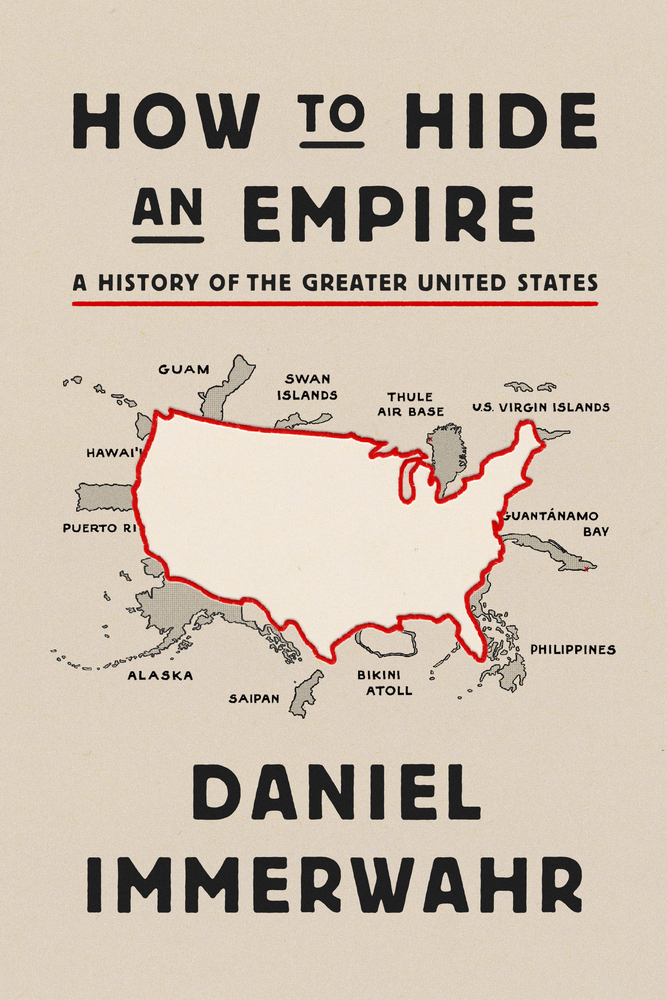
How to Hide an Empire: A History of the Greater United …
A pathbreaking history of the United States' overseas p…
The Decline and Fall of the American Empire
Even if you don’t think it’s likely, it’s always best to be prepared.

010 - Greg Stoker on Iran, U.S. Imperialism, and Why the Wars Never Stop
Valuing What Counts: Framework to Progress Beyond Gross Domestic Product: Our Common Agenda Policy Brief 4
What Else Matters?
Here’s what happened to a bunch of big economies over the last 30 years…
interfluidity » The great game of global public goods provision
War is bad. Excuses should not be made for it. All sides should work to end this and every war as quickly as possible and shift to modes of bargaining and competition that are not profoundly destructive.
America's been arguing over trade for more than 250 years
As the United States marks the 250th anniversary of declaring its independence from Britain, Americans continue a tradition begun even longer ago: debating trade and tariffs. In recent years, disagreements over the US role in the world economy have grown particularly intense amid rising geopolitical tensions. A brief look at history offers an opportunity to reflect on the importance of international trade to the US economy over time.