

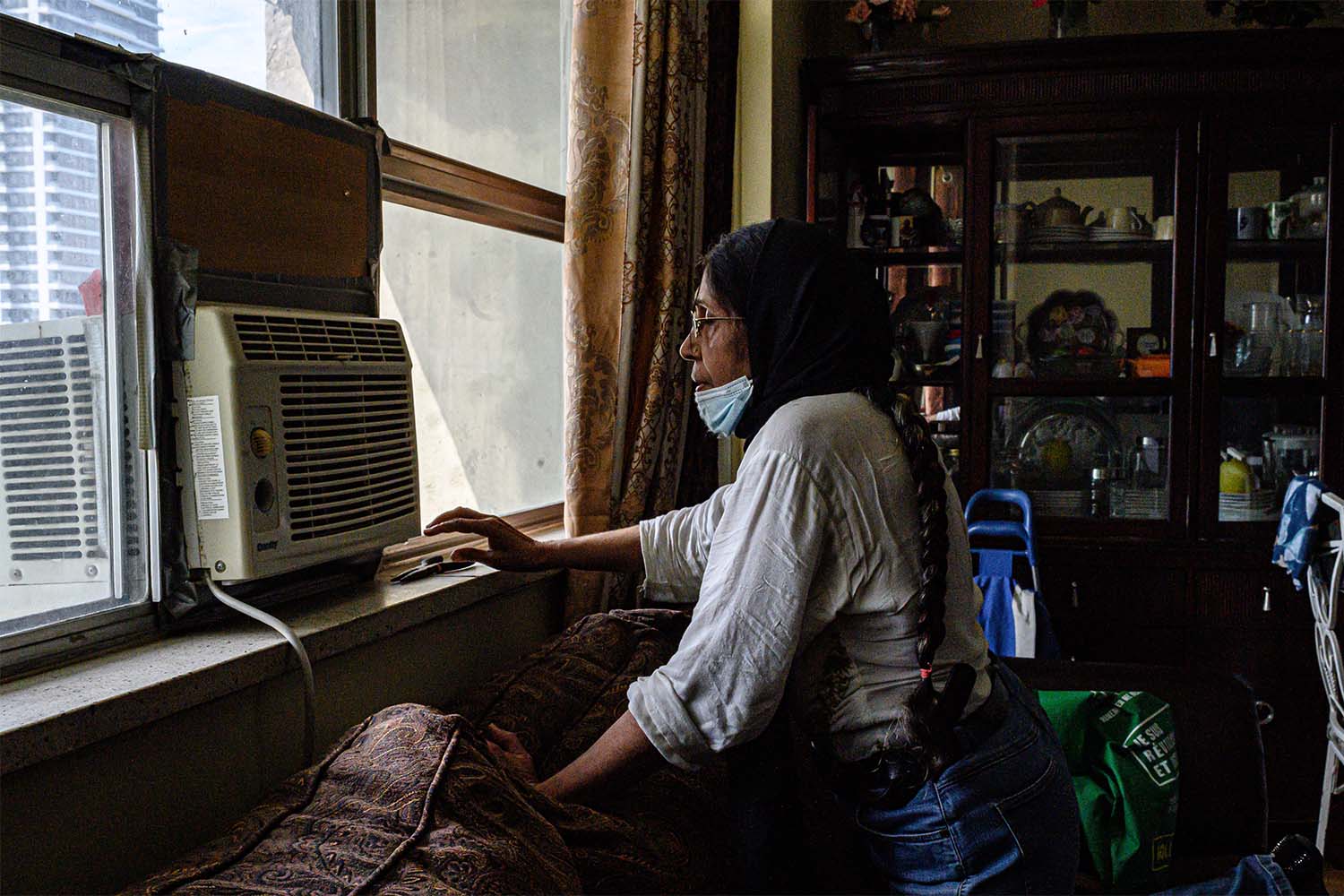
Climate change causes heat waves, but the city’s politics, policies, and design determine who suffers most.
Toronto seniors are feeling the heat | The Narwhal
This won’t be Ontario’s last hot summer, but many older adults and seniors still lack proper cooling spaces
We’re the mayors of Paris, Milan and Phoenix. The heat crisis has us all facing the same question | Emmanuel Grégoire, Giuseppe Sala and Kate Gallego
Our three cities are learning from each other about how to protect residents. These climate policies are also public health measures

Some Ontario students can’t escape extreme heat | The Narwhal
As the school year begins, some students in Peel Region are feeling the impacts of climate change in the classroom

Future warming events will outdo the extreme heat waves of the recent past, new study finds
The extreme heat waves we have seen over the last few years may only serve as a preview of what is to come as a result of climate change. A new study led by researcher Philipp Aglas-Leitner from Freie ...

Fact-check: Is air conditioning making cities hotter?
A study found that waste heat generated by a city’s worth of air conditioners during a heatwave can raise the outside temperature by more than 2 degrees Celsius.

Re:Permissioning the City — Unlocking cities’ growing underutilised spatial assets for an emergent…
In recent years, various macro-level shifts, including public health crises, demographic changes, and climate risks, have had cascading…

A grim report about climate change in Ontario was kept quiet for 8 months | CBC News
A new report commissioned by Premier Doug Ford’s government warns that climate change poses high risks to Ontario, with impacts on everything from food production to infrastructure to businesses.

Heat-related urban mortality attributable to human-induced climate change in Europe in summer 2026
The summer of 2026 was characterised by a series of extreme heatwaves across Western Europe, with both monthly and annual temperature records broken repeatedly across many countries from May onwards. Several government agencies took the unprecedented step of issuing near-real-time estimates of the mortality associated with the most intense heat events, reflecting the severity of the threat to public health. In this study we combine probabilistic climate attribution with city- and age-specific temperature–mortality relationships to estimate heat-related mortality in 854 European cities during the summer months (June-August) and compare with counterfactual climate conditions representing a world without human-caused warming. We estimate 50,391 heat-related excess deaths across the 854 cities during the summer, with around two thirds of these attributable to anthropogenic climate change. These results highlight the threat from human-caused warming and the need for rapid emissions reductions alongside preparation and adaptation measures.
Cycling Toward a Cooler Toronto | The Power of Bike Lanes
Botanical gardens can cool city air by an average of 5 °C
Temperatures around the world are on the rise, with 2023 recently confirmed as the hottest since records began. A new study has found that bringing nature into cities could help lower temperatures during heatwaves.

As the Planet Warms, Canada Faces an Influx of Climate Refugees
Advocates want the government to allow more climate-related immigration and to consider those migrants “protected persons.”
Majority of US voters link extreme weather to climate crisis, study finds
Top Democrat says findings show public ‘way ahead of the politicians’ as Trump dismisses global heating as ‘hoax’

District cooling could be the solution we need to tackle extreme heat | New Scientist
Networks of pipes carrying chilled water have proven to be an efficient way to cool hospitals and universities. Now, they are expanding into cities as heatwaves increase in the US and Europe

🌡️🔥Climate change isn't a distant threat—it's a public health crisis now. Our study shows heat-related deaths in many cities could surpass annual COVID-19 deaths in just 5–10 years at 3°C warming. Urgent action is needed! 👉 rdcu.be/d5rnL @natureportfolio.bsky.social #scientificreports

Rapid climate action is needed: comparing heat vs. COVID-19-related mortality
rdcu.be