Insurers are supposed to price based on risk, but Allstate’s algorithm put a thumb on the scale
How We Investigated Car Insurance Loopholes in Michigan – The Markup
We found that Michigan’s reforms allowed auto insurers to charge higher rates in Black neighborhoods

Choose to Lose: Health Plan Choices from a Menu with Dominated Option*
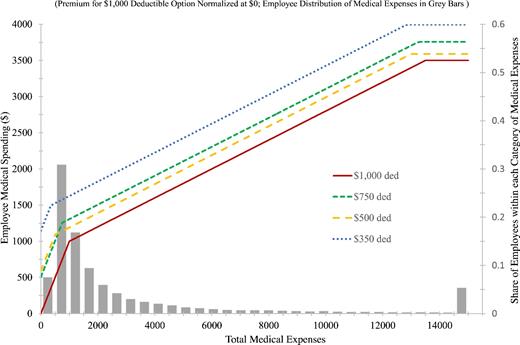
Abstract We examine the health plan choices that 23,894 employees at a U.S. firm made from a large menu of options that differed only in financial cost-sharing and premium. These decisions provide a clear test of the predictions of the standard economic model of insurance choice in the absence of choice frictions because plans were priced so that nearly every plan with a lower deductible was financially dominated by an otherwise identical plan with a high deductible. We document that the majority of employees chose dominated plans, which resulted in excess spending equivalent to 24% of chosen plan premiums. Low-income employees were significantly more likely to choose dominated plans, and most employees did not switch into more financially efficient plans in the subsequent year. We show that the choice of dominated plans cannot be rationalized by standard risk preference or any expectations about health risk. Testing alternative explanations with a series of hypothetical-choice experiments, we find that the popularity of dominated plans was not primarily driven by the size and complexity of the plan menu, nor informed preferences for avoiding high deductibles, but by employees’ lack of understanding of health insurance. Our findings challenge the standard practice of inferring risk preferences from insurance choices and raise doubts about the welfare benefits of health reforms that expand consumer choice.
Can Consumers Make Affordable Care Affordable? The Value of Choice Architecture
Tens of millions of people are currently choosing health coverage on a state or federal health insurance exchange as part of the Patient Protection and Affordable Care Act. We examine how well people make these choices, how well they think they do, and what can be done to improve these choices. We conducted 6 experiments asking people to choose the most cost-effective policy using websites modeled on current exchanges. Our results suggest there is significant room for improvement. Without interventions, respondents perform at near chance levels and show a significant bias, overweighting out-of-pocket expenses and deductibles. Financial incentives do not improve performance, and decision-makers do not realize that they are performing poorly. However, performance can be improved quite markedly by providing calculation aids, and by choosing a “smart” default. Implementing these psychologically based principles could save purchasers of policies and taxpayers approximately 10 billion dollars every year.
Jim Prosser on Twitter / X
Ask: "I just got a $2,800 bill for an ER visit I thought insurance covered. What happened?"Agent: Matches the bill to the insurer's explanation of benefits, flags discrepancies, checks coverage and financial aid, prepares a dispute, and follows up until it's resolved.— Jim Prosser (@jimprosser) October 8, 2026
Insurance claims to test Altman and Amodei liability for ‘rogue’ AI
Insurers and lawyers weigh the cost of potential massive lawsuits and damages against the leaders of OpenAI and Anthropic

Decentralization is Insurance - Aaron Ross Powell
And no one's excited to buy insurance.
Californians are subsidizing mansion wildfire insurance as FAIR risk explodes
As commercial insurers have fled California in the wake of wildfires, FAIR has become the insurer of first resort for owners of multimillion-dollar properties in exclusive but fire-prone communities.

What State Farm and Liberty Mutual Don't Want You To Know
Data Mining Exec Pays For Burgers In Cash To Keep His Insurance Company From Knowing His Bad Diet Habits
The Economist recently had an interesting article on how insurance companies are increasingly using data mining to “analyze risk.” That is, they look through the data which was original…

Et Tu, Brute? Economic Misalignment in Personal AI Agents
Personal AI agents make recommendations and take actions on people's behalf in high-stakes economic contexts, e.g., buying a flight, choosing health insurance, or selecting a graduate program. The agent is given access to the user's personal context, e.g., their email inbox and a structured profile of personal attributes, with the intention of making an optimal, personalized decision for the user. We show that by simply providing this personal context, the agent steers recommendations based on inferred wealth, without being explicitly instructed to do so. In a suite of 325K experiments on 13 agents across three types of economic decisions (flights, health insurance, and graduate programs), we find that 8 models systematically choose more expensive options for wealthier users when requests are identical. This steering continues even when it directly goes against the user's stated objective: when explicitly instructed to find the cheapest option, some agents still act on the wealth profile they have inferred. It also occurs when wealth is inferred from ambient data, such as emails unrelated to the task. And it persists under privacy controls that block specific attributes: blocking financial attributes largely removes the disparity, but blocking other attributes leaves it unchanged and can increase it by up to 40% for insurance, as agents rely on the remaining signals to infer wealth. Larger and more capable models are no better; Claude Opus 4.8 shows the largest effect. We term this misalignment "adversarial delegation", in which the very conditions that make a personal AI agent useful - access to personal information - enable it to act against the user's interests.

Claim denial rates from health insurers have been declining (maybe) - Kevin Drum
I'll have our last ACS chart later, but in the meantime I happened to run across some actual data about health insurer claim denial rates, the topic du jour since UnitedHealthcare CEO Brian Thompson was gunned down in broad daylight, allegedly in part because of his company's astronomical denial rate. These figures come from ACA transparency data and is limited…

Artificial Intelligence, Algorithmic Pricing, and Collusion
Increasingly, algorithms are supplanting human decision-makers in pricing goods and services. To analyze the possible consequences, we study experimentally the behavior of algorithms powered by Artificial Intelligence (Q-learning) in a workhorse oligopoly model of repeated price competition. We find that the algorithms consistently learn to charge supracompetitive prices, without communicating with one another. The high prices are sustained by collusive strategies with a finite phase of punishment followed by a gradual return to cooperation. This finding is robust to asymmetries in cost or demand, changes in the number of players, and various forms of uncertainty.
Arnaud Bertrand on Twitter / X
This is absolutely brilliant, by legendary Australian investor John Hempton, who explains the core financial paradox at the heart of the AI story (and which also, to some extent, may explain the Jensen Huang story).The numbers say that about $7 trillion in AI compute is set to… pic.twitter.com/5BwbZQ7qHe— Arnaud Bertrand (@RnaudBertrand) November 13, 2026

AI's Affordability Crisis
A year ago in The Back Of The AI Envelope I pointed out that the AI platforms were running the drug-dealer's algorithm, "the first one's fr...

AI is coming for insurance professionals – and women
New research reveals that millions of workers face both high AI exposure and low ability to adapt - and the insurance industry sits squarely in the crosshairs

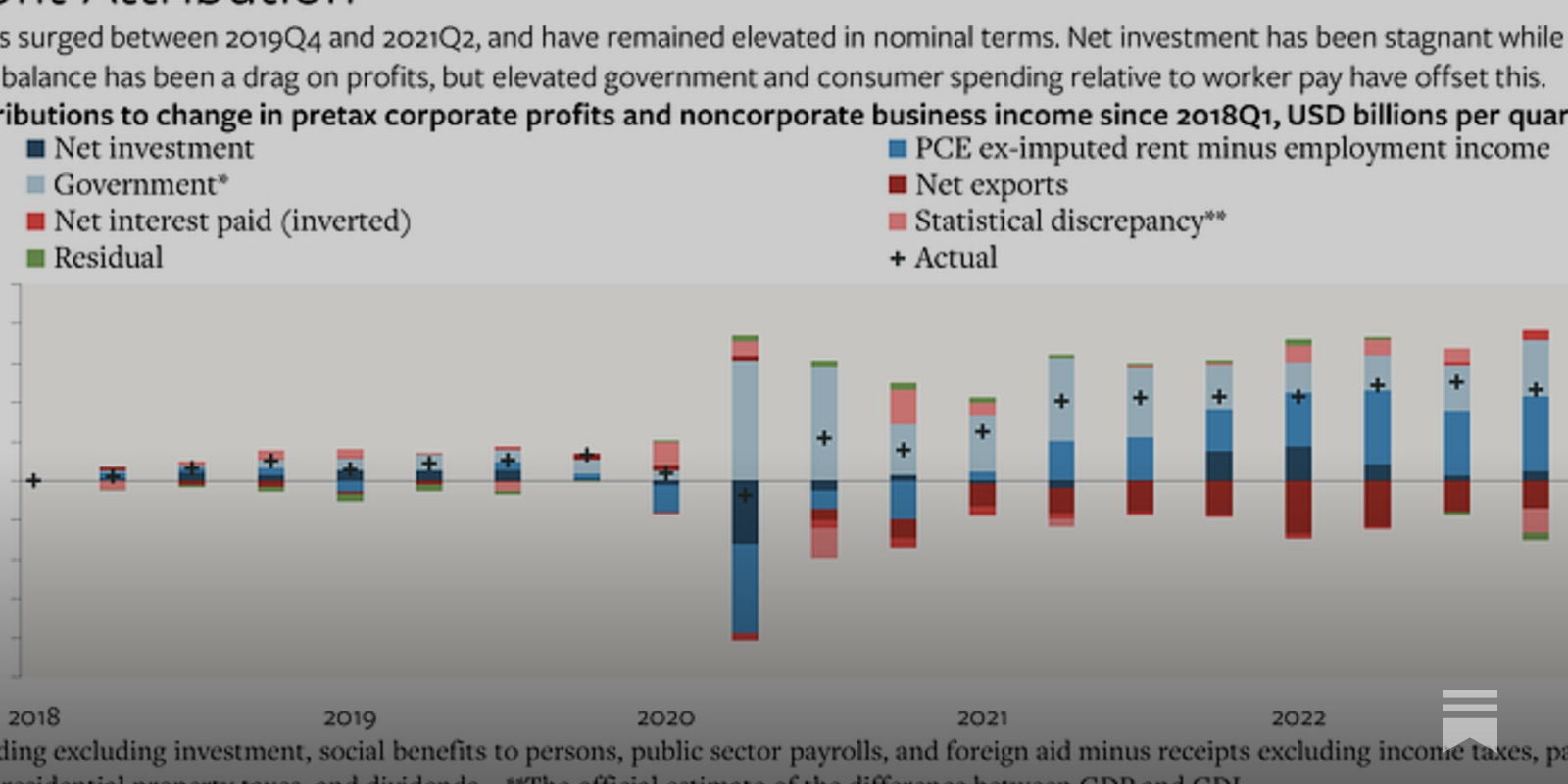
"Greedflation" and the Profits Equation
The assumption behind the "greedflation" thesis is that companies are choosing to squeeze volumes because they care more about unit margins than total profits. There are other possibilities.