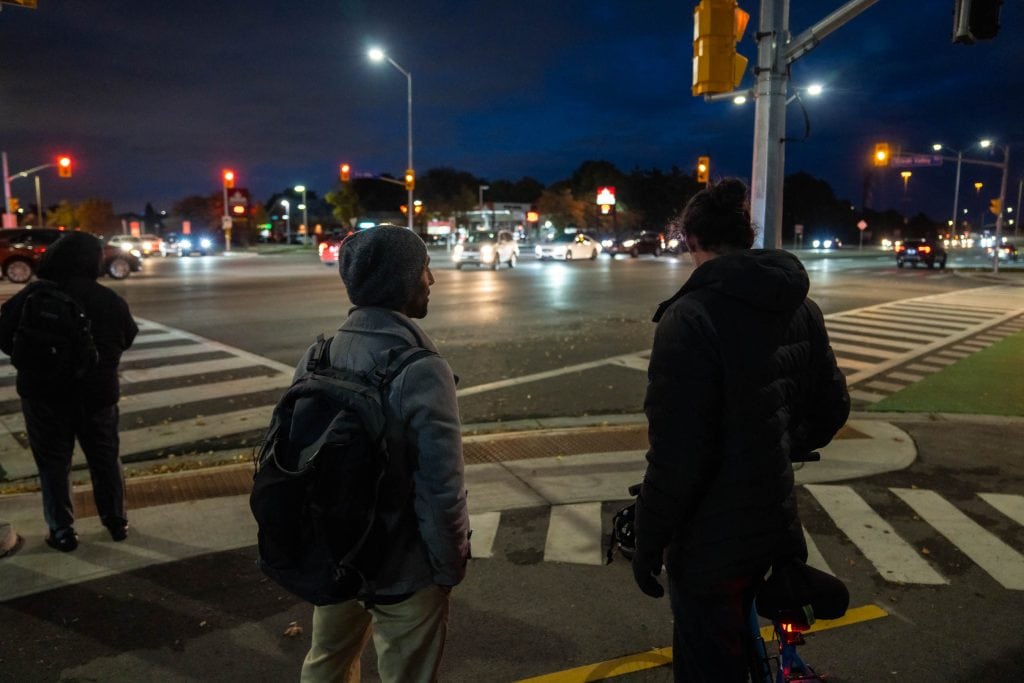
The Carney government is keeping its tax off at gas pumps to help with the cost of living, but critics call it a subsidy for the oil and gas industry that won’t help those who need it most
Alberta to pause provincial gasoline tax as of Oct. 1 | CBC News
Alberta Premier Danielle Smith says her government is axing its fuel tax for three months to help combat the cost at the pumps. Smith says starting Oct. 1, drivers will save 13 cents a litre on gasoline and diesel.

Prime Minister Carney announces the largest clean energy investment in North American history
Canada is starting from a position of strength. We have what the world wants.

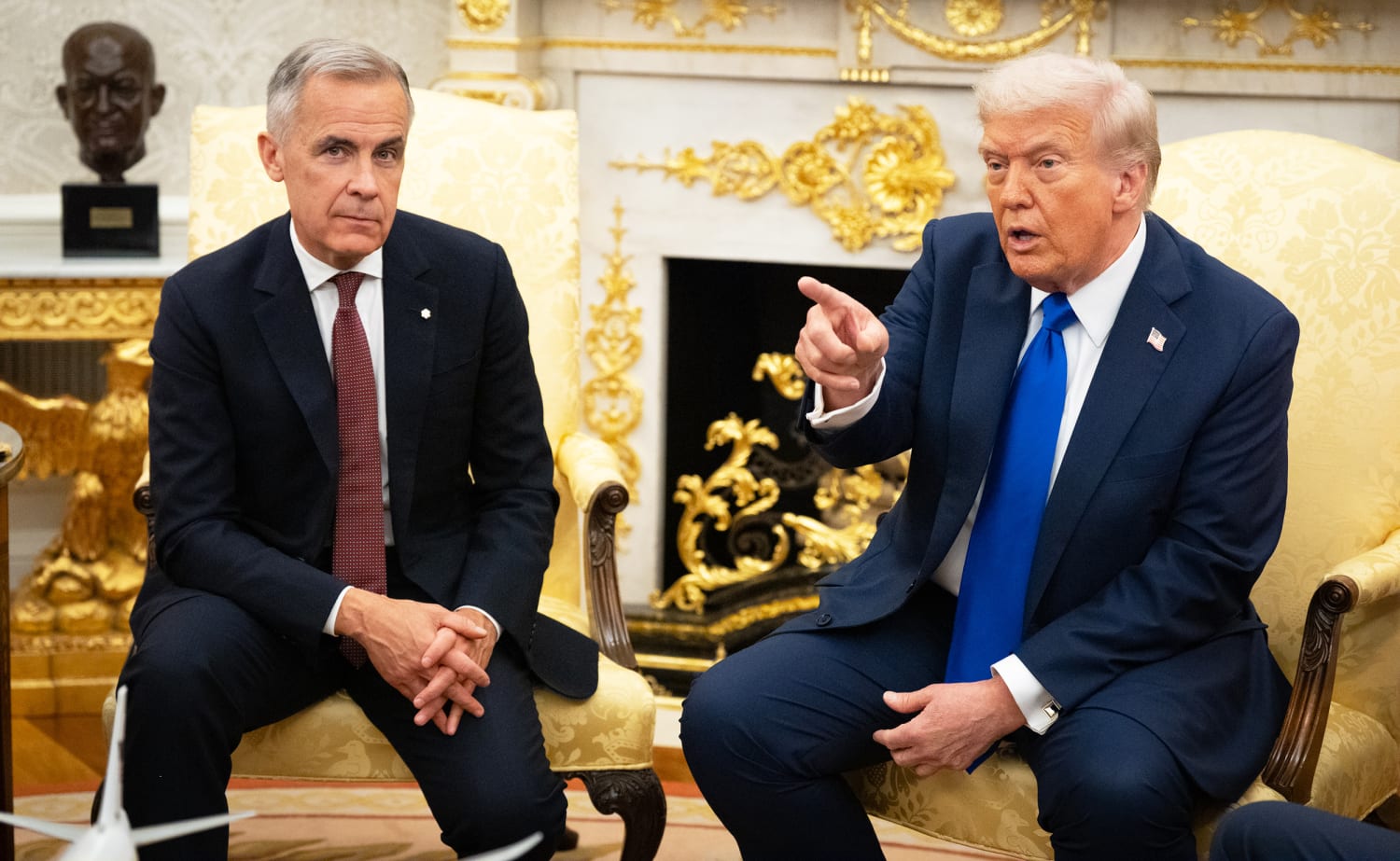
Canadian Prime Minister Mark Carney calls new U.S. tariffs ‘a miscalculation’ after trade talks collapse
The U.S. import taxes will apply to hockey sticks, building materials, liquors and certain kinds of clothing. Carney said “Canada will match those tariffs dollar for dollar.”
In Deep
The numbers are simply mind-blowing: up to £264 billion for a climate “solution” that will increase emissions. Has the government lost its mind?

Yeah, We're Going to Have to Tax the Middle Class
Carney government passes law allowing authorization of banned pesticides | CBC News
The federal government has brought in major changes to how pesticides are regulated in Canada, granting cabinet the power to authorize the use of pesticides — even ones that Health Canada has deemed unsafe.

Canada, the EU, and the Future of the ITAR Exemption
To be a Catalyst for Innovative Canadian Global Engagement

U.S. and Canada fall deeper into a trade war with new tariffs as talks collapse and blame is spread
President Donald Trump’s import taxes will hit about 5% of what Canada ships to the United States every year, including products ranging from hockey sticks to tongue depressors.
Shopify CEO endorses idea to give more votes to wealthy Canadians | CBC News
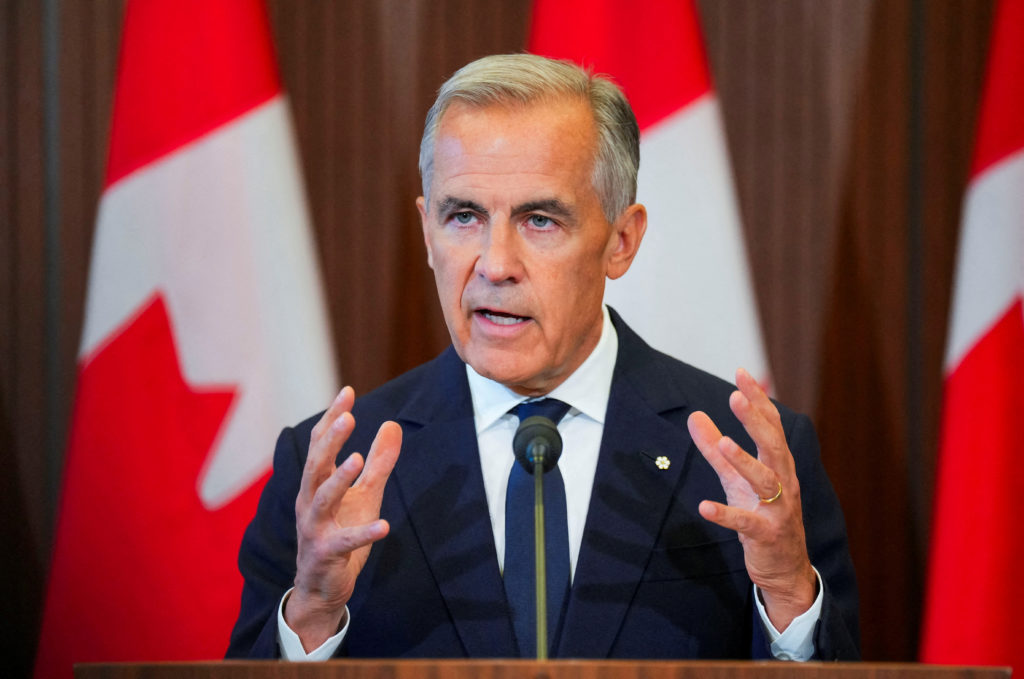
The billionaire CEO of one of Canada's largest companies has come under fire for endorsing stripping voting rights from some and giving more votes to the ultra wealthy. Shopify CEO Tobi Lütke replied positively to a post on X suggesting a system of "weighted voting proportional to the amount of income tax you pay," from no votes for people who don't pay income tax to five votes for anyone paying $500,000 or more.

Gander: The Social Media You Want, Built for Canada
427 votes, 81 comments. 372K subscribers in the BuyCanadian community. Welcome to r/BuyCanadian! Come on in and share your favorite hidden gems, major Canadian chains, and local goodies. Help fellow Canadians find Canadian alternatives to imported goods—and maybe discover something new yourself! This subreddit is about supporting Canadian businesses, not boycotting U.S. products or debating politics. We're here to highlight what Canada has to offer, not to argue about trade wars or nationalism. Check out our sidebar and guidelines to learn more.
Move fast and break kings
There is another policy response to tariffs, one that will substantially lower prices for Canadians, while incubating profitable, export-oriented Canadian tech firms, whose products can be sold by community-based small and medium enterprises, to the benefit of the Canadian news and culture industry, Canadian software firms, and Canadian consumers.

Shaping Preferences with Pigouvian Taxes
A Pigouvian tax is a tax that is imposed to correct an externality, which arises when a person engages in behavior that harms others without their consent. Pigouvian taxes are popular among academics—with prominent economists and legal scholars arguing for their imposition on myriad goods and activities that harm third parties, like carbon emissions and alcohol. Policymakers have recently been receptive to at least some of these arguments as evidenced by taxes imposed on or proposed for a variety of externality-generating goods, including guns, plastic bags, and sugary drinks.The conventional economic rationale for Pigouvian taxes assumes that they affect behavior by increasing the prices of taxed goods and not by altering people’s underlying preferences for them. For example, a carbon tax reduces driving by making gasoline more expensive, but it otherwise leaves people’s desire to drive unchanged. This conclusion follows from the standard assumption in economics that people’s tastes and preferences are fixed and determined exogenously to public policy.Contrary to standard analysis, I argue that Pigouvian taxes can in fact shape preferences and that policymakers should consider using them for that purpose. A carbon tax, for instance, would not only make driving more expensive, it might also modify preferences such that people develop a taste for alternative modes of transportation—making driving less desirable, even if we ignore the increase in gas prices.I make an original contribution to the literature on Pigouvian taxes by explaining in detail the psychological mechanisms through which these taxes can alter preferences. I also argue that once we relax the assumption of fixed preferences, the already strong case for Pigouvian taxes often becomes even more compelling. Specifically, preference endogeneity means that the loss in consumer utility resulting from Pigouvian taxes will often be smaller than standard analysis suggests. Moreover, malleable preferences dramatically expand the potential scope for Pigouvian taxes and enhance their impact on behavior through a social multiplier effect that can make taxes more effective in achieving public policy goals than scholars have traditionally assumed. I illustrate these points in a variety of policy-relevant contexts, including environmental law, gun control, and public health policy.
The great oil inflection
Who pays when petrol stops paying the refinery’s rent
GPT-5.5 may burn fewer tokens, but it always burns more cash
It’s not just gas prices skyrocketing. Frontier-model pricing keeps climbing too

CanadaGPT - Canadian Government Accountability & Transparency Platform
Track Canadian MPs, federal bills, parliamentary debates, lobbying activities, and government spending. Access comprehensive data on House of Commons proceedings, committee work, and political accountability with AI-powered insights.
Austerity and climate (in)action
In the wake of the 2008 global financial crisis, many governments implemented austerity policies aimed at reducing budget deficits through public spending cuts. This column examines the rollout of programme awarding grants for home energy efficiency upgrades in the UK examine the extent to which cuts to local government finances may have impacted efforts to promote climate action. The findings suggest that austerity, combined with poor digital skills, undermined local authorities’ efforts to effectively carry out a climate action policy that was centrally planned but locally administered.