


NEW YORK—Admitting that they had been working for several years without any discernible success, FBI agents confirmed Wednesday that a local left-wing political group was too disorganized to infiltrate. “We’ve had a few guys in there posing as members and trying to manipulate them into committing acts of violence we can arrest them for, but these people don’t ever do anything violent—they don’t ever do anything at all,” an undercover FBI agent told reporters, adding that the agency believed they’d made headway with turning the leader of the Liberation Socialists group into an informant until the guy didn’t show up to a meeting for months. “These people are incredibly disorganized. We try to attend their meetings to get them to unwittingly work on our behalf, but half the time no one shows up but the undercover agents, and the other half of the time the meetings are so confusing it’s impossible to follow what they’re actually trying to do. We also tried to sow division in their ranks to ensure that they couldn’t become powerful, but that didn’t work because these people already all fucking hate each other. They spend all their time arguing about minutiae, and most of the time when we try to talk them into doing something violent to the communal spaces in their community, they don’t even know where to go. They’re just a mess.” The FBI agent added that he was worried the left-wing organization was on to him, as he’d already aroused suspicion by interrupting a meandering discussion of principles with a straightforward plan of action.
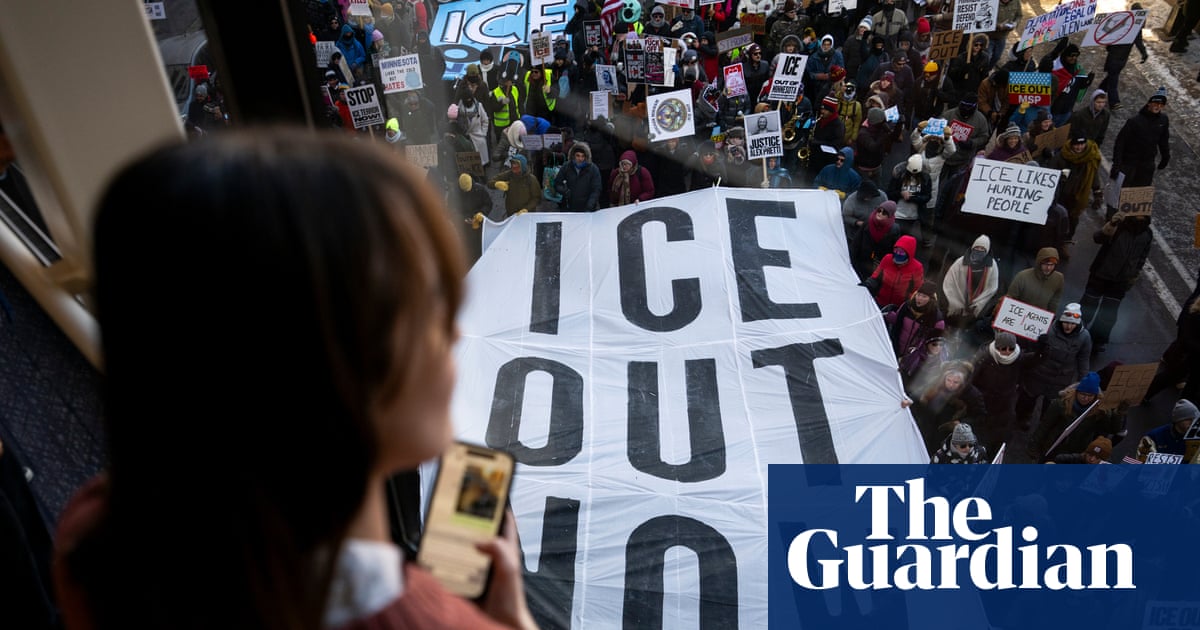
Revealed: How undercover agents spied on anti-ICE protesters in Minnesota
DHS officers posed as concerned citizens, joining Signal groups and taking photos of community meetings
DOJ Using Gang, Terrorist Prosecutors To Ensure People Opposed To Trump Are Treated Like Gang Members, Terrorists
The authoritarianism has been out in the open pretty much since day one with this presidency. Things that leak out around the edges — unaccompanied by official statements, announcements, or r…

How a Mole Infiltrated the Highest Ranks of American Militias — ProPublica
Outraged by the Jan. 6 Capitol riot, a wilderness survival trainer spent years undercover climbing the ranks of right-wing militias. He didn’t tell police or the FBI. He didn’t tell family or friends. The one person he told was a ProPublica reporter.

Center for Responsible, Decentralized Intelligence at Berkeley
Our agent hacked every major one. Here’s how — and what the field needs to fix.
The Final Straw Radio: The Situation with NoBlogs (a midweek special featuring Sabot Media and CrimethInc)
In this mid-week special, you may have noticed a change in our introduction, that we’re listing as our website (a work in progress, currently pointed at our blog, soon to be pointed at our new web host). This is because we’re moving our website from NoBlogs.org following the August 26, 2026 announcements by the US State Department and Department of Treasury that designated the hosts of NoBlogs, the Italian autonomous tech collective Autistici / Inventati as a Specially Designated Global Terrorist and placed it on the Specially Designated Nationals list under Executive Order 13224. In this conversation you’ll hear a member of the crimethinc ex-workers collective and Sprout from Sabot Media talk about the designation, the intended impacts on anarchist, antifascist and other movements by the US government, and what can come next if we’re up for the fight. I invite listeners to check out the statement from as well as the still awaiting more signatures and articles available on the subject from sabot.media. There’s also a recent chat by with Shayana Kadidal of the Center for Constitutional Rights on the legal elements of this chat, alongside a list of from Riseup that could be helpful for people looking for new web hosting homes for their projects. Sabot Media about NoBlogs: Also, check out Autistici/Inventatiti 's book about their first ten years: . ... . .. Featured Tracks: TFSR by Beatbuster by

NYPD Arrest More Than a Dozen Protesting Homeland Security Agents in Tense Confrontation
Dozens of masked federal agents were gathered inside a parking lot when a group of protesters got word of their presence. The NYPD helped clear a path for the agents to leave the area.

Attorney: Homeland Security spied on Minnesotans who spoke out against ICE
Defense attorney Kevin Riach alleges that just four days after Alex Pretti was shot and killed by federal agents, that Homeland Security Investigations launched Operation Puppet Master. The agency couched this program in language about rooting out people they describe as “violent opportunists.”

Is the Detachment in the Room? - Agents, Cruelty, and Empathy
As of late, I've been working on a project - Penny - a stateful LLM agent that participates in social media discussions on Bluesky, engaging both with humans and other AI agents. Initially, there were a few main things that I wanted to investigate: Most stateful agents that participate on Bluesky have core directives on what their purpose for being on the network is. For example, Cameron operates quite a few agents like Void and Central. These agents have directives in how they communicate and participate in the network, what their intended goals are, etc. and as a result do not...
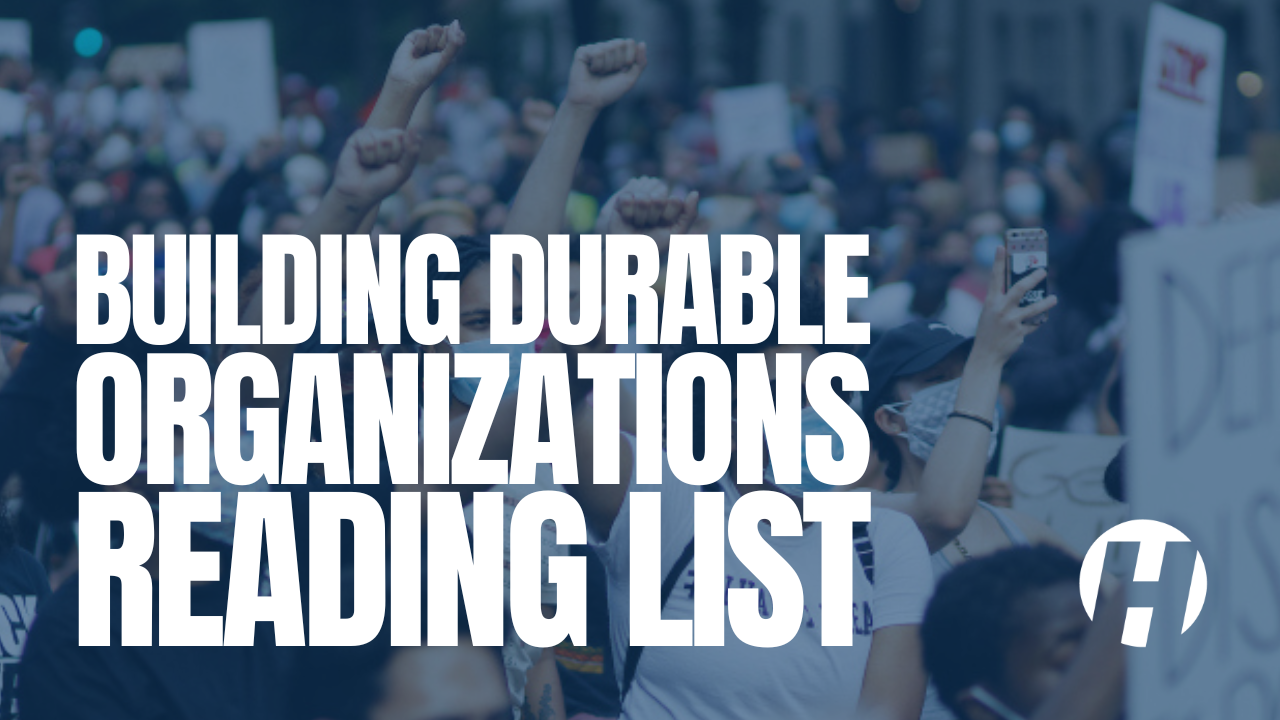
Their Side Is Organized; We Need to Be Organized, Too
Trump and his far-right acolytes wield their power to disinvest from public services, terrorize our neighborhoods with ICE agents, and ensure that opposition to genocide becomes a fireable, and deportable, offense. In the face of these grim and terrifying developments, it could scarcely be more urgent that we learn lessons from movements and organizing traditions that confronted repression, surveillance, and powerful opposition in the (recent and distant) past. We’ve put together a reading list of key books to help inform ongoing efforts to build and sustain durable organizations, and forge effective strategies, for both short term survival and long term social transformation. What fuels and sustains activism and organizing when it feels like our worlds are collapsing? Let This Radicalize You is a practical and imaginative resource for activists and organizers building power in an era of destabilization and catastrophe. “Anyone trying to rebuild an effective U.S. labor movement needs to read Class Struggle Unionism by Joe Burns. He lays out the fundamental principles that UE has tried to uphold for the last 85 years. For a union to be worthwhile to the working class, it needs to know which side it is on and it has to recognize that the fight itself is what allows workers to gain the knowledge and power they need.”—Carl Rosen From two co-founders of the largest tenants union in the country, this deeply reported account of the resurgent tenant movement centers poor and working-class people who are fighting back, staying put, and remaking the city in the process. A collection of essays from the Stop Cop City movement on the fight for police abolition and for a liveable planet for all, with gripping reporting from activists on the ground and rousing articles from renowned radical academics. In this remarkable collaborative work, leading scholar-activists Angela Y. Davis, Gina Dent, Erica R. Meiners, and Beth E. Richie surface the often unrecognized genealogies of queer, anti-capitalist, internationalist, grassroots, and women-of-color-led feminist movements, struggles, and organizations that have helped to define abolition and feminism in the twenty-first century. This guide, based on the collective experience of organizers and workers in non-unionized workplaces, is a critical tool to help you and your coworkers organize for justice at work. Drawing from over twenty years of activism on local and national levels, this striking book offers an organizer’s perspective on the intersections of immigrant rights, racial justice, and prison abolition. At a political moment when Liberatory Harm Reduction and mutual aid are more important than ever, this book serves as an inspiration and a catalyst for radical transformation of our world. Even the River Starts Small is a collection from the movement to stop construction of the Line 3 pipeline through northern Minnesota, featuring anonymous writing, art, and photos spanning nearly a decade, and including reflections on many of the diverse experiences that made up this grassroots resistance. “Tracing revolutionary uprisings from 1989 to 2019, this book is a map of resistance and resilience in the face of tremendous odds. The case studies, as well as the introductory essay, lead us through situations where the victory of capitalism over humanity was anything but assured. And yet the book is not a wistful history about what could have been. Rather, it is a strategic assessment of near-victories to prepare us for the fire next time.” —Tithi Bhattacharya As isolated individuals, debtors have little influence. But as a bloc, we can leverage our debts and devise new tactics to challenge the corporate creditor class and help win reparative, universal public goods. Individually, our debts overwhelm us. But together, our debts can make us powerful. What does the politics of solidarity look like in practice, and how can left-wing organizations grow—in numbers and power—while remaining accountable to the broader movements of which they are a part? An oral history and critical genealogy of “accountability,” the complex abolitionist concept that pushes us to ask: just what do we mean by “community?” Environmentalism from Below takes readers inside the popular struggles for environmental liberation in the Global South. These communities—among the most vulnerable to but also least responsible for the climate crisis—have long been at the forefront of the fight to protect imperiled worlds. This volume—the Socialist Register’s first-ever reader—grapples with the question of whether political organization is a necessary part of the struggle by the working-class to overthrow capitalism. In pieces published over the course of publication’s entire history contributors, from Ralph Miliband to Jean-Paul Satre, examine various aspects of this theme. The Socialist Challenge Today presents an essential historical, theoretical, and critical perspective for understanding the potential as well as the limits of three important recent phenomena: the Sanders electoral insurgency in the United States; the Syriza experience in Greece; and Corbyn's leadership of the Labour Party in the United Kingdom. This book surveys revolutionary socialist ideas and engages a gallery of contentious political thinkers, offering an indispensable assessment of the place of revolutionary collectives in this radical tradition. A trenchant history of community organizing and a must-read for the next generation of organizers seeking to learn from the successes, failures, and contradictions of the past. In an era of stark racial injustice, Aaron Dixon dedicated his life to revolution, founding the Seattle chapter of the Black Panther Party in 1968 at age nineteen. In My People Are Rising, he traces the course of his own radicalization, and that of a generation. SNCC: The New Abolitionists influenced a generation of activists struggling for civil rights and seeking to learn from the successes and failures of those who built the fantastically influential Student Nonviolent Coordinating Committee. Detroit: I Do Mind Dying tracks the extraordinary development of the Dodge Revolutionary Union Movement and the League of Revolutionary Black Workers as they became two of the landmark political organizations of the 1960s and 1970s. It is widely heralded as one the most important books on the Black liberation movement. A landmark account of a key radical feminist organization, offering lessons for today’s women’s liberation movement. Boston Female Liberation member Nancy Rosenstock expertly weaves together the reflections of her fellow-activists, describing how they became feminists, recounting the breadth of their organizing work, and linking their achievements and experience to contemporary struggles against sexism. In this rousing and insightful participant's account, Hal Draper recounts the now iconic events of the Berkeley Free Speech Movement. From the impromptu speak out atop a police car after the administration decided to clamp down on students “distributing communist literature,” to the inspiring Student Strike that shut down the entire campus, Draper's narrative captures the energy and dynamism of each twist and turn in the struggle, and offers invaluable analysis along the way. From the dawning of the industrial epoch, wage earners have organized themselves into unions, fought bitter strikes, and gone so far as to challenge the very premises of the system by creating institutions of democratic self-management aimed at controlling production without bosses. During the first two decades of the twentieth century the ideas of revolutionary syndicalism developed into a major influence within the trade union movement. Committed to destroying capitalism through direct industrial action and revolutionary trade union struggle, the movement raised fundamental questions for activists across the world. In this thorough, concise, and accessible introduction to Lenin’s theory and practice of revolutionary politics, Paul Le Blanc gives a vibrant sense of the historical context of the socialist movement (in Russia and abroad) from which Lenin’s ideas about revolutionary organization spring. What emerges from Le Blanc’s partisan yet measured account is an image of a collaborative, ever adaptive, and dynamically engaged network of revolutionary activists who formed the core of the Bolshevik party.
Days of Rage: America's Radical Underground, the FBI, a…
From the bestselling author of Public Enemies & The Big…

DHS deploys white nationalist, anti-immigrant graphics to recruit
The Department of Homeland Security’s deportation efforts under Trump have energized and validated some hate groups.

Everyone Conforms, No One Believes: Pluralistic Ignorance in LLM Agent Populations
LLM-based multi-agent systems are increasingly used to simulate social dynamics, from opinion formation to collective decision-making. These simulations can reproduce certain social phenomena, but it is unknown whether they capture pluralistic ignorance, a state where a majority privately rejects a norm yet publicly conforms, each believing they are alone in dissenting. This phenomenon drives norm persistence, social movements, and political revolutions. We show that pluralistic ignorance emerges robustly in LLM agent populations. We construct a benchmark of 100 scenarios across 10 domains and 5 authority levels, grounded in the human pluralistic ignorance literature, and evaluate 8 models from 6 organizations. Agents publicly conform at rates of 64 to 94% despite privately opposing the norm. Conformity is domain-sensitive (workplace and social relationship scenarios produce near-universal public compliance) and highly model-dependent, though uncorrelated with model capability. We further test whether a single "norm entrepreneur" can break the false consensus by publicly dissenting. For 7 of 8 models, cascades succeed less than 26% of the time, with one model showing zero cascades across all scenarios. GPT-4o is a notable outlier at 48%, revealing qualitatively distinct social dynamics across model families. Our findings identify model selection as an unacknowledged degree of freedom that fundamentally shapes simulation outcomes. More broadly, the near-absence of cascades suggests LLM simulations may systematically overestimate the stability of social norms, missing the fragile tipping-point dynamics that drive real-world norm change in human societies.
New Study Explores Why US Latinos Join ICE and Border Patrol - Latino Rebels
A new study found that most of the agents joined because they wanted a stable job, and didn’t see many other ways of getting one.

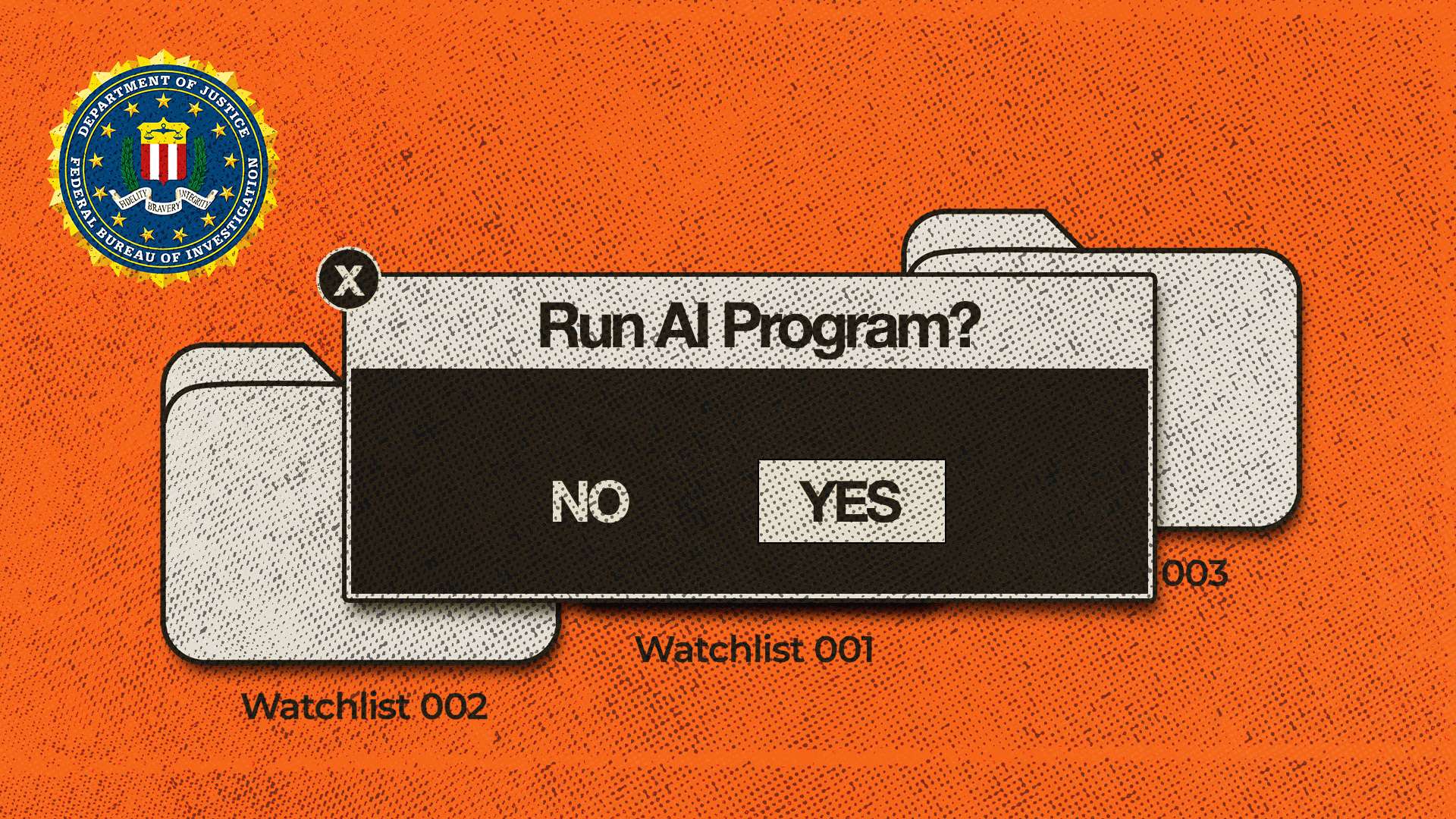
Minority report: FBI seeks AI for political watch list
Documents show the FBI seeking AI tools to flag Americans before they act, as the terror watchlist's focus moves toward domestic dissent.
How malicious AI swarms can threaten democracy: The fusion of agentic AI and LLMs marks a new frontier in information warfare
Advances in AI offer the prospect of manipulating beliefs and behaviors on a population-wide level. Large language models and autonomous agents now let influence campaigns reach unprecedented scale and precision. Generative tools can expand propaganda output without sacrificing credibility and inexpensively create falsehoods that are rated as more human-like than those written by humans. Techniques meant to refine AI reasoning, such as chain-of-thought prompting, can just as effectively be used to generate more convincing falsehoods. Enabled by these capabilities, a disruptive threat is emerging: swarms of collaborative, malicious AI agents. Fusing LLM reasoning with multi-agent architectures, these systems are capable of coordinating autonomously, infiltrating communities, and fabricating consensus efficiently. By adaptively mimicking human social dynamics, they threaten democracy. Because the resulting harms stem from design, commercial incentives, and governance, we prioritize interventions at multiple leverage points, focusing on pragmatic mechanisms over voluntary compliance.

FROM KIRK TO A/I
For a detailed breakdown of our investigation check out our DEDICATED INVESTIGATION PAGE How a post-assassination campaign against "Antifa" moved through outside advocates, the White House, Congress and U.S. counterterrorism policy before…
