

The Open Machine is a cultural research studio that invokes unlikely alliances across technology and culture to advance ethical, open forms of coordination. We conduct research to produce media, events, and frameworks that capture and project the patterns that emerge.

Open Culture - The Best Free Cultural and Educational Media on the Web.
Discover thousands of free online courses, audio books, movies, textbooks, eBooks, language lessons, and more.

Open Standards and the Digital Age
Cambridge University Press, 2014 Available in hardcover, paperback, and e-book formats: Cambridge University Press How did openness become a foundational value for the networks of the twenty-first …

Towards a definition of “Open Artificial Intelligence”: First meeting recap
The Open Source Initiative kicked off a multi-stakeholder process to define machine learning systems that can be characterized as “Open Source.” This is the recap of the first meeting.

Reframing “Open Source AI” with Meredith Whittaker: AI Impact Summit 2026
The Paradox of Open
Numerous organisations and initiatives have been launched with a belief in openness and free knowledge. Their proponents placed their bets on the combined power of networked information services and new governance models for the production and sharing of content and data. We – as members of this broad movement – were among those who believed it possible to leverage this combination of power and opportunity to build a more democratic society, unleashing the power of the internet to create universal access to knowledge and culture. For us, such openness meant not only freedom, but also presented a path to justice and equality.
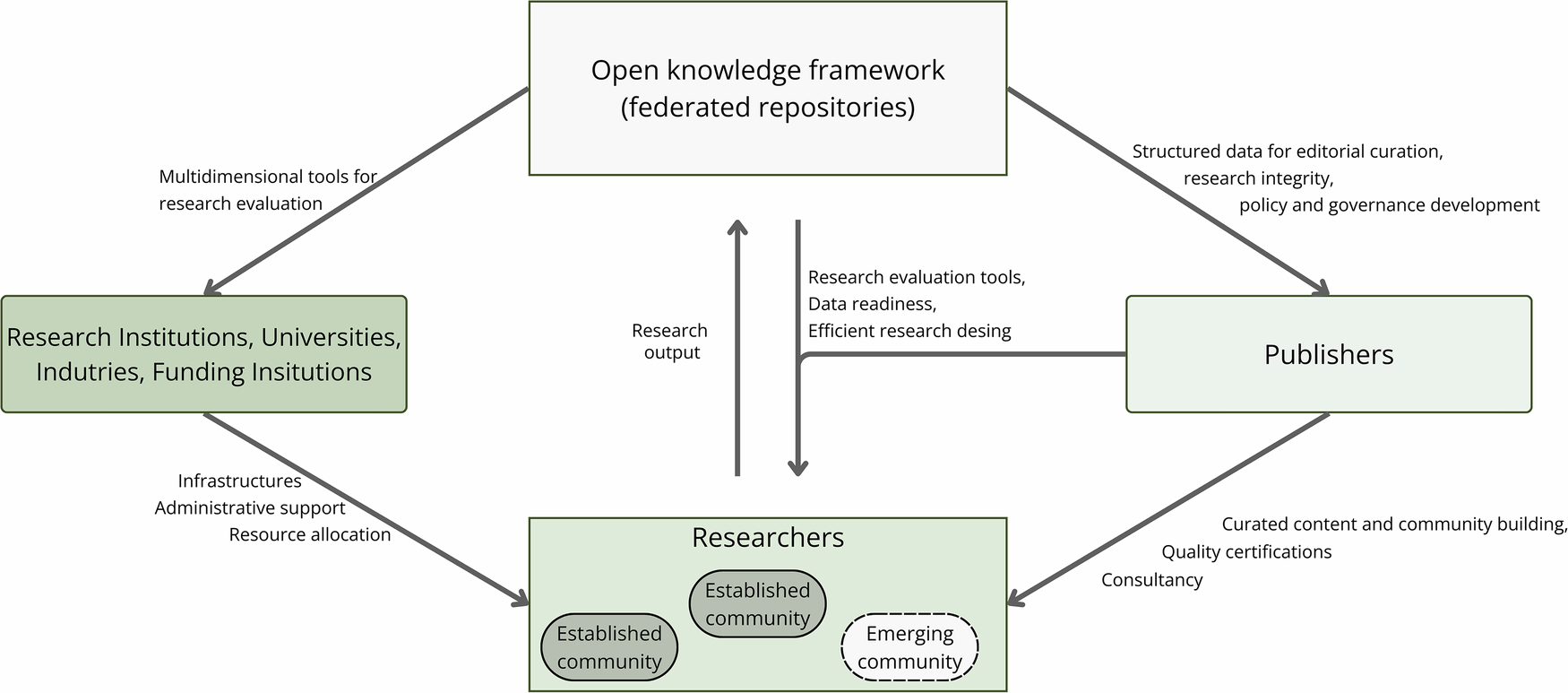
Fostering cultural change in research through innovative knowledge sharing, evaluation, and community engagement strategies
Bringing together researchers, funders, industry partners, and publishers from 14 countries across five continents, we advance the debate around open-science, assessment and learning. We introduce an integrative “open-knowledge system” framework linking knowledge production, validation, assessment, and reuse into one ecosystem view, and translate it into actionable recommendations for each stakeholder. Shifting focus to modular, machine-readable knowledge objects, these recommendations are intended to help diagnose misaligned incentives and guide reforms that properly value all scientific contributions.
Open Source Explained — Open Indie
Musings on the concept of ‘open source’, in the broadest possible definition of the term. Also an invitation to become a participant in ...
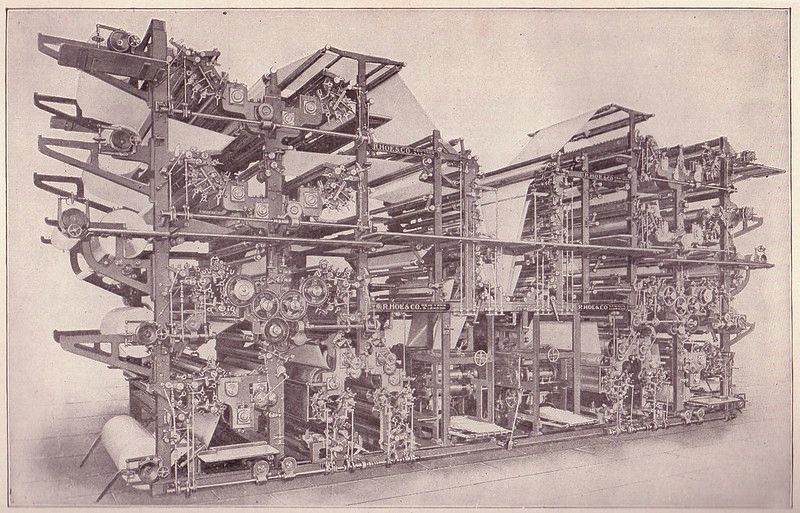
The Politics of Open Infrastructures: Power, Governance, and Justice in Digital Knowledge Practices
This volume examines how openness is designed, governed, contested and lived in contemporary digital knowledge infrastructures. From open source software and internet standards, to citizen science platforms, public sector data systems and alternative computing practices, the book shows that infrastructures are never neutral technical backbones.

Mozilla’s Inaugural ‘State of Open Source AI’ Report Is Here | The Mozilla Blog
Open source AI has crossed a threshold. For years the debate has centered around whether open models could ever compete with closed ones. This is no longer
Open Source and Free Software Considered Harmful — marisa's "blog"
(It's best to read this blog post after reading Steve Klabnik's The culture war at the heart of open source and What comes after “open so...

Open Responses: What you need to know
We’re on a journey to advance and democratize artificial intelligence through open source and open science.

The Evolution Of Open | blarg
This started its life as a pair of posts to the Mozilla governance forum, about the mismatch between private communication channels and our principles of open development. It’s a little long-winded, but I think it broadly applies not just to Mozilla but to open source in general. This version of it interleaves those two posts into something I hope is coherent, if kind of rambly. Ultimately the only point I want to make here is that the nature of openness has changed, and while it doesn’t mean we need to abandon the idea as a principle or as a practice, we can’t ignore how much has changed or stay mired in practices born of a world that no longer exists.