


To measure was to apprehend and be made accountable, and nowhere was this more resonant than in the identification and classification of criminals.
Accountability sinks
In The Unaccountability Machine, Dan Davies argues that organizations form “accountability sinks,” structures that absorb or obscure the consequences of a decision such that no one can be held dire...
Why accountability is an increasingly elusive endeavour
In the age of algorithmic decision-making, allocating blame is a fraught process — but this doesn’t have to be a bad thing

The Unaccountability Machine, by Dan Davies
I read an online excerpt of this book and was immediately intrigued by the idea of an “accountability sink”, which is a mechanism by which “The communication between the decision-maker and the decided-upon has been broken – they have created a handy sink into which negative feedback can be poured without any danger of it affecting anything.” This lack of accountability where people shrug their shoulders and ask “What else could we do?” really frustrates me, as I believe that we should take responsibility for our actions and their consequences. So I bought the book and inhaled it in a few days.
New evidence, new challenges: ICC judges’ perspectives on user-generated evidence and judging in an age of artificial intelligence
Evidence recorded on personal digital devices, or “user-generated evidence” (UGE), has profoundly shaped our ways of knowing about international crimes. UGE can be expected to play an important role in future cases before the International Criminal Court (ICC), yet few trials to date have relied extensively on UGE.. This research provides important insights into how ICC judges define UGE and perceive its strengths and weaknesses, and on the readiness of the Court to adapt to judging in an age of Artificial Intelligence. Using grounded theory to analyse interviews with ICC judges, we identified several key themes, including concerns about the perceived importance and potential bias of evidence sources; the practical challenges of employing UGE; the burden placed on the parties to ensure the reliability of the evidence, to rigorously challenge the opposing party’s evidence, and the importance of preparing legal professionals to address the risks associated with misinformation and disinformation.
Predictive policing AI is on the rise − making it accountable to the public could curb its harmful effects
AI that anticipates where crimes are likely to occur and who might commit them has a troubling track record. Democratic accountability could shine a light on the technology and how it’s used.
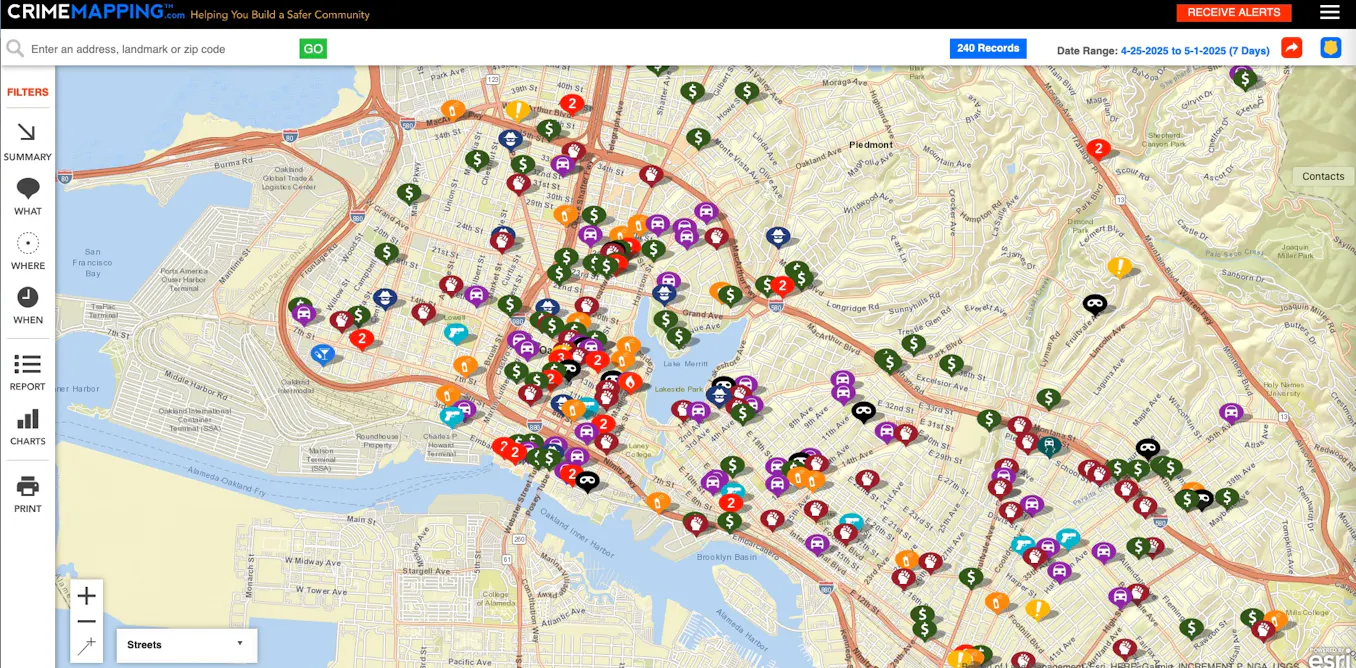
Predictive policing AI is on the rise − making it accountable to the public could curb its harmful effects
AI that anticipates where crimes are likely to occur and who might commit them has a troubling track record. Democratic accountability could shine a light on the technology and how it’s used.
Pluralistic: Goodhart’s Law (of AI) (11 Aug 2025) – Pluralistic: Daily links from Cory Doctorow
One way to think about AI's unwelcome intrusion into our lives can be summed up with Goodhart's Law: "When a measure becomes a target, it ceases to be a good measure":
#NoAccountability | Allen Holub
The notion of accountability—and its lesser cousin, responsibility—often pop up in the context of business, as if both of those ideas are good things. A culture of accountability, we’re told, is essential to running a business. The word “accountable” appears all over the 2020 Scrum Guide. I don’t buy any of it. A culture of…
Machine Bias — ProPublica
There’s software used across the country to predict future criminals. And it’s biased against blacks.

Find Rated Practices | CrimeSolutions, National Institute of Justice
NoticeThis page is no longer being updated. It may contain outdated information and links may no longer function as originally intended.

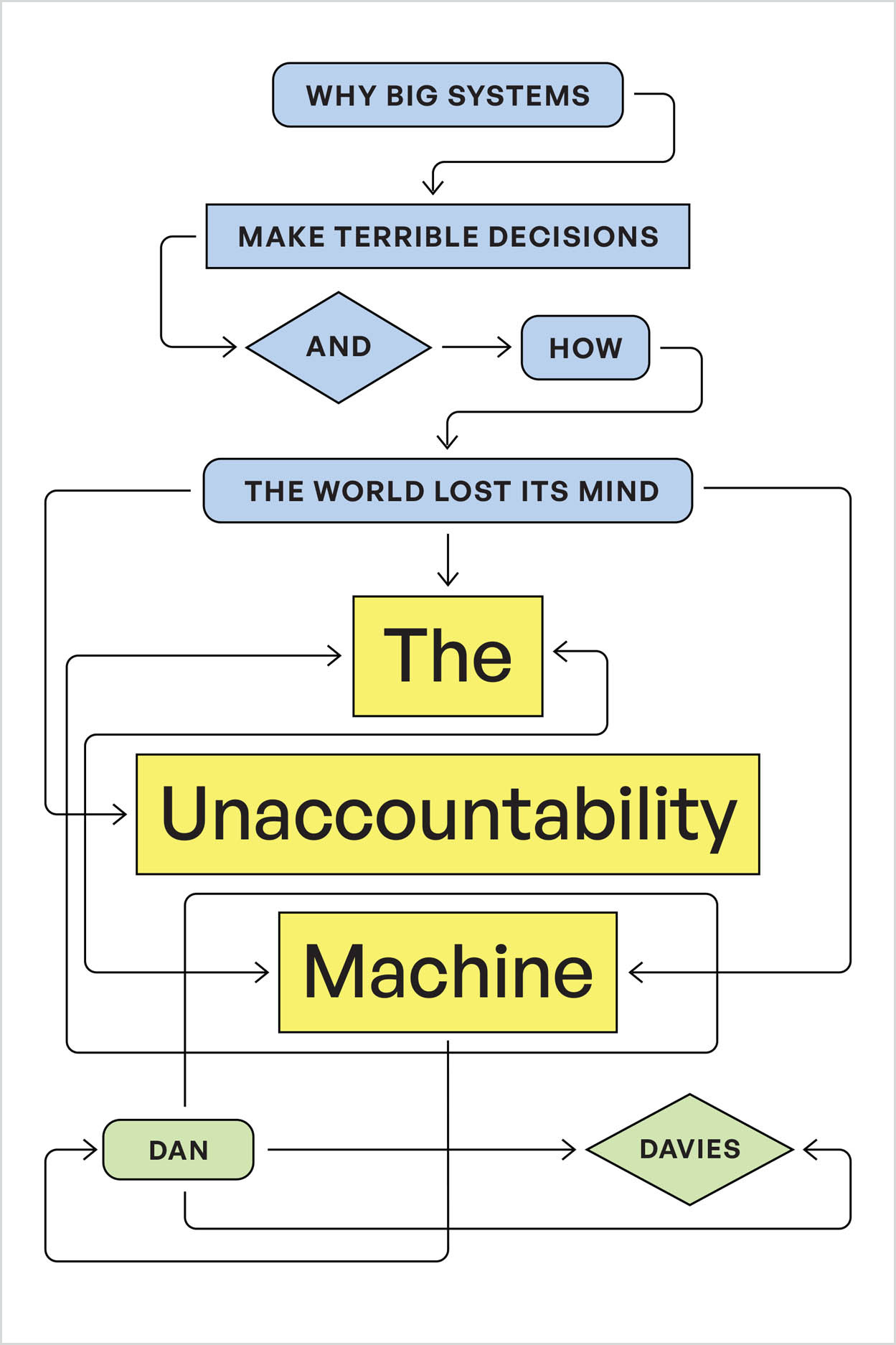
The Unaccountability Machine: Why Big Systems Make Terrible Decisions—and How the World Lost Its Mind
Longlisted for the 2024 Financial Times Book of the Year. How life and the economy became a black box—a collection of systems no one understands, producing outcomes no one likes. Passengers get bumped from flights. Phone menus disconnect. Automated financial trades produce market collapse. Of all the challenges in modern life, some of the most vexing come from our relationships with automation: a large system does us wrong, and there’s nothing we can do about it. The problem, economist Dan Davies shows, is accountability sinks: systems in which decisions are delegated to a complex rule book or set of standard procedures, making it impossible to identify the source of mistakes when they happen. In our increasingly unhuman world—lives dominated by algorithms, artificial intelligence, and large organizations—these accountability sinks produce more than just aggravation. They make life and economy unknowable—a black box for no reason. In The Unaccountability Machine, Davies lays bare how markets, institutions, and even governments systematically generate outcomes that no one—not even those involved in making them—seems to want. Since the earliest days of the computer age, theorists have foreseen the dangers of complex systems without personal accountability. In response, British business scholar Stafford Beer developed an accountability-first approach to management called “cybernetics,” which might have taken off had his biggest client (the Chilean government) not fallen to a bloody coup in 1973. With his signature blend of economic and journalistic rigor, Davies examines what’s gone wrong since Beer, including what might have been had the world embraced cybernetics when it had the chance. The Unaccountability Machine is a revelatory and resonant account of how modern life became predisposed to dysfunction.
The System From Nowhere
When Accountability Goes Rogue 💡I recently spoke with Dr. Zena Assaad for her podcast, Responsible Bytes. Video is above, below is an essay adapted from the conversation. "The system from nowhere" is a way of talking about AI systems that excludes its origin as a consciously, human-designed product. It

Artificial Intelligence, Predictive Policing, and Risk Assessment for Law Enforcement
There are widespread concerns about the use of artificial intelligence in law enforcement. Predictive policing and risk assessment are salient examples. Worries include the accuracy of forecasts that guide both activities, the prospect of bias, and an apparent lack of operational transparency. Nearly breathless media coverage of artificial intelligence helps shape the narrative. In this review, we address these issues by first unpacking depictions of artificial intelligence. Its use in predictive policing to forecast crimes in time and space is largely an exercise in spatial statistics that in principle can make policing more effective and more surgical. Its use in criminal justice risk assessment to forecast who will commit crimes is largely an exercise in adaptive, nonparametric regression. It can in principle allow law enforcement agencies to better provide for public safety with the least restrictive means necessary, which can mean far less use of incarceration. None of this is mysterious. Nevertheless, concerns about accuracy, fairness, and transparency are real, and there are tradeoffs between them for which there can be no technical fix. You can't have it all. Solutions will be found through political and legislative processes achieving an acceptable balance between competing priorities.
Capturing our Attention by @neillevy.bsky.social "we possess sophisticated capacities of epistemic vigilance, which work reasonably well to distinguish reliable from unreliable information, but ... we do not have parallel defences against attentional capture" > tandfonline.com/doi/full/10.1080/00048402.202…
