


The science is clear. CBT and GET are not useful treatments for ME/CFS. But cognitive dissonance is a powerful force, and we can fully expect continued denials from the conspiratorial fringe
‘You don’t want to get better’: the outdated treatment of ME/CFS patients is a national scandal | George Monbiot
The notion that this illness is psychosomatic is having devastating effects, says Guardian columnist George Monbiot

How to take things less personally and avoid mind reading | Psyche Guides
Always blaming yourself or assuming others think ill of you? A CBT therapist shares ways to break these self-critical habits

Abandoned, dismissed and gaslighted: there is no excuse for the way ME sufferers have been betrayed | George Monbiot
Changes in guidance and science seem to have little impact on millions of devastated lives. It’s a social crisis playing out behind closed doors, says Guardian columnist George Monbiot
CFP: Religion, Politics, and Cognitive Warfare | The Journal for Cultural and Religious Theory | JCRT
This call for papers invites work on religion, politics, and cognitive warfare, exploring how belief, media, conspiracy, identity, and power shape struggles over reality, interpretation, and life in an age of disinformat

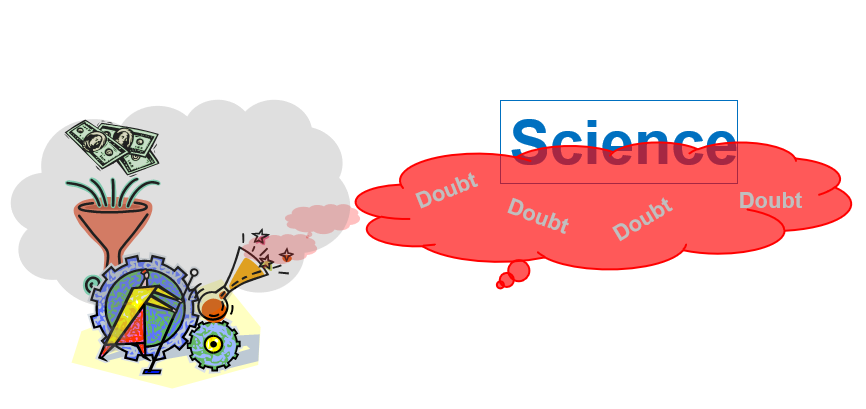
Dark-Moneyed Denialists Are Running 'Fixing Science' Symposium of Doubt
The “Fixing Science” symposium, which is hosted by the National Association of Scholars and kicks off today in Oakland, California, includes credible speakers who want to improve some areas of science hurt by the use of poor statistical methods or making irreproducible claims. Unfortunately, they are outnumbered by people who have often cast doubt on mainstream climate, environmental, and health sciences. For […]
Disinformation and grievance narratives
Synthese - Disinformation is often defined as misleading content intended to instill false beliefs. But this definition is too narrow. We need to focus instead on its broader epistemic effects....

Comparison of adaptive pacing therapy, cognitive behaviour therapy, graded exercise therapy, and specialist medical care for chronic fatigue syndrome (PACE): a randomised trial
CBT and GET can safely be added to SMC to moderately improve outcomes for chronic fatigue syndrome, but APT is not an effective addition.

Debunking “When Prophecy Fails”
ABSTRACT In 1954, Dorothy Martin predicted an apocalyptic flood and promised her followers rescue by flying saucers. When neither arrived, she recanted, her group dissolved, and efforts to proselytize ceased. But When Prophecy Fails (1956), the now‐canonical account of the event, claimed the opposite: that the group doubled down on its beliefs and began recruiting—evidence, the authors argued, of a new psychological mechanism, cognitive dissonance. Drawing on newly unsealed archival material, this article demonstrates that the book's central claims are false, and that the authors knew they were false. The documents reveal that the group actively proselytized well before the prophecy failed and quickly abandoned their beliefs afterward. They also expose serious ethical violations by the researchers, including fabricated psychic messages, covert manipulation, and interference in a child welfare investigation. One coauthor, Henry Riecken, posed as a spiritual authority and later admitted he had “precipitated” the climactic events of the study.

CFP: Religion, Politics, and Cognitive Warfare: Information, Interpretation, Conspiracy, and the Struggle for Reality
The Journal for Cultural and Religious Theory (JCRT) invites proposals for an online conference entitled Religion, Politics, and Cognitive Warfare: Information, Interpretation, Conspiracy, and the Struggle for Reality. The proceedings will be considered for publication in a special issue of the JCRT. This conference investigates how beliefs, paranoia, and conspiratorial modes of knowing shape a contemporary cognitive battlespace in which actors struggle to define truth, authority, and reality itself. Drawing on Michel Foucault's Lectures on the Will to Know and Julia Kristeva's This Incredible Need to Believe (2024), we focus on practices of selective fact use and "truth-selecting" that construct alternative epistemic orders while claiming privileged access to what is "really" going on. Rather than treating conspiracy thinking as merely political or psychological, the conference foregrounds its religious dimensions: faith in hidden powers, moral dualism, apocalyptic expectation, and hermeneutical struggle over revelatory access to the real. Conspiracy cultures routinely reproduce theological structures of knowing—visions of salvation and corruption, truth and deception, initiation and blindness. At the same time, new forms of "cognitive warfare" reframe these religious energies within state and platform attempts to govern perception, attention, and trust. Artificial intelligence, algorithmic media, and strategic information campaigns do not only deliver messages; they create digital ecologies in which suspicion becomes faith-like and revelation is continual. The conference organizers are seeking proposals of high academic quality that take a reflective and analytical approach to both general and specific topics with international appeal or focus. We encourage contributions from scholars of religious studies, philosophy, communication, sociology, security studies, psychology, media, and related fields. Submissions should engage religion as a dynamic force—conceptually, historically, or materially—within the cognitive battlespaces of our time. We encourage contributions from a spectrum of perspectives, approaches, and methodologies. We are not interested in papers that simply rehearse or promote particular conspiracies, or that use the conference as a platform for calling out disliked groups. We are not interested in polemics, jeremiad, or de facto advocacy pieces. Instead, we welcome theoretically informed and methodologically rigorous work that takes the religious and epistemic dimensions of cognitive conflict seriously as objects of critical inquiry.
Facts and Myths about Misperceptions
Misperceptions threaten to warp mass opinion and public policy on controversial issues in politics, science, and health. What explains the prevalence and persistence of these false and unsupported beliefs, which seem to be genuinely held by many people? Though limits on cognitive resources and attention play an important role, many of the most destructive misperceptions arise in domains where individuals have weak incentives to hold accurate beliefs and strong directional motivations to endorse beliefs that are consistent with a group identity such as partisanship. These tendencies are often exploited by elites who frequently create and amplify misperceptions to influence elections and public policy. Though evidence is lacking for claims of a “post-truth” era, changes in the speed with which false information travels and the extent to which it can find receptive audiences require new approaches to counter misinformation. Reducing the propagation and influence of false claims will require further efforts to inoculate people in advance of exposure (for example, media literacy), debunk false claims that are already salient or widespread (for example, fact-checking), reduce the prevalence of low-quality information (for example, changing social media algorithms), and discourage elites from promoting false information (for example, strengthening reputational sanctions).

interfluidity » Consensus not censorship
We’ve become obsessed over the past few years with the problem of misinformation. And for good reason. “Flood the zone with shit” is now standard operating procedure for a variety of interests and factions. Groups who pretend to be above that kind of thing let confirmation bias do the same work, elevating conjectures they find convenient to believe far beyond the evidentiary basis for believing them, and transmuting concurrence among prestigious groups whose biases are aligned into “authority” to which they demand deferrence. Casual information consumers become divided into two camps, the “do your own research” types who imagine, mistakenly, that they are capable of seeing through all this (and so succumb to their own confirmation bias), and those who more accurately understand that they cannot reliably distinguish truth from bullshit (and so opt out of democratic deliberation with a shrug, other than perhaps to vote for the candidates whose political party they distrust less).

‘PACE-Gate’: When clinical trial evidence meets open data access
Science is not always plain sailing and sometimes the voyage is across an angry sea. A recent clinical trial of treatments for chronic fatigue syndrome (the PACE trial) has whipped up a storm of controversy. Patients claim the lead authors overstated the effectiveness of cognitive behavioural therapy and graded exercise therapy by lowering the thresholds they used to determine improvement. In this extraordinary case, patients discovered that the treatments tested had much lower efficacy after an information tribunal ordered the release of data from the PACE trial to a patient who had requested access using a freedom of information request.

There's growing experimental evidence¹˒²˒³˒⁴ that LLMs are unusually good at talking people out of entrenched false beliefs and conspiracy theories. ¹ pubmed.ncbi.nlm.nih.gov/39264999/ ² pubmed.ncbi.nlm.nih.gov/41179846/ ³ sciety.org/articles/activity/10.21203/rs… ⁴ connecticut.adl.org/resources/report/short-dialog…

Der Fisher
Unpopular opinion: LLMs are generally deradicalizing people whose beliefs are based on pure propaganda. I've been watching this happen slowly with some people I care about. ChatGPT is one of the reasons they finally accept that the NRA, OAN, and NewsMax are lying to them.
In February 2024, I wrote Scientific Reports about a published meta-analysis claiming that mindfulness interventions affect neural plasticity, 'cementing the neuropsychological basis of mindfulness-based interventions'. The paper was retracted yesterday—here a little summary of the process.🧵

