

The Systems Thinker works to catalyze effective change by expanding the use of systems approaches. All articles are available free of charge in an effort to expose as wide of audience as possible. Browse, share with others, save your favorites and tell others about this valuable resource!
Summary: Thinking in Systems (by Donella H. Meadows)
The main argument of the book: Everything in this world is made of systems. While we cannot fully understand systems, we can observe them…
ver.ooo
Curious about systems — how they behave, how they fail, and what they get up to when nobody is steering.

Vector theory of change — a theory of change for complex systems - The Cynefin Co
We're launching a short explainer on vector theory of change, which describes how approaches to theory of change thus far have not been suitable for complex systems, and how vector theory of change helps to rectify these issues. It walks you through vector theory of change step by step: starting from where you are, setting direction and finding stepping stones, designing interventions, and monitoring continuous feedback as opposed to recklessly aiming for a fixed endpoint at any cost.

A Systems Literacy Manifesto
In 1968, West Churchman wrote, “…there is a good deal of turmoil about the manner in which our society is run. …the citizen has begun to suspect that the people who make major decisions that affect our lives don’t know what they are doing.”[1] Churchman was writing at a time of growing concern about war, civil rights, and the environment. Almost fifty years later, these concerns remain, and we have more reason than ever “to suspect that the people who make major decisions that affect our lives don’t know what they are doing.” Examples abound.
Idea and action driven systems
This article is part of a series: ‘Stigmergy: Systems of Mass Collaboration’. “Turing believes machines think. Turing lies with men. Therefore machines cannot think.” –…

Reality Blind - Vol. 1
Integrating the Systems Science Underpinning Our Collective Futures
We need to talk about the social graph - Philip Sheldrake
Concepts are the fundamental building blocks of thinking, of designing. While there are plenty of things in the mix when it comes to contemplating system design, if the primary concepts remain unchallenged and unchanged from what came before, then the outcome will likely look very familiar.

The purpose of a system is what it does
The purpose of a system is what it does (POSIWID) is a heuristic in systems thinking coined by the British management consultant Stafford Beer,[1] who stated that there is "no point in claiming that the purpose of a system is to do what it constantly fails to do".[2] It is widely used by systems theorists, and is generally invoked to counter the notion that the purpose of a system can be read from the intentions of those who design, operate or promote it. When a system's side effects or unintended consequences reveal that its behaviour is poorly understood, then the POSIWID perspective can balance political understandings of system behaviour with a more straightforwardly descriptive view.
Leverage Points: Places to Intervene in a System
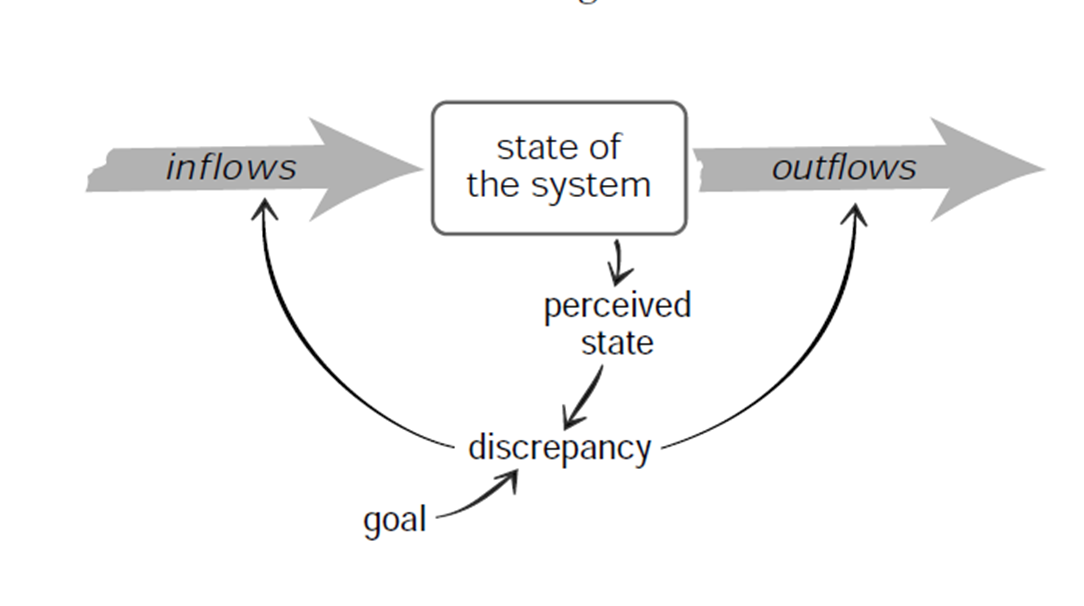
By Donella Meadows~ Folks who do systems analysis have a great belief in “leverage points.” These are places within a complex system (a corporation, an economy, a living body, a city, an ecosystem) where a small shift in one thing can produce big changes in everything. This idea is not unique to systems analysis — […]
Leverage Points: Places to Intervene in a System
By Donella Meadows~ Folks who do systems analysis have a great belief in “leverage points.” These are places within a complex system (a corporation, an economy, a living body, a city, an ecosystem) where a small shift in one thing can produce big changes in everything. This idea is not unique to systems analysis — […]
How to read | Robert Heaton
Five years ago I realized that I remembered almost nothing about most books that I read. I was reading all kinds of non-fiction - pop-psychology, pop-economics, pop-sociology, you name it - and felt like quite the polymath auto-didact. But one day, after I had finished blathering at a friend about how much I had enjoyed Thinking, Fast and Slow, they asked for a quick summary of the book’s overall thesis. I thought for a while, mumbled something about System 1 and System 2 and how I had only really read...

Systems design 3: LLMs and the semantic revolution
Long ago in the 1990s when I was in high school, my chemistry+physics teacher pulled me aside. "Avery, you know how the Internet works, righ...
Distributed Systems lecture series
