


When you read in the news that a person whom you know as rich and wealthy is in financial trouble or has declared bankruptcy, it is easy to feel a sense of futility about managing your own money. Y…
Pluralistic: Bankruptcy is very, very good (17 Jun 2024) – Pluralistic: Daily links from Cory Doctorow
There's a truly comforting sociopathy snuggled inside capitalism ideology: if markets are systems for identifying and rewarding virtue, ability and value, then anyone who's failing in the system is actually unworthy, not unlucky; and that means the winners are not just lucky (and certainly not merely selfish), but actually the best and they owe nothing to their social inferiors apart from what their own charitable impulses dictate.
Beyond Income: Dynamic Consumer Financial Vulnerability
This research challenges the entrenched belief that financial vulnerability affects only low-income consumers. Instead, most consumers across the socioeconomic spectrum experience varying degrees of financial vulnerability at different points during their lives, whether sporadically or chronically; vulnerability is dynamic and heterogeneous. The authors propose a novel, theory-driven definition of consumer financial vulnerability (CFV) as the risk of incurring future harm, given the consumer's current access to various financial resources. A new conceptual framework decouples “vulnerability” from “harm” to distinguish the state of CFV, its determinants (access to various interdependent financial resources), and the constructs it foreshadows (multiple interconnected forms of realized harm). Five research propositions follow: (1) financial resource volatility plays a vital role in CFV, (2) recovering from harm requires more financial resources than preventing harm, (3) a multiperiod lens is needed to assess CFV accurately, (4) greater financial resource access can increase CFV, and (5) generalized financial literacy is not a panacea for mitigating CFV. The propositions and their implications for marketing strategy, public policy, and consumer well-being offer a rich research agenda. The authors propose a measure of CFV—the probability that financial resources are insufficient to meet or exceed a harm threshold—for future empirical investigations.

This is a thread of my thoughts and feelings about the actions that led to FTX’s bankruptcy, and the enormous harm that was caused as a result, involving the likely loss of many thousands of innocent people’s savings.
This is a thread of my thoughts and feelings about the actions that led to FTX’s bankruptcy, and the enormous harm that was caused as a result, involving the likely loss of many thousands of innocent people’s savings.— William MacAskill (@willmacaskill) November 11, 2022
Judging VC Skill: The Hardest Open Problem in Finance?
One life skill working in finance teaches people is how to act disappointed, even insulted, at being offered an absurd amount of money for…

The Algebra of Wealth: A Simple Formula for Financial Security by Scott Galloway
A must-have guide to optimizing your life for wealth and success, from bestselling author, NYU p...
A Star Investor's Tale of Risk, Ruin & Reinvention w/ Victor Haghani (RWH071)
A Theory of Fiduciary Liability – McGill Law Journal / Revue de droit de McGill – Érudit
An article from McGill Law Journal / Revue de droit de McGill, on Érudit.

The Ostrich in Us: Selective Attention to Personal Finances
Abstract We analyze attention to personal finances using a high-frequency panel of bank data, including information on logins. We document a number of robust patterns. Relative to their personal histories, individuals pay more attention when holding more cash and liquidity and when receiving income. In contrast, attention decreases discretely as bank account balances go from positive to negative and then decreases further as overdraft debt increases. We conclude that Ostrich effects in a personal finance context, i.e., the avoidance of obtaining information on everyday personal finances, is a widespread phenomenon and explore a number of explanations for our findings.

Consumption, Debt, and Portfolio Choice: Testing the Effects of Bankruptcy Law
In the United States, consumer bankruptcy (Chapter 7 and Chapter 13) is designed to provide debtors a fresh start. Broadly speaking, after a household successfully files a bankruptcy petition, its unsecured debts are erased, but it must forfeit any assets above an exemption level determined by law. Laws regulating bankruptcy are a complex mix of state and federal rules. While the specific legal details are beyond the scope of this essay, in general, state laws set the exemption levels above which households forfeit assets; these range from exemptions as low as $75 to more than $100,000 (or, indeed, potentially unlimited levels).1
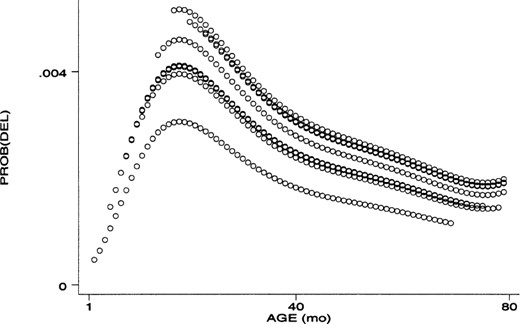
An Empirical Analysis of Personal Bankruptcy and Delinquency
Abstract. This article uses a new dataset of credit card accounts to analyze credit card delinquency, personal bankruptcy, and the stability of credit risk
If You’re Not Getting Rich in your 20s, You’re Doing it Wrong
Whenever something unusually interesting in the field of personal finance shows up in the news, Mr. Money Mustache hears about it. Our diligent network of Mustachian Volunteer Spies combs and filte…

Personal Finance
Get the Business Insider take and compare the best savings accounts, best credit cards, best insurance policies, and more. Never feel like a financial outsider again.

Who supplies and demands safe assets – and why it matters
Safe assets are the building blocks of modern financial markets. This column examines the sectoral dynamics of safe assets across advanced economies since the 1980s. It shows that foreign demand for these assets has steadily increased, with the financial sector playing a key role in meeting it. However, because financial institutions often back the safe assets they create with risky loans, this rising foreign demand can fuel domestic credit booms and contribute to macroeconomic instability. The results highlight the importance of carefully managing the creation of safe assets within the global financial system.

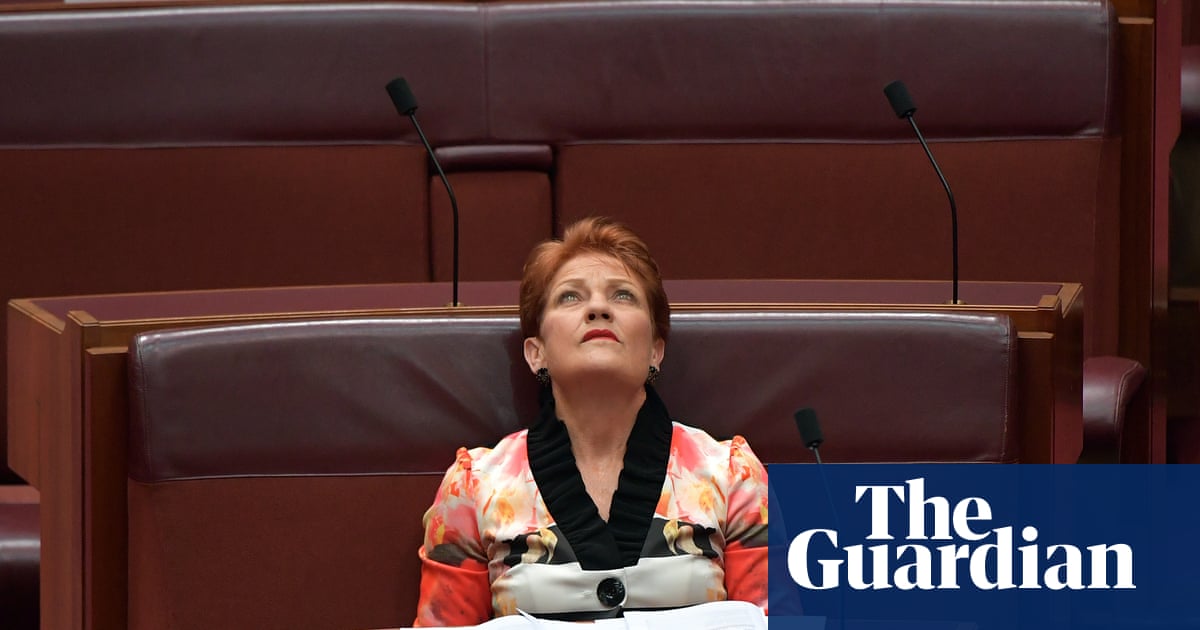
One Nation’s ‘incredibly sloppy’ financial reports reveal more than $1m in missing or worthless assets
Financial returns, obtained by the Guardian, are ‘very poor and unprofessional’ and call into question party’s fitness to govern, expert says
Capitalist Class Cleavages | Alex Browne
The irrationality of American business partisanship is a symptom of its own success

The following is from an essay which will be coming out later this year, but it's so relevant to this moment, I'm just going to excerpt a little section. Please read the whole essay when it comes out! "While the asset class’s thought leaders, such as BlackRock CEO Larry Fink... 1/18

Tressie McMillan Cottom
Just saw BlackRock ceo warning that data center moratorium would trigger a massive recession, which is fear mongering. And also hahahahahahhahahahaaaa.
