


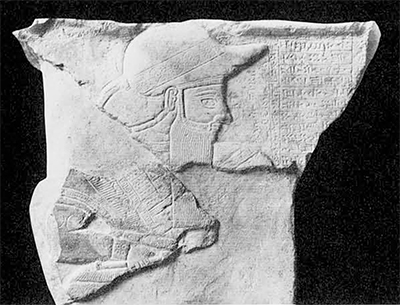
Genesis describes Nimrod as a great hunter before YHWH and a powerful king. In late Second Temple writings, Nimrod is connected to the Tower of Babel and seen as a rebel against God. This negative view of Nimrod persisted through the centuries in the writings of the Church Fathers, and was further expanded in rabbinic midrash and medieval Islamic literature. | Prof. Carol Bakhos
Expedition Magazine | Aspects of Elamite Art and Archaeology
In Sumerian texts we read about the country NIM, the wondrous mountain area which we call Iran today. The biblical […]
Millenarianism
The name is from the 20th chapter of the Book of Revelations. Christ has just defeated the Beast, and cast him and his false prophet into a "lake of fire burning with brimstone". Christ has also slaughtered the army of the beast, including the kings of the earth, slaying them with a sword which "proceeded out of his mouth". (A conservation-minded angel had earlier called together the birds of the air, that they might "eat the flesh of kings, and the flesh of captains, and the flesh of mighty men, and the flesh of horses, and of them that sit on them, and the flesh of all men, both free and bond, both small and great".)
3 Enoch
Modern scholars describe this book as pseudepigraphal, as it says it is written by "Rabbi Ishmael" who became a "high priest" after visions of ascension to Heaven.[2] This has been taken as referring to Rabbi Ishmael, a third-generation Tanna and a leading figure of Merkabah mysticism. However, he could not have been a High Priest of Israel, as he was born after the Siege of Jerusalem and associated destruction of the Second Temple in 70 CE. An alternative attribution would be the earlier Tanna Ishmael ben Elisha, who lived through the Siege of Jerusalem.[citation needed] Although 3 Enoch contains several Greek and Latin words, the book appears to have been originally written in Hebrew.[2]
The Search for Kusanagi-no-Tsurugi, the Lost Imperial Sword of Japan
An ancient sword, the Kusanagi-no-Tsurugi, is linked to ancient tales of gods and serpents in Japanese lore. The sword is seen as a weapon of immense

The Call of Abraham: A Midrash Revisited | JSTOR
PAUL MANDEL, The Call of Abraham: A Midrash Revisited, Prooftexts, Vol. 14, No. 3, SEPTEMBER 1994
The dacian stronghold and the wolf-warriors: SARMISEGETUSA REGIA
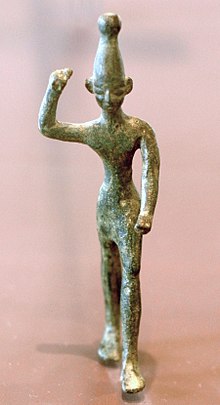
Other Gods Mentioned in the Old Testament
“You shall have no other gods before me” (Exodus 20:3). The second commandment declares that in Israel no other god should be worshiped in addition to Yahweh. While the intent of the commandment ma…
Nandi (Hinduism)
Nandi, also known as Nandikeshvara or Nandideva, is the bull vahana (mount) of the Hindu god Shiva. He is also the guardian deity of Kailash, the abode of Shiva. Almost all Shiva temples display stone images of a seated Nandi, generally facing the main shrine.

Do not conquer what you cannot defend — LessWrong
Once upon a time there was a great king. He ruled his kingdom with wisdom and economically literate policies, and prosperity followed. Seeing this, t…

The Mighty Nein
When a powerful arcane relic known as 'The Beacon' falls into nefarious hands, a group of fugitives and outcasts, bound by secrets and scars, must learn to work together to save the realm and stop reality as they know it from unraveling.

Go Beyond God of War With These Norse Mythology Books - IGN
The new God of War is based in an around the lands and myths of the Vikings, and these books give you an ever deeper understanding of the most metal of pantheons.

Traces of Necromantic Divinatory Practices in the Picatrix
In the famous medieval magical manual called the Picatrix, the unknown author describes the phenomenon of magic with the term nigromantia. As is well known, the original meaning of the Greek term necromantia has a more concise meaning. It is used for a special kind of divination, i.e., divination through the parts of a cadaver and the conjured spirit of the dead. Seemingly, in the Picatrix, no necromantic ritual can be found; moreover, the author stresses that his main goal is pious, i.e., to find the path leading to the ultimate source of the universe, the one and only God. In my article, I show that on some pages of the Picatrix, there are traces of divinatory practices that may be connected to the original meaning of the term nigromantia. In the third book of the manual, descriptions of some interesting rituals attributed to the pagan Sabeans of Harran and their teacher, the god Hermes can be found. During the practices, the magician involved conjured spirits of the heavenly bodies and powers as well. Because of this, by looking closely at and analyzing the given text, it is possible to piece together a complex web of necromantic and demonic divinatory rituals.

AI Priests & Occultism
It's all fun and games until you reinvent Himmler's Wewelsburg.

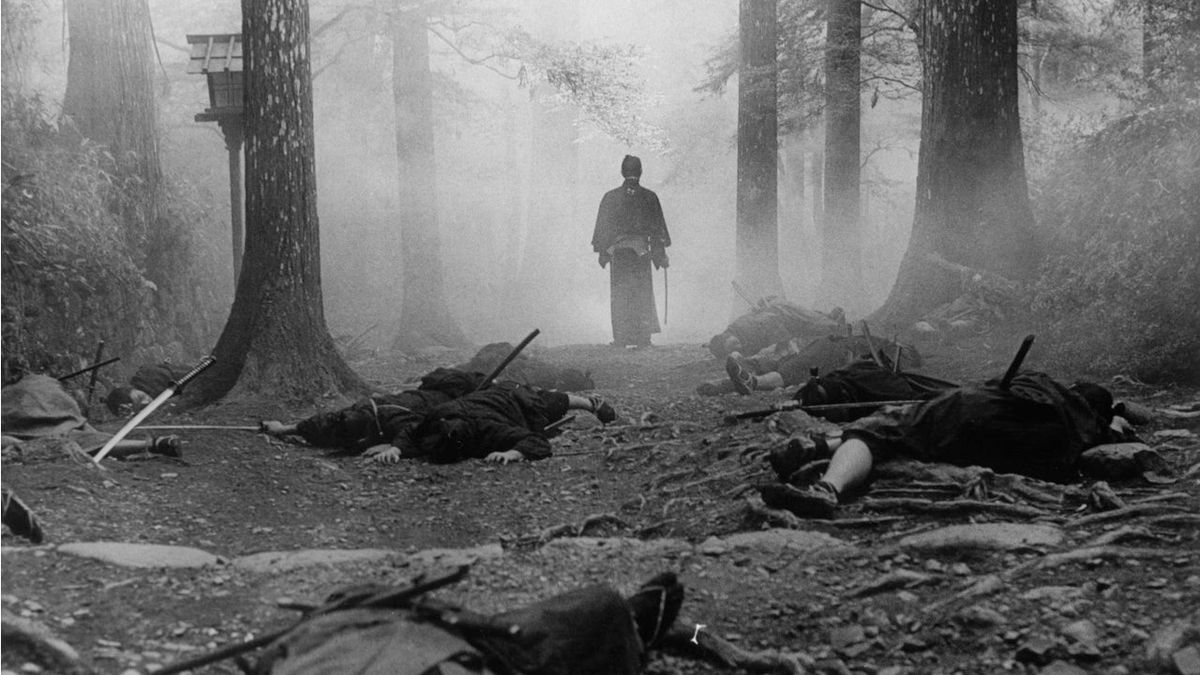
The Sword of Doom (1966)
Ryunosuke, a gifted swordsman plying his trade during the turbulent final days of Shogunate rule, has no moral code and kills without remorse. It’s a way of life that leads to madness.
"nihiliberalism" - feels like a useful new concept "nihilist neoliberalism, ... or nihiliberalism... intensifies the dynamic of endless growth while doubling down on hierarchies of oppression that enable it" From "AI, Decomputing and the Interregnum" by @danmcquillan.bsky.social
AI, Decomputing and the Interregnum
zenodo.org