

Authorea is the leading collaborative platform to read, write, and publish research.
Authorea: multi-disciplinary research preprints
Authorea is the leading collaborative platform to read, write, and publish research.
Single-Source Publishing Community
Join the Single-Source Publishing Community for open, interoperable, and sustainable scholarly publishing workflows.
From Tools to Adoption: A Path to Modular and Interactive Scientific Publishing | ICOR
Tracy Teal, openRxiv Rowan Cockett, Continuous Science Foundation Monica Granados, Creative Commons Jason Priem, OpenAlex Paul Shannon, eLife

Making sense of preprints by adding context – The Publish Your Reviews initiative - LSE Impact
Improving scientific publishing is often framed as an issue of openness and speed and less often as one of context. In this post, Ludo Waltman and Jessica Polka make the case for a more contextualised approach to open access publishing and preprinting, and introduce the Publish Your Reviews initiative. Launched today by ASAPbio, the initiative

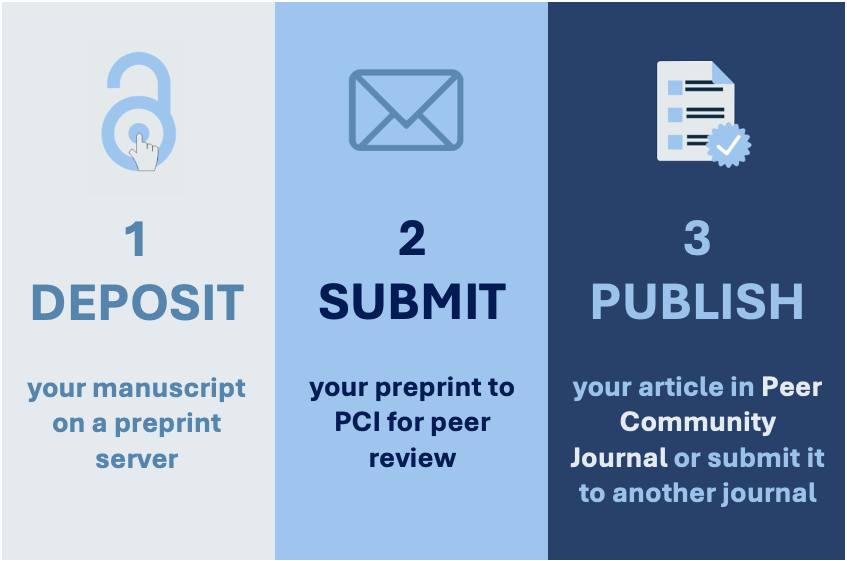
Peer Community In - free peer review & validation of preprints of articles
PCI is a non-profit open science organization of scientists to evaluate, recommend and publish research preprints in free open access
From novices to co-pilots: Fixing the limits on scientific knowledge production by accessing or building expertise
As part of the Digital Library's transition to Open Access, new features for researchers are available in the Premium Edition. Click here to learn more.

A budding discipline around how science gets read and judged - Aris
Scholarly publishing spent thirty years arguing about access. It has barely begun arguing about what readers do with the paper once they have it. At Aris we call that second argument scholarly interface design. Mike Morrison's community calls it ScienceUX. Either way it is becoming a field, and here is why it is worth your attention.
Synchronized editing: the future of collaborative writing
A growing suite of tools allows teams of researchers to work collectively to edit scientific documents.

Want a Better Scholarly Communication System? Rethink Preprints.
For too long, researchers and institutions in the life sciences have treated preprints as preliminary offerings that require validation from journals. What if we treated them instead as the primary record of scientific work?

Augmented Text Tools. Minimalist writing, powerful tools
Augmented Text tools offer a new ecosystem for writing, reading and interacting with text. Author is a writing app for Mac which makes citations and concept mapping easier than ever before. Reader is a free minimalist PDF viewer with powerful interactions.

Coordinating Research Assessment And Publishing Reform: Action Groups – ASAPbio
Connect with focused ASAPbio groups working on specific aspects of scientific communication, from preprint review to community engagement.

MIRA · A new medium for research
Modular Interoperable Research Attribution. An open architecture that publishes research as a graph of questions, claims, evidence, and sources, with provenance and attribution on every record.
Rayuela Editor - The Future of Creative Writing
A next-generation writing tool for authors. Offline-first, cross-platform, privacy-focused.

Landing — Open Journals Collective
We're a collective of libraries, university presses, and non-profit publishers reshaping academic research.
RWOT Library | Learn & Work Ecosystem Library
Rebooting the Web of Trust From 2015 through 2023, RWOT held a dozen in-person collaborative writing workshops dedicated to exploring new approaches in decentralized identity. Workshops held in the United […]

Great survey of the "scholarly interface design" frontier that also highlights the emerging role of the atproto.science and modular research ecosystems - @chive.pub @paperstarsorg.bsky.social @cosmik.network @semble.so @margin.at @discoursegraphs.bsky.social @curvenote.com and many more!

leotrs
1/ Scholarly publishing spent thirty years arguing about access. It has barely started arguing about what readers do with the paper once they have it. That second argument is turning into a field, forming around how science gets read and judged. Here is the map as I see it: aris.pub/blog/scholarly-interface-desi…
