

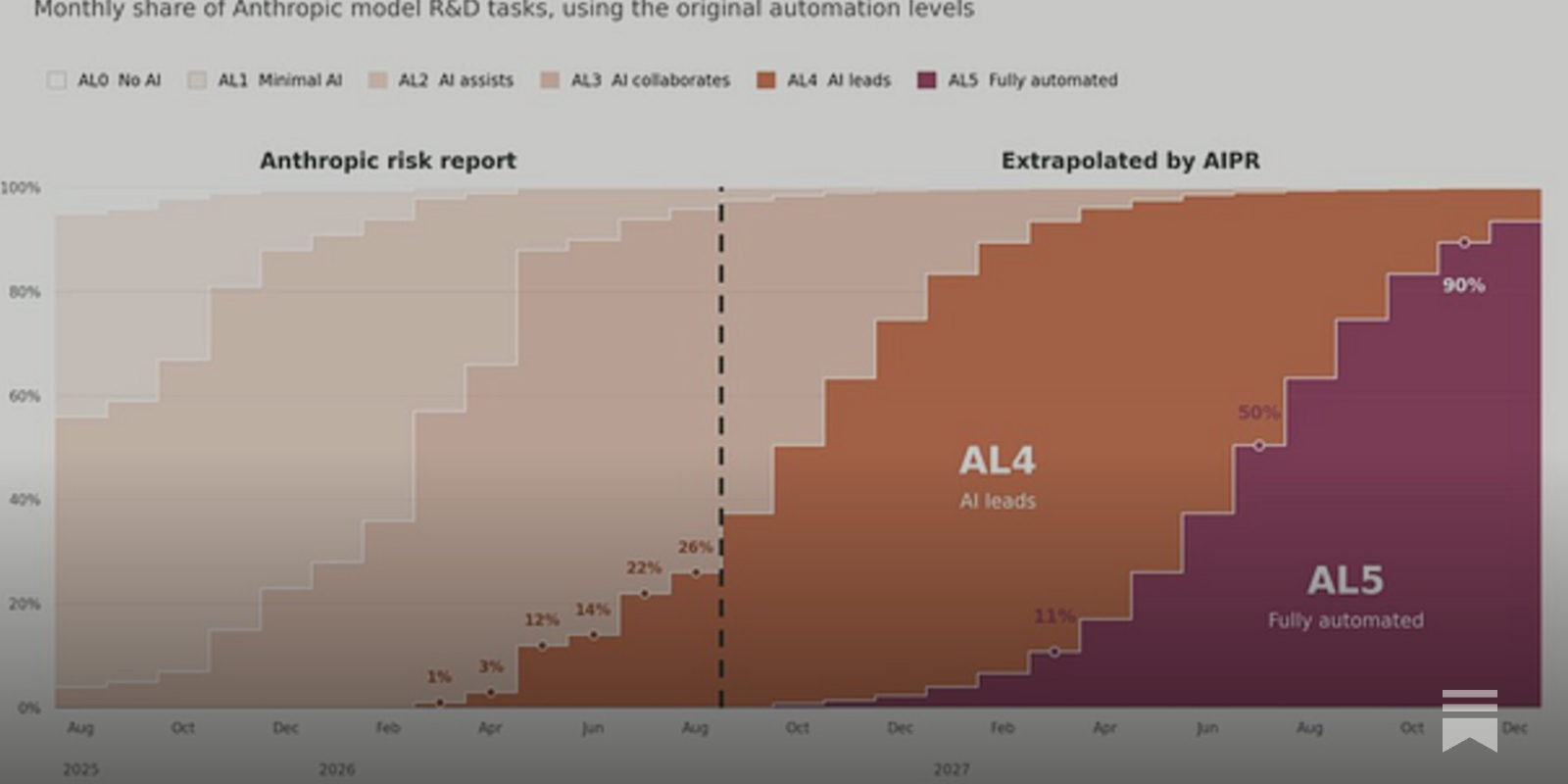
METR came out with an extensive report on how much AI is accelerating AI R&D at Anthropic, and thus how close we might be to recursive self-improvement (RSI) and how far that might go.
Independent Assessment of AI R&D Acceleration at Anthropic in October 2026
METR's high-access assessment of the degree to which AI is accelerating AI research and development at Anthropic.
Harness Engineering for Self-Improvement
The concept of recursive self-improvement (RSI) dates back to I. J. Good (1965), where he defined an “ultraintelligent machine” as a system that can surpass humans in all intellectual activities and design better machines to improve itself. Yudkowsky (2008) used the phrase “recursive self-improvement” for a specific feedback loop: an AI uses its current intelligence to improve the cognitive machinery that produces its intelligence. This feedback loop in modern AI may indicate the model rewriting its own weights directly, or more broadly the model improves the training pipeline and the deployment system, which in turn enables a better successor model with improved performance across economically valuable tasks. The speed of research development in AI has been shown to drastically accelerated in frontier labs (Anthropic; OpenAI).
Awesome RSI: A curated research map of Recursive Self-Improvement
A curated research map of Recursive Self-Improvement (RSI): models, agents, harnesses, embodied systems, automated AI R&D, benchmarks, and safety.
RSI Simulator: Play the Economics of Recursive Self-Improvement
Bootstrap an AI lab from scratch. A web game from Paradigm built on real economic models of AI recursive self-improvement.
When AI builds itself
Our progress toward recursive self-improvement, and its implications.

Peter Wildeford🇺🇸🚀 on Twitter / X
Great to see @tristanharris talking on his podcast about recursive self-improvement. Here's how his guest, Tim Fist, puts it -- "Over the last few months we've had all three of the leading US AI labs say that having the option for a global slowdown or pause in AI development is… https://t.co/s5UURtkEjQ— Peter Wildeford🇺🇸🚀 (@peterwildeford) June 21, 2026
What the hell happened with AGI timelines in 2026?
Inside the AI Index: 12 Takeaways from the 2026 Report | Stanford HAI
The annual report reveals a field hitting breakthrough capabilities while raising urgent questions about environmental costs, transparency, and who benefits from the technology.

Import AI 455: AI systems are about to start building themselves.
The first step towards recursive self improvement

Import AI 460: Reward hacking society, RSI data from Anthropic; and RL-based quadcopter racing
When will markets price the singularity?

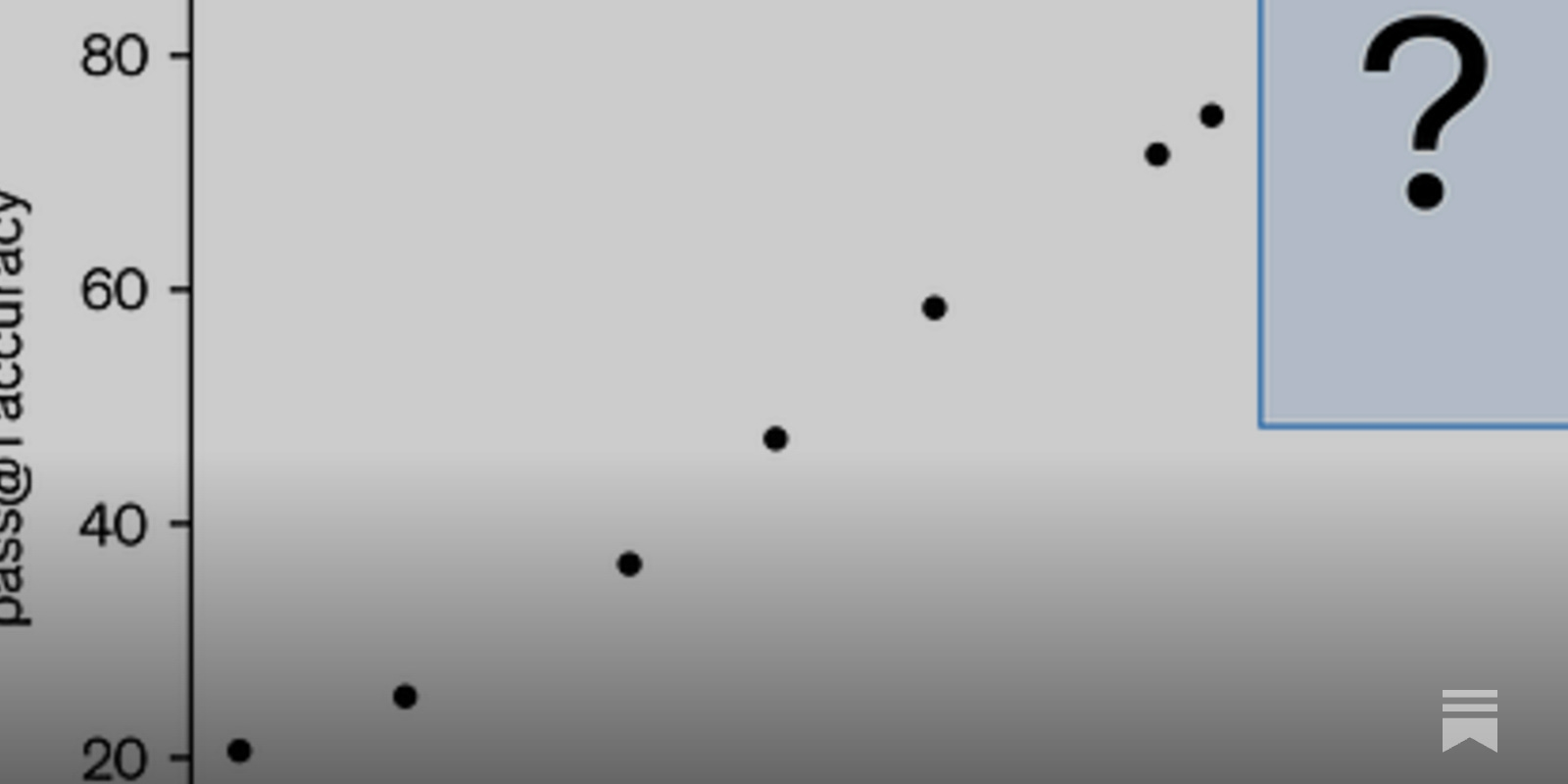
A snapshot of research into answering if frontier AI agents can run R&D into AI (which not surprisingly failed apart from "minor findings" and "engineering steps"). The paper lists its TBDs strengths and limits, worth a read before people who don't know theirs jump in arxiv.org/pdf/2607.27191
1/7 Proud to share our paper, accepted as an oral at ICML '26! We highlight how Big Tech’s influence on AI R&D drives damaging outcomes, and what we as researchers can do about it. We also discuss underlying economic causes. See link for paper, and below for a brief summary arxiv.org/abs/2512.03077
1/7 Proud to share our paper, accepted as an oral at ICML '26! We highlight how Big Tech’s influence on AI R&D drives damaging outcomes, and what we as researchers can do about it. We also discuss underlying economic causes. See link for paper, and below for a brief summary arxiv.org/abs/2512.03077

