First you get to college via the wrong metrics, as previously discussed in #12. Then things get easier.
Grading is a Scam (and Motivation is a Myth) | A Professor Explains
You're wrong about Common Core math: Sorry, parents, but it makes more sense than you think
When Common Core problems go viral, the steps seem complicated, unnecessary. But it actually teaches a real skill

Childhood And Education #17: Is Our Children Reading
Reading is the most fundamental thing in education.
Standards in Your State | Common Core State Standards Initiative
Forty-one states, the District of Columbia, four territories, and the Department of Defense Education Activity (DoDEA) have adopted the Common Core State Standards. The map below provides information about the process each state or territory followed to adopt their academic standards. Please note that states routinely review their academic standards and may choose to change or add onto the standards to best meet the needs of their students. The map provides links to the website in each state and territory that provides the most up-to-date information on a state’s specific academic standards.
Why Grades Shouldn't Exist - Alfie Kohn
Transitioning to a Living Curriculum
The Principles and Practices to building a new way of Learning

Opinion | My Students Can’t Read
The generational collapse in literacy is measurable, persistent, and likely to get worse.
No One Dies in this Dystopia
I am all done with grading for the semester just past, but the work sticks to me in a way I can’t yet manage to fling off.

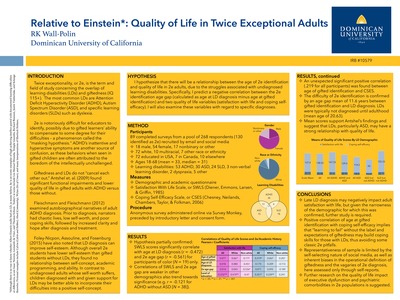
Relative to Einstein: Quality of Life in Twice Exceptional Adults
Twice exceptionality, or 2e, is the recently-coined term for the intersection of learning disabilities (LDs) and giftedness in an individual. Typically, these learning disabilities encompass ADHD, ASD, and/or specific learning disorders such as dyslexia. Because giftedness may obscure or compensate for a student’s academic struggles, and because institutional fixation on disability may overshadow intelligence, twice exceptionality is often missed by teachers and other authority figures in a child’s life. Given the ongoing difficulties of screening for twice exceptionality, it is likely that many 2e students have gone unidentified throughout most of their academic careers, without receiving the accommodations that would most benefit their studies. Furthermore, 2e adults whose schooling predated widespread awareness of twice exceptionality are more likely to have been diagnosed later in life. The twin prongs of identification and intervention for 2e youth make up the bulk of studies in the field. Today’s 2e youth are better-identified, better-studied, and better-supported than any previous generation, but 2e adults remain an understudied population. In addition to the difficulties and contradictions inherent in twice exceptionality, late identification and lack of support are likely to have negatively impacted twice exceptional adults, both in and out of the classroom. The present study will examine the ability of 2e adults to effectively cope with stressors in their lives, as well as their current level of life satisfaction. Approximately fifty or more 2e adults will be recruited through email and social media, and via the disability department of a small liberal arts university. Participants will be asked about their diagnostic histories and their experiences with higher education, and will then complete the Satisfaction With Life Scale (Diener, E., Emmons, R. A., Larsen, R. J., & Griffin, S., 1985) and Coping Self-Efficacy Scale (Chesney, M.A., Neilands, T.B., Chambers, D.B., Taylor, J.M., & Folkman, S., 2006). Data will be collected and analyzed in March and April 2017. We hypothesize that there will be a relationship between the age of identification as twice exceptional and adult quality of life, operationalized by Satisfaction with Life and Coping Self-Efficacy. Additionally, we will explore the relationships between specific diagnoses and these variables, as well as factors of race and gender. This study will provide information on an underserved and understudied group, and we hope it will provide a deeper understanding of the needs and strengths of this population.
Forget coding, we need to teach our kids how to dream
Tom Goodwin on the five key attributes we should help kids develop instead of focusing on knowledge.

The Racist Beginnings of Standardized Testing | NEA
From grade school to college, students of color have suffered from the effects of biased testing.
Academia: What Was "Digital Literacy"?
Short Shelf Lives Make For Bad Curricular Planning
The Math Academy Way
The Math Academy Way Using the Power of Science to Supercharge Student Learning – Working Draft – Note: If you are reading this as a PDF, consider switching to the Google Doc which may contain new updates. Authored by Justin Skycak, advised by Jason Roberts. Ma...

Kids who use ChatGPT as a study assistant do worse on tests
Researchers compare math progress of almost 1,000 high school students

The future of MIT education looks more global, modular, and flexible
Final report of Institute-wide Task Force offers 16 recommendations to help MIT evolve for a new world.

Childhood and Education #20: Phones and Screens
We have a respite, so I thought I’d tackle various thoughts on children, phones and screens.