

This was the most famous problem in mathematics.
Anders Sandberg on Twitter / X
In my understanding, the Alpöge/Claude proof of the Riemann Hypothesis seems to be winding its way through a vast set of known methods and tricks. In a sense it is an "elementary" proof in that it does not use any new fancy concepts to succeed. https://t.co/N7z0e5C0iV— Anders Sandberg (@anderssandberg) November 22, 2026
Alpöge/Claude proof of the Generalized Riemann Hypothesis
On 20 November 2026 Levent Alpöge announced a proof, found with Anthropic's Claude, of the Riemann Hypothesis and of the Generalized Riemann Hypothesis for Dirichlet L-functions. The proof was released as a formal proof in the Lean proof assistant: 175,187 files, about 17 million lines. This page links to my own check of that Lean proof and to checks made by others.— Michael Rubinstein
An Anthropic mathematician just solved math’s most famous problem
Is solving the Riemann Hypothesis a “coal mine canary for dangerously advanced AI?”
AI Just Cracked the Hardest Problem in Mathematics. It Will Change Everything
The Riemann Hypothesis has fallen
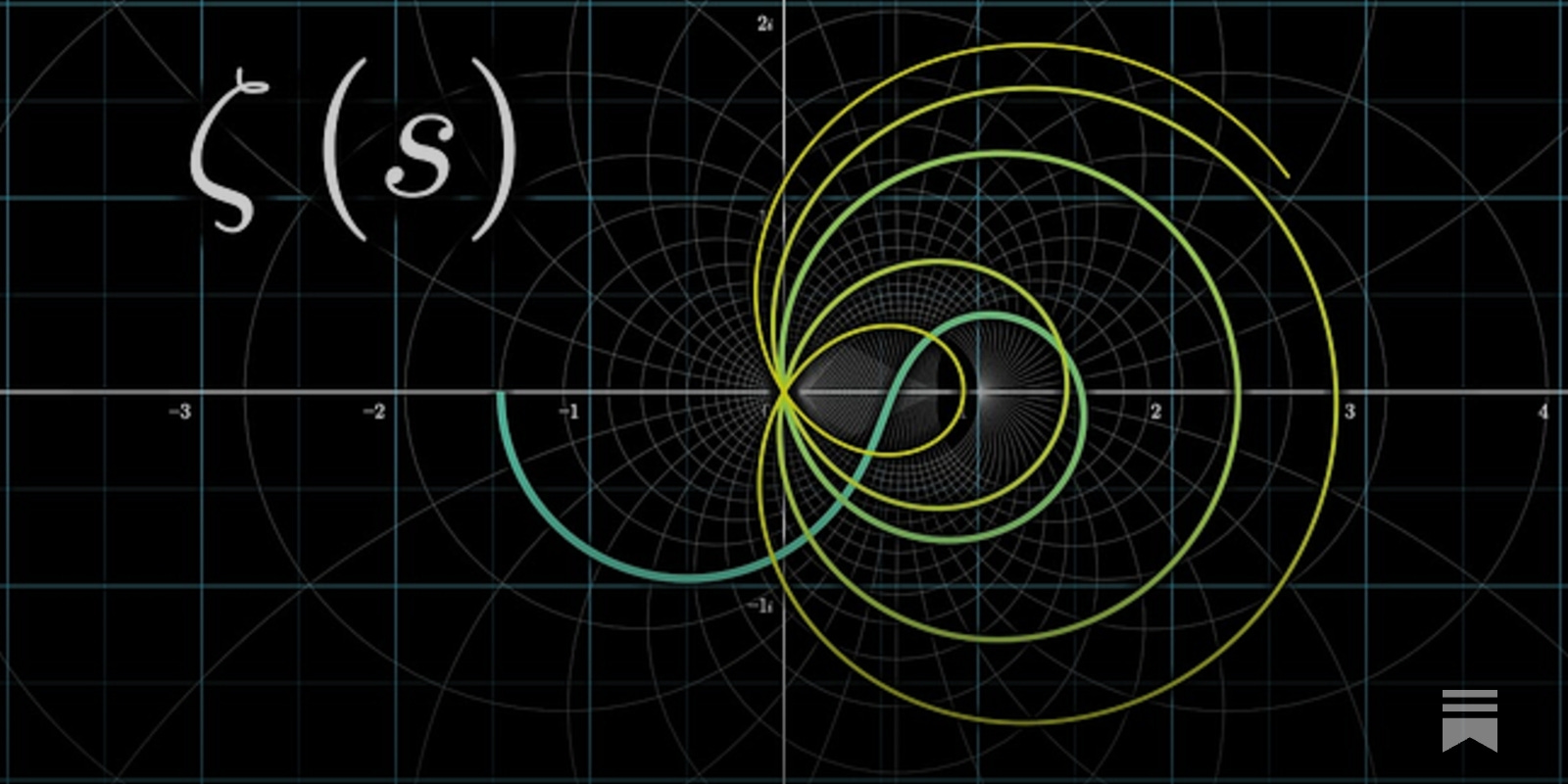
Lean verification of the Riemann Hypothesis | Lean community blog
Lean verification of the Riemann Hypothesis Joint statement by the Lean and Mathlib communities, endorsed by the Lean FRO and the Mathlib Initiative. On November 20, 2026, Levent Alpöge released a pro

The Lean proof of the Riemann Hypothesis: a treemap
An explorable map of the 175,187 Lean modules in Levent Alpöge's formalization of the Riemann Hypothesis and GRH for Dirichlet L-functions.
tamnd/riemann-handbook
The Riemann Handbook: the proof of the Riemann Hypothesis in tamnd/riemann-lean, written as mathematics, as PDF and EPUB
Terence Tao (@tao@mathstodon.xyz)
In traditional mathematics (or "Math 1.0"), a breakthrough proof of a long-standing open conjecture generates a large amount of subsequent activity and excitement in the field. The authors of the proof are invited to give many talks, and meet with other experts in the area. Workshops are set up to discuss the proof, as well as other recent developments. As a result, new connections and collaborations are formed, followup problems are shared, and other mathematicians (both junior and senior) are attracted to the field (including in some cases the authors themselves, if they initially came from a different subject). As a result of all this activity, the proofs naturally become digested, streamlined, placed in context with other results in the field, and ultimately become part of the textbooks and lecture notes for the next generation of mathematicians in the field. (1/4)
Michael Truell on Twitter / X
We believe Cursor discovered a novel solution to Problem Six of the First Proof challenge, a set of math research problems that approximate the work of Stanford, MIT, Berkeley academics. Cursor's solution yields stronger results than the official, human-written solution.…— Michael Truell (@mntruell) March 3, 2026
AI's solution to 87-year-old riddle takes mathematicians by surprise | New Scientist
Mathematicians have been trying to prove the Jacobian conjecture for nearly a century, but now the Claude Fable 5 AI has apparently found a counterexample that disproves it

Terence Tao – Kepler, Newton, and the true nature of mathematical discovery
“And what those stories teach us about how AI will revolutionize math”
We are all Workers now - Hyperproblems
I want to talk about the Riemann Hypothesis. And I want to talk about consciousness. Trying to hold both of these ideas at the same time is getting me into t…
Mathematics in the age of AI
An essay, based on a public lecture delivered at the 2026 International Congress of Mathematicians, on how the mathematical community might respond to the arrival of artificial intelligence tools that are capable of performing research-level mathematical tasks. Rather than debating the capabilities of such tools, we condition on the hypothesis that these capabilities will arrive, and examine instead a question that is orthogonal to it: what the goals and values of mathematical research actually are. The problem-solving component of mathematics is used as a case study.

Yes, 17m lines of Lean is a lot
The recent proof of the Riemann hypothesis came with a statistic attached: the proof is 17 million lines of Lean. Beyond the philosophical questions of what it means to have a proof longer than any human could comprehend, I’m left with a simpler question: is that as large as it sounds? To investigate, I hunted for collections of Lean proofs online. I found two and charted the lengths of their proofs.
Anthropic mathematician claims to have solved prestigious Millennium Prize problem with Claude
AI may have just solved another Millennium Prize problem.

Riemann Hypothesis may have been solved with the help of Claude. “what I saw during the course of progress so amazed me that I believe it is one dawn across science of something far greater.” alpo.ge/remark.pdf
