Large-scale behavioral and neuroscience data for object recognition and understanding.
The brain in the machine: How AI could help explain how we think | IBM
Scientists are using large AI models to predict patterns of brain activity at scale, a development that researchers say is pushing neuroscience toward a new kind of digital imaging.

nubrain - A foundation model for neural decoding
Building the world's largest dataset of human brain activity.
Neuropeek — Accelerating the Neuro-AI convergence
Where brain data becomes shared knowledge. A community-driven platform federating neuroscience datasets, models, and tools to accelerate discovery.

Understanding the Limits of Vision Language Models Through the Lens of the Binding Problem
Recent work has documented striking heterogeneity in the performance of state-of-the-art vision language models (VLMs), including both multimodal language models and text-to-image models. These models are able to describe and generate a diverse array of complex, naturalistic images, yet they exhibit surprising failures on basic multi-object reasoning tasks -- such as counting, localization, and simple forms of visual analogy -- that humans perform with near perfect accuracy. To better understand this puzzling pattern of successes and failures, we turn to theoretical accounts of the binding problem in cognitive science and neuroscience, a fundamental problem that arises when a shared set of representational resources must be used to represent distinct entities (e.g., to represent multiple objects in an image), necessitating the use of serial processing to avoid interference. We find that many of the puzzling failures of state-of-the-art VLMs can be explained as arising due to the binding problem, and that these failure modes are strikingly similar to the limitations exhibited by rapid, feedforward processing in the human brain.
re:vision | Replication Initiative for Visual Neuroscience
Replicate and generalize visual-neuroscience findings using the LAION-fMRI (LfMRI) 7T dataset.

Exploring Psychology in the Field: Steps and Examples From the Used‐Car Market
Abstract The growing availability of large datasets in a variety of domains presents an opportunity for researchers to use field data to better understand psychological concepts. I discuss, from an empirical economics point of view, steps for how to study cognition in large datasets. I use two recent papers that explore psychology in the used‐car market as motivating examples. These examples help illustrate the potential importance of big data as a way to explore human psychology and cognition. , The growing availability of large datasets in a variety of domains presents an opportunity for researchers to use field data to better understand psychological concepts. I discuss from an empirical economics point of view, steps for how to study cognition in large datasets and illustrate these steps with recent empirical papers.

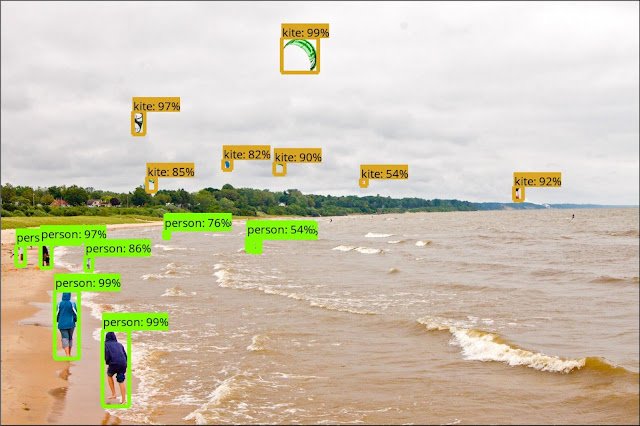
Supercharge your Computer Vision models with the TensorFlow Object Detection API
Posted by Jonathan Huang, Research Scientist and Vivek Rathod, Software Engineer (Cross-posted on the Google Open Source Blog) At Google, we develo...
Constellation
Building foundation models of human state to understand brains, bodies, and environments
On-device intelligence for every product
We're building a frontier lab for on-device AI. Small, specialized models for audio, vision, and text, faster than the cloud and free.
NeuroAI’s Next Steps: Balancing Computation and Embodiment
Deep neural networks trained at scale now predict neural activity across sensory cortices, raising a question that divides neuroscience: does the convergence between artificial and biological representations constitute understanding, or does understanding require models of biological processes grounded in the embodied, evolved character of natural intelligence? In this Dual Perspectives article, Bing Brunton and Patrick Mineault articulate two research programs—Process and Convergence—to engage this question about the future of NeuroAI research. The conversation is organized around four questions that probe what scaled model–brain alignment reveals, what the brain is coupled to and evolved to do, what success beyond the lab looks like, and where the field should invest over the coming decade. Their exchanges reveal the distance between the two programs to be primarily about the level of analysis and priorities for what to build next. The conversation converges on shared ground: measure broadly, then distill to causal principles.

The Umwelt Representation Hypothesis: rethinking Universality
Recent studies reveal striking representational alignment between artificial neural networks (ANNs) and biological brains, leading to proposals that all sufficiently capable systems converge on universal representations of reality. We argue that this claim of Universality is premature. We introduce the Umwelt Representation Hypothesis, which proposes that alignment arises not from convergence toward a single global optimum but from overlap in the ecological constraints under which systems develop. We review empirical evidence showing that representational differences between species, individuals, and ANNs are systematic and adaptive, which is difficult to reconcile with Universality. Finally, we reframe ANN model comparison as a method for mapping clusters of alignment in the ecological constraint space rather than as a search for a single optimal world model.

BrainMind
At this important juncture in neuroscience, the BrainMind ecosystem is combining the most talented of these groups in novel ways to collectively shepherd, support, and fund ideas that can be translated from labs into interventions that will benefit humanity.

brainlife
The platform allows to analyze Magnetic Resonance Imaging (MRI), electroencephalography (EEG) and magnetoencephalography (MEG) data. Data can either be uploaded from local computers or imported from public archives such as OpenNeuro.org. Over 400+ data processing Apps are available on brainlife.io to build custom data workflows. Thousands of jobs can be submitted using shared clusters or on users' compute resource. Users can perform group-level statistical analysis or apply machine learning methods using Jupyter notebooks. A single record containing the entire data workflow (from raw data to published figures) can be published addressed by with a unique digital object identifier (DOI).
Plastic Labs Releases Neuromancer XR
NEUROMANCER: The first collection of models dedicated to AI-native memory and social cognition.