

Toward Wayfinding Infrastructure for the Living Web · Atlas Research Group
Our world is getting crazier by the day. Our old maps and compasses weren’t made for this complexity. While new tools may open up amazing possibilities, they also make it easier to lose ourselves – especially when they don’t belong to us, and make us vulnerable to other people’s hidden choices and unsavory intentions about what is worth attending to.


Decentralised Identity 🤝 Mesh Networking - Thinking with portals
How you can invite your Bluesky friends into your Tailscale network using an OIDC shim
Rethink: Web - Open Space
When we struggle to explain the inherent qualities of a medium, we tend to defer to analogies and metaphors. This is especially true of the internet. Clouds, highways, streams, and real estate are just a few examples of the concepts employed to represent this intangible invention. Staring into a screen, it’s easy to imagine an […]

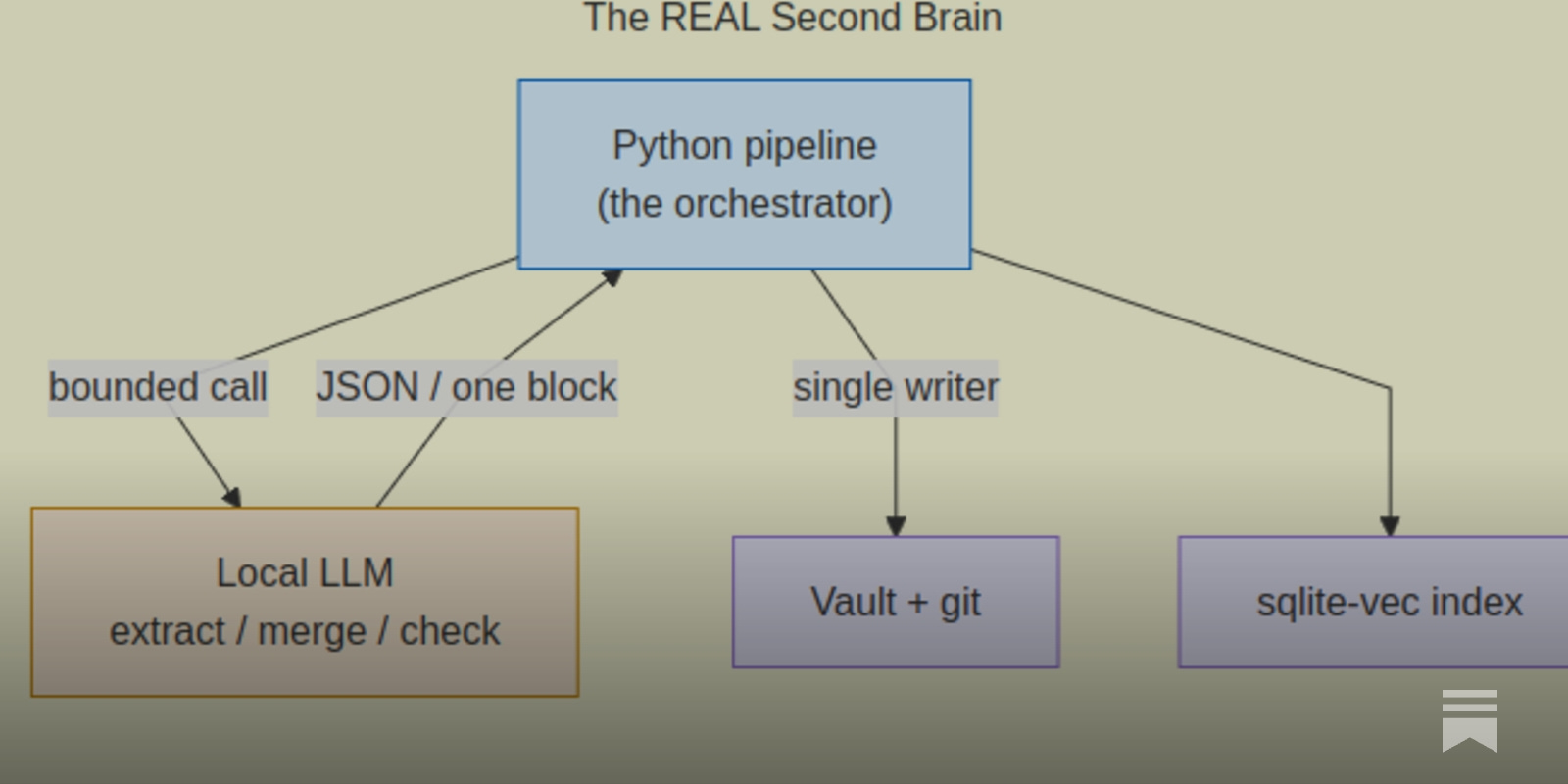
The REAL Second Brain: an autonomous, self-hosted knowledge wiki that runs on cheap local models
How I turned Karpathy's "LLM wiki" sketch into a system that actually maintains itself — no frontier API, no human in the loop, nothing leaving my LAN.
WayFinder Philosophy | WayFinders Network
Wayfinding is a way of navigating through the uncertainty and complexity of the modern world
Future of Communications
Our seeming separation is but a trick of the light, for in truth we are all one, connected like dewdrops on a spider’s web. As technology traverses the illusory distance between us, it leads us back to the recognition of our inherent unity. Communication, once imagined as bridges between islands, dissolves as we awaken to find ourselves a sea; not separate, but an oceanic communion. We return h...

Chasing RATs: Tracing Reading for and as Creative Activity
Creativity research has privileged making over the interpretive labor that precedes and shapes it. We introduce Reading Activity Traces (RATs), a proposal that treats reading -- broadly defined to include navigating, interpreting, and curating media across interconnected sources -- as creative activity both for future artifacts and as a form of creation in its own right. By tracing trajectories of traversal, association, and reflection as inspectable artifacts, RATs render visible the creative work that algorithmic feeds and AI summarization increasingly compress and automate away. We illustrate this through WikiRAT, a speculative instantiation on Wikipedia, and open new ground for reflective practice, reader modeling, collective sensemaking, and understanding what is lost when human interpretation is automated -- towards designing intelligent tools that preserve it.


