

Tabbed browsers have confined us internet users to a reduced representation of our engagement with content online. We are bound to a linear, sequential histo…


Open tabs are cognitive spaces
Nobody actually wants to use a web browser. It becomes evident the second you open your browser and notice that you don’t have internet connection. What we like about browsers is what they offer on the other side. What they connect us to. In that sense, browsers are transitory spaces - similar to airports, planes and train stations. Most of us have lost our childish curiosity towards these spaces - we go there because we want to arrive somewhere else. Arriving somewhere else with early browsers was quite one-dimensional - you clicked your way from one website to the next, in the same window. You surfed. You bookmarked the pages that you wanted to return to. Later, as the web became richer, you sometimes had more than one browser window open. I vividly remember having seven Internet Explorer windows open, thinking to myself “this is way too much to keep track of!”. Right now, my Firefox has 477 tabs open. How could this happen? Tabs are externalized cognition
Surf the web on an infinite canvas. Meet Marble, a research browser I'm building
31 votes, 21 comments. Hi r/browsers . I'm the developer of Marble. I do a lot of research in the browser, and tabs kept failing me. Forty tabs into…
The reckless, infinite scope of web browsers
This blog post was published on March 18, 2020. It might be out of date, have broken images or links, or simply contain bad ideas and opinions that didn't stand the test of time. Please read generously!
My journey to the heart of the forgotten internet
Slowly but surely, huge swaths of the internet are vanishing. But the artefacts of the early web are still out there, and they have lessons for the future.

Rethinking the creative web: Our journey to reimagine ‘web publishing’ for the social web
Part 1 explores key research and insights that led to Hopscotch by Firefox, a toolkit that empowers people of any skill level to create and

Toward Wayfinding Infrastructure for the Living Web · Atlas Research Group
Our world is getting crazier by the day. Our old maps and compasses weren’t made for this complexity. While new tools may open up amazing possibilities, they also make it easier to lose ourselves – especially when they don’t belong to us, and make us vulnerable to other people’s hidden choices and unsavory intentions about what is worth attending to.

What Is The Future For Internet Browsers? - Luke Hubbard Speaks
What Is The Future For Internet Browsers? - Luke Hubbard Speaks
What Is The Future For Internet Browsers? - Luke Hubbard Speaks
Embed Everything!
These days it takes a diverse and complex collection of components to power a web browser. It’s fair to think of all those parts coming…

The case against efficiency: friction in social media
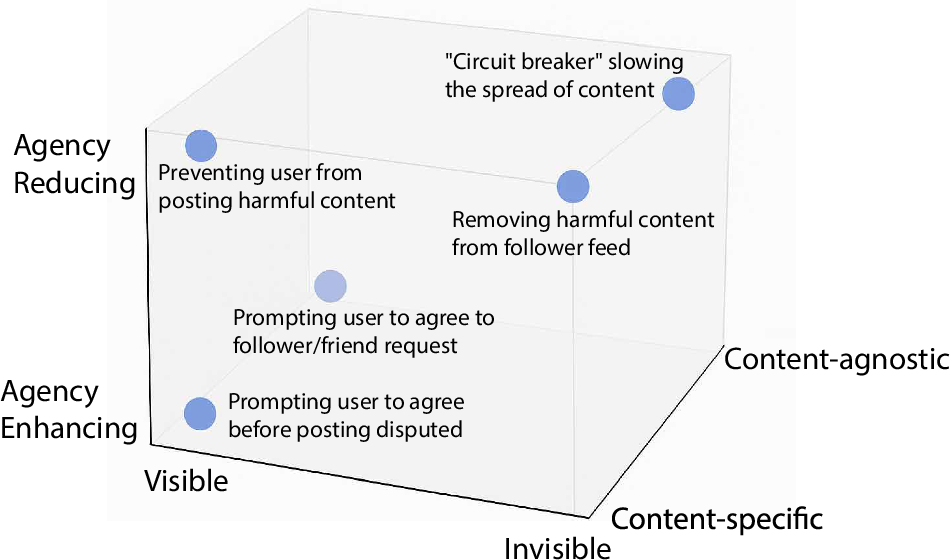
Social media platforms frequently prioritize efficiency to maximize ad revenue and user engagement, often sacrificing deliberation, trust, and reflective, purposeful cognitive engagement in the process. This manuscript examines the potential of friction—design choices that intentionally slow user interactions—as an alternate approach. We present a case against efficiency as the dominant paradigm on social media and advocate for a complex systems approach to understanding and analyzing friction. Drawing from interdisciplinary literature, real-world examples, and industry experiments, we highlight the potential for friction to mitigate issues like polarization, disinformation, and toxic content without resorting to censorship. We propose a state space representation of friction to establish a multidimensional framework and language for analyzing the diverse forms and functions through which friction can be implemented. Additionally, we propose several experimental designs to examine the impact of friction on system dynamics, user behavior, and information ecosystems, each designed with complex systems solutions and perspectives in mind. Our case against efficiency underscores the critical role of friction in shaping digital spaces, challenging the relentless pursuit of efficiency and exploring the potential of thoughtful slowing.
Who Wins The Browser Wars?
Impressions from my time with Perplexity’s Comet and The Browser Company’s Dia

WebAssembly’s post-MVP future: A cartoon skill tree – Mozilla Hacks - the Web developer blog
People have a misconception—they think that the WebAssembly that landed in browsers back in 2017—is the final version. In fact, we still have many use cases to unlock, from heavy-weight ...
