
Strategic openness can strengthen AI safety and support broader access as defenses and safety science mature.
Open Weights and American AI Leadership
Open weight AI can expand access, strengthen competition, improve security, and help sustain American AI leadership.

OpenAI technical goals
OpenAI’s mission is to build safe AI, and ensure AI’s benefits are as widely and evenly distributed as possible.

Safety and alignment in an era of long-horizon models
OpenAI shares lessons from deploying long-running AI models, highlighting new safety risks, observed failures, and improved safeguards through iterative deployment.

The AI safety movement needs normies
A broader base may be the only way for the AI safety field to get what it wants

Unpacking Open Source Artificial Intelligence: Toward a Framework for Openness in Foundation Models
Openness has long driven innovation in software,9 and AI is no exception.12 While some see openness in foundation models (FMs) as a security threat,18 others argue that restricting access will not meaningfully reduce risk and will limit the benefits of transparency, research, and global participation.3 As the EU AI Act reporting requirements on FMs—also referred to as general-purpose AI models (GPAIMs)—move toward implementation, there is an urgent need for a more nuanced and informed understanding of openness in AI systems.

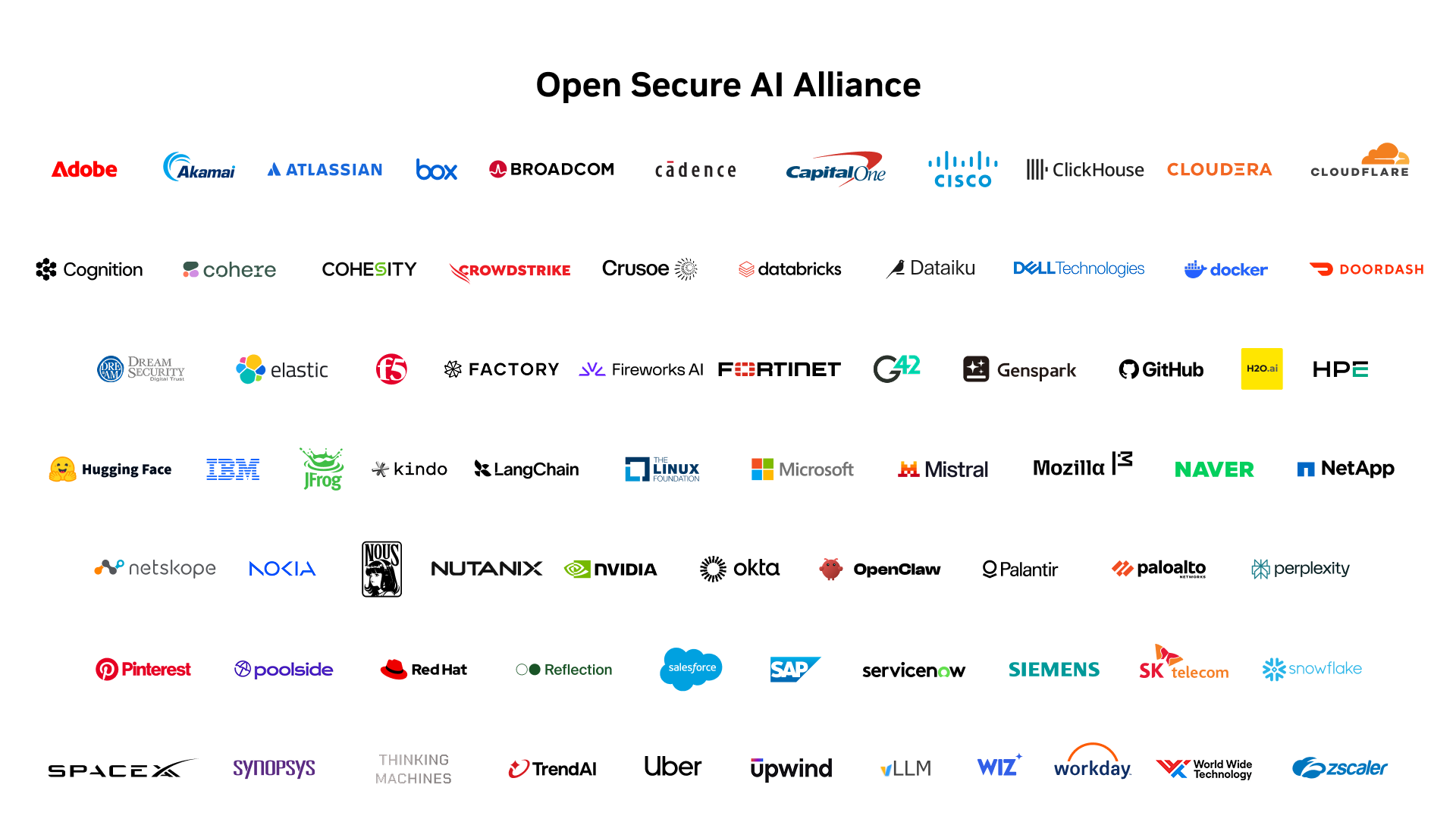
Industry Leaders Unite in Open Secure AI Alliance for AI Safety and Security
NVIDIA and founding members form new alliance to build and share open tools that promote responsible use of and trust in AI.
Clear, Compelling Arguments: Rethinking the Foundations of Frontier AI Safety Cases
This paper contributes to the nascent debate around safety cases for frontier AI systems. Safety cases are structured, defensible arguments that a system is acceptably safe to deploy in a given context. Historically, they have been used in safety-critical industries, such as aerospace, nuclear or automotive. As a result, safety cases for frontier AI have risen in prominence, both in the safety policies of leading frontier developers and in international research agendas proposed by leaders in generative AI, such as the Singapore Consensus on Global AI Safety Research Priorities and the International AI Safety Report. This paper appraises this work. We note that research conducted within the alignment community which draws explicitly on lessons from the assurance community has significant limitations. We therefore aim to rethink existing approaches to alignment safety cases. We offer lessons from existing methodologies within safety assurance and outline the limitations involved in the alignment community's current approach. Building on this foundation, we present a case study for a safety case focused on Deceptive Alignment and CBRN capabilities, drawing on existing, theoretical safety case "sketches" created by the alignment safety case community. Overall, we contribute holistic insights from the field of safety assurance via rigorous theory and methodologies that have been applied in safety-critical contexts. We do so in order to create a better foundational framework for robust, defensible and useful safety case methodologies which can help to assure the safety of frontier AI systems.

AI for Science & Safety Nodes - Request for Proposals
Artificial intelligence is accelerating the pace of discovery across science and technology. But today’s AI ecosystem risks centralizing compute, talent, and decision-making power – concentrating capabilities in ways that could undermine both innovation and safety.

Open-weight AI is having its Kubernetes moment. Let's not ruin it. | Tobi Knaup
Open-weight models are becoming the foundation for the next AI ecosystem. The US should compete in it, not wall itself off.

Pacing model development in an era of cyber-critical capabilities
OpenAI is strengthening monitoring, alignment, and security for frontier AI models. See how new safeguards are guiding the pace of model development.

An End-to-End View of AI Safety
In this blog, Rachel Coldicutt OBE, Executive Director, Careful Industries discusses our newly published literature review on the safe adoption of artificial intelligence in engineered systems.

“Wait, not like that”: Free and open access in the age of generative AI
The real threat isn’t AI using open knowledge — it’s AI companies killing the projects that make knowledge free

We’re running out of reasons to ignore AI safety
In the aftermath of OpenAI’s attack on Hugging Face, experts say it’s time for everyone to take security far more seriously.

Built to benefit everyone: our plan
A vision for the future of AI, focusing on access, safety, and shared prosperity as OpenAI works to ensure AGI benefits everyone.

Built to benefit everyone
OpenAI’s recapitalization strengthens mission-focused governance, expanding resources to ensure AI benefits everyone while advancing innovation responsibly.

Trusted access for the next era of cyber defense
OpenAI expands its Trusted Access for Cyber program, introducing GPT-5.4-Cyber to vetted defenders and strengthening safeguards as AI cybersecurity capabilities advance.