Interaction models move beyond turn-based AI interfaces by handling multimodal, real-time collaboration natively across audio, video, and text.
Introducing interaction models | Thinking Machines Lab
Human–AI Collaboration at Scale: Task Criticality, Agency, and Friction Across 250,000 Conversations
Stanford University researchers analyzed nearly 250,000 real-world human-AI conversations from Claude.ai to understand collaborative dynamics, finding that over half of interactions involve...
The path to ubiquitous AI | Taalas
By Ljubisa Bajic Many believe AI is the real deal. In narrow domains, it already surpasses human performance. Used well, it is an unprecedented amplifier of human ingenuity and productivity. Its widespread adoption is hindered by two key barriers: high latency and astronomical cost. Interactions with language models lag far...

bytedance/UI-TARS-desktop
The Open-Source Multimodal AI Agent Stack: Connecting Cutting-Edge AI Models and Agent Infra
LibreChat - The Open-Source AI Platform
LibreChat brings together all your AI conversations in one unified, customizable interface.
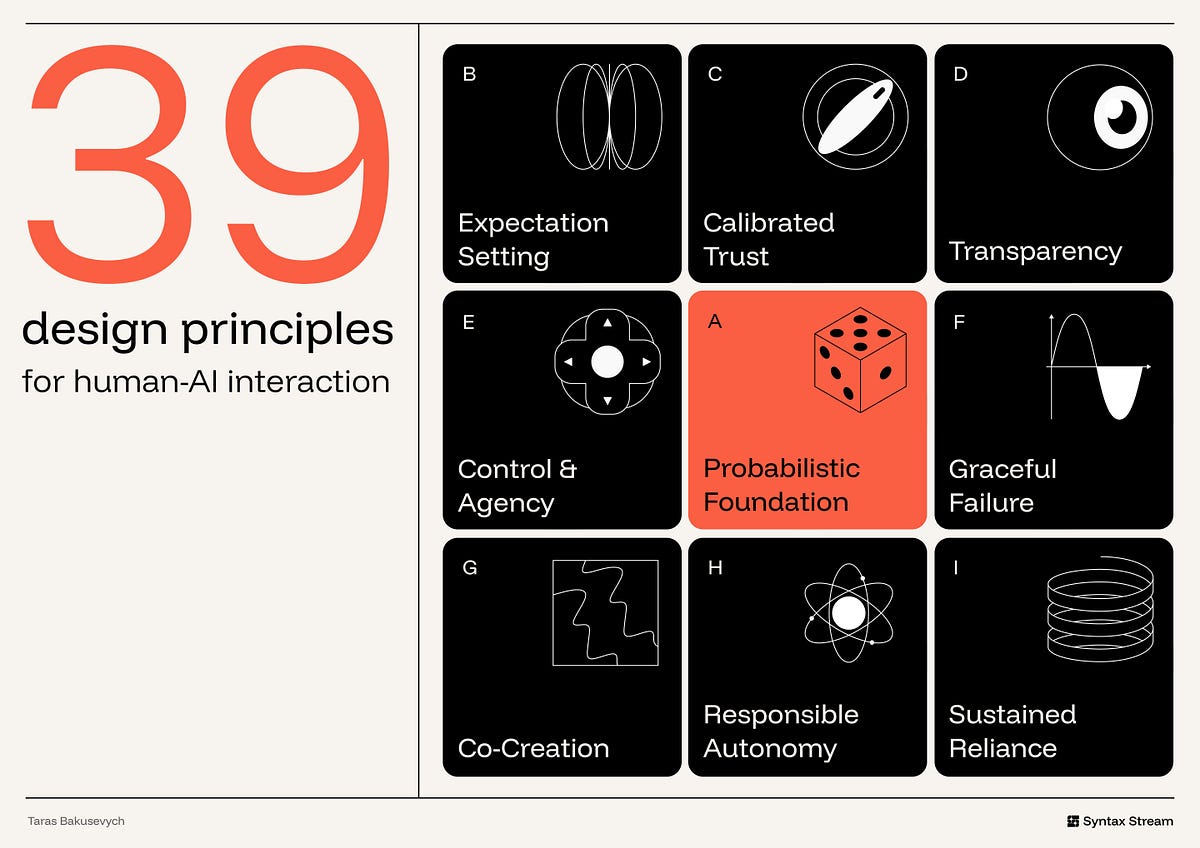
39 principles for designing human-AI interaction
An applied framework for designing AI interfaces that support appropriate reliance, user control, transparency, and responsible autonomy.
Introducing FlexOlmo: a new paradigm for language model training and data collaboration | Ai2
Explore how FlexOlmo enables collaborative language model training without sacrificing data privacy or control, introducing a new, flexible approach to building shared AI models.

AI-powered research talks
Discover, run, and publish academic talks as AI-enhanced, citable video that increases visibility, engagement and citations.
Beautiful UI — Crafted primitives for AI-native interfaces
A small library of extremely crafted, copy-paste components for chat agents, thinking states, human-in-the-loop approvals, and everything agents need to talk to humans beautifully.
Towards Expert-level Medical AI for Real-time Video Consultations
Audio-visual interaction is the standard for patient-physician consultations, enabling natural communication and effective assessment of illness through non-verbal cues. While text-based AI has shown promise, it discards essential perceptual dimensions and limits patients who cannot articulate symptoms in writing. Early efforts to extend medical AI to audio-visual interaction have demonstrated feasibility but not reached clinician-level performance. Here, we provide the first demonstration of expert-level AI in real-time clinical video consultations using AMIE (Articulate Medical Intelligence Explorer) in a video configuration. AMIE (Video) is a Gemini-based multi-agent system integrating low-latency dialogue, clinical reasoning, and real-time audio-visual perception. To guide development, we established a taxonomy and automated evaluations for clinical audio-visual cues in telehealth settings. In a randomized Objective Structured Clinical Examination (OSCE) study with 30 primary care physicians (PCPs), 15 patient actors and 100 clinical scenarios, we compared AMIE (Video), its text-only counterpart AMIE (Text), and PCPs consulting via video. Clinical evaluators rated AMIE (Video) on par or better than PCPs in history-taking, diagnosis, management, and physical observation and examination. Patient actors preferred AMIE's approach to assessing and explaining conditions, while PCPs were preferred for rapport and partnership building. In modality ablation, patient actors preferred AMIE (Video)'s interface over text chat for communicative effectiveness, convenience, and feeling understood. Limitations remain in fine anatomical precision, subtle affective nuances, and high-frequency movements. While further research is needed before real-world translation, these results mark an important milestone toward AI systems capable of augmenting care across the sensory complexity of clinical practice.

Why ChatGPT Keeps Interrupting You — Dr. Tom Shapland, LiveKit
SwarmChat: An LLM-Based, Context-Aware Multimodal Interaction System for Robotic Swarms
Traditional Human-Swarm Interaction (HSI) methods often lack intuitive real-time adaptive interfaces, making decision making slower and increasing cognitive load while limiting command flexibility. To solve this, we present SwarmChat, a context-aware, multimodal interaction system powered by Large Language Models (LLMs). SwarmChat enables users to issue natural language commands to robotic swarms using multiple modalities, such as text, voice, or teleoperation. The system integrates four LLM-based modules: Context Generator, Intent Recognition, Task Planner, and Modality Selector. These modules collaboratively generate context from keywords, detect user intent, adapt commands based on real-time robot state, and suggest optimal communication modalities. Its three-layer architecture offers a dynamic interface with both fixed and customizable command options, supporting flexible control while optimizing cognitive effort. The preliminary evaluation also shows that the SwarmChat's LLM modules provide accurate context interpretation, relevant intent recognition, and effective command delivery, achieving high user satisfaction.
Introducing GPT-Live
A new generation of voice models for natural human-AI interaction, now powering ChatGPT Voice.

(PDF) Hyperchat and Hypervideo: Enabling Real-time Groupwise Conversations at Unlimited Scale
PDF | This paper explores a novel Generative AI based communication technology called Conversational Swarm Intelligence (CSI) or simply Hyperchat AI. It... | Find, read and cite all the research you need on ResearchGate

AI tools make things up a lot, and that’s a huge problem | CNN Business
Artificial intelligence-powered tools like ChatGPT have mesmerized us with their ability to produce authoritative, human-sounding responses to seemingly any prompt. But as more people turn to this buzzy technology for things like homework help, workplace research, or health inquiries, one of its biggest pitfalls is becoming increasingly apparent: AI models sometimes just make things up.