


An important skill to develop to enhance thinking creatively is to be able to link disparate ideas. This article lays out some provocations to spark creative collisions for innovation
Reversing Assumptions Technique — Think Jar Collective
Think Jar Collective contributor and creativity expert Michael Michalko shares a technique to challenge our own assumptions and in the process spark new thinking.

Random Object Creativity Technique — Think Jar Collective
Michael Michalko shares a useful technique for generating relevant creative ideas using random words to inspire creativity.

Cultivating a state of mind where new ideas are born
Solitary work, creativity and larval ideas

Measuring Combinatorial Creativity in Large Language Models and Humans
Combinatorial creativity, the process of combining familiar ideas in unfamiliar ways, is one of the foremost engines of scientific, technological, and artistic progress. This work introduces Kombine, an LLM benchmark for combinatorial creativity tasking models to discover surprising, original, and useful associations, analogies, and blends between unrelated entities, and to use those analogies and blends to invent novel concepts by re-combining the parts of existing ones. In a large-scale study across 35 LLMs, we find that: (1) LLMs are 10-16 percentage points better at discovering associations and analogies than blends, and (2) exhibit an abstraction bottleneck on blending, in which even frontier LLMs struggle to find a shared abstraction between inputs and instantiate a coherent blended space. (3) LLMs also exhibit inventive homogeneity, in which one in five concepts invented for a given item reuses properties invented by another model. Moreover, (4) models are $14\times$ more likely to reuse other invented properties on blends than analogies, and (5) models from the same provider are $2.3\times$ more likely to reuse properties than those from different providers. Next, in a comparative study involving 75 humans on the same tasks, we find that (6) humans score below nearly every LLM on each task and (7) both humans and LLMs find blending most difficult, but association is easier than analogy for LLMs, while analogy is easier than association for humans. Lastly, (8) humans and LLMs access distinct regions of semantic space on each task, suggesting that combinatorial creativity could benefit from systematic human-AI collaboration to enhance conceptual diversity. In summary, we provide a framework to assess progress towards LLMs, AI systems, and human-AI collaborations more broadly, that can elicit combinatorial creativity in a setting relevant to scientific and technological innovation.

Combinatorial Creativity
Combinatorial creativity recombines existing ideas to spark novel, valuable innovations in cognition, AI, and design.

Beyond the Artifact: Power as a Lens for Creativity Support Tools

Thinking outside the box means thinking outside the search engine
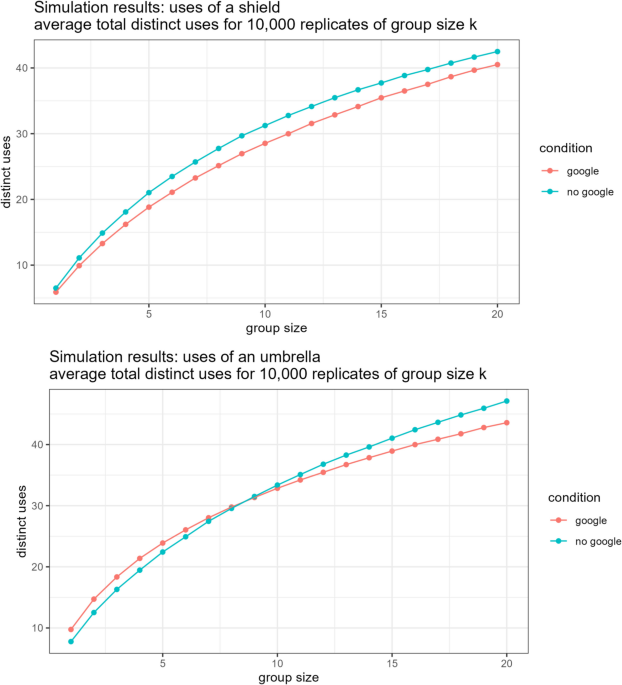
This study investigates the impact of internet access on creativity and identifies potential hidden costs of internet use for groups. Using the alternative uses task, we randomized participants (N = 244) into separate conditions to generate ideas for nonstandard uses for one of two common objects—a shield or an umbrella—either with or without internet access. Nominal group analysis reveals that while individual creativity may be enhanced by internet access, groups articulate fewer novel solutions when provided internet access, suggesting that internet access may constrain collective creative fluency. We also ran a reanalysis of previous data sets on creativity and internet use and found robust converging evidence across different paradigms, coders, and contexts. We further explore robustness by examining alternative operationalizations of fluency: quality of responses, as measured by coders’ evaluations of effectiveness, novelty, and subjective evaluations of creativity. While overall trends suggest an advantage for subjects who do not have internet access, this patterning depends to some degree on variation among coders. Implications for the way digital tools influence creative processes are discussed.
Don’t change the subject
Many creatives know this phenomenon: They start a new project on a promising topic with excitement, but when they can’t come up with an original idea instantly — they lose interest. They come to th…
Creative Computing Group by @tgoerke.bsky.social — Grain
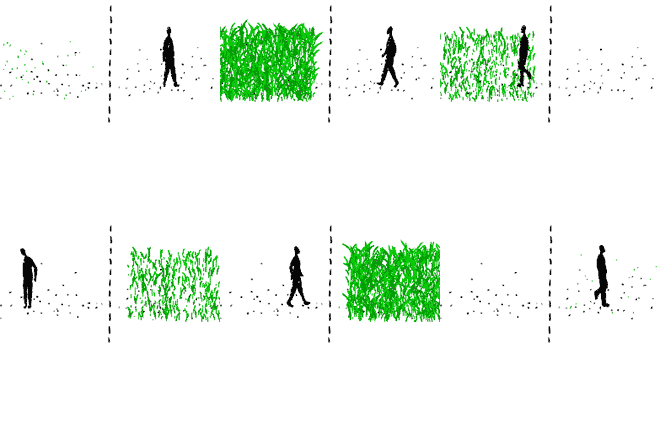
Let's start a group at CODIP to explore creative computing. Let's not start by defining creativity nor computing. It would be a trap. Let's collect artifacts instead. Images, text, thoughts,...
What Makes Us Smart?
Human creativity does not solely rely on our individual cognitive abilities, but instead emerges from the recombination of ideas, practices, and approaches that result from social interactions and id...

Design Thinking by IDEO: Human-Centered Innovation
Learn how IDEO uses design thinking to help teams solve complex problems through human-centered innovation, creativity, collaboration, and impact.

Think Like a Commoner | A Short Introduction to the Life of the Commons
Think Like a Commoner, Second Edition was published by New Society Publishers. The print and audiobook versions are both published under a Creative Commons Attribution-NonCommercial-ShareAlike 4.0 International License.
Ink & Switch
An independent research lab exploring the future of tools for thought.
mata.garden
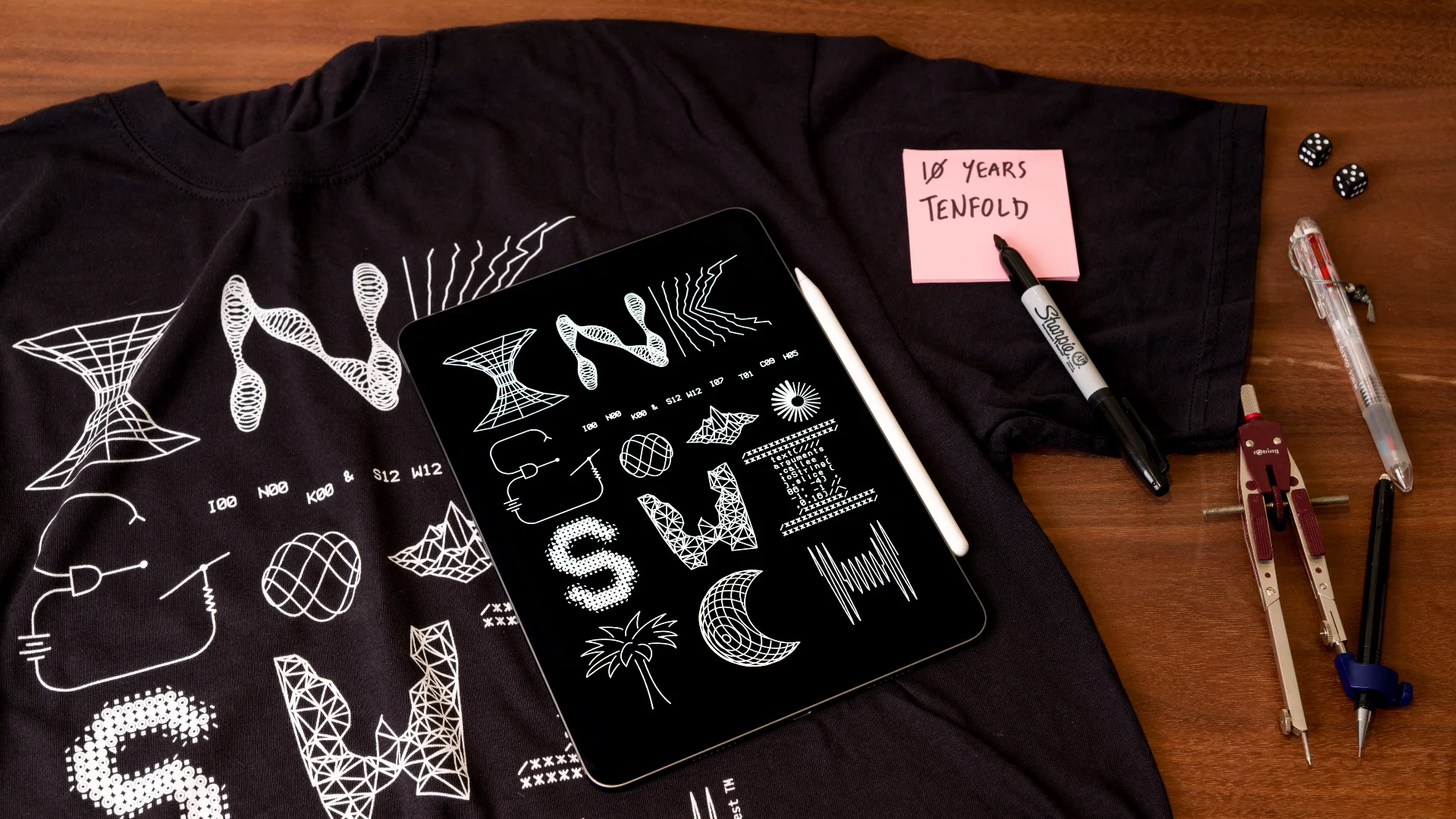
The garden is where we grow seeds of ideas. Either coming through a creative thought or a technological development we consider these live, multi-dimensional, interactive sketches or maquettes. It's important to have ideas that have no specific functional end but are there only to evolve and mutate into others. This is our place to do that.