

In our age of predatory markets and make-believe democracy, our troubled political institutions have lost sight of real people and practical realities. But if you look to the edges, ordinary people are reinventing governance and provisioning on their own terms. The commons is arising as a serious, practical alternative to the corrupt Market/State.
Think Like a Commoner | A Short Introduction to the Life of the Commons
Like the printed book, this audiobook is released under a Creative Commons Attribution-NonCommercial-ShareAlike 4.0 International license.
Think Like a Commoner | A Short Introduction to the Life of the Commons
Think Like a Commoner, Second Edition was published by New Society Publishers. The print and audiobook versions are both published under a Creative Commons Attribution-NonCommercial-ShareAlike 4.0 International License.
Commoning as a Transformative Social Paradigm | David Bollier
Every so often I am invited to write a piece that in effect answers the question, “Why the commons?” I invariably find new answers to that question each time that I re-engage with it. My latest attempt is an essay, “Commoning as a Transformative Social Paradigm,” which I wrote for the Next System Project as part of its series of proposals for systemic alternatives.
New to the Commons? | David Bollier
If you’re coming to the commons for the first time, it can be difficult to grok the idea because there are so many different ways to understand the commons. That’s because the commons is not so much a fixed, universal thing as a general concept describing durable, dynamic sets of social relationships for managing resources -- all sorts of resources: digital, urban, natural, indigenous, rural, cultural, scientific, to use some crude categories.
The tragedy of the commons is a false and dangerous myth | Aeon Essays
Far from being profoundly destructive, we humans have deep capacities for sharing resources with generosity and foresight
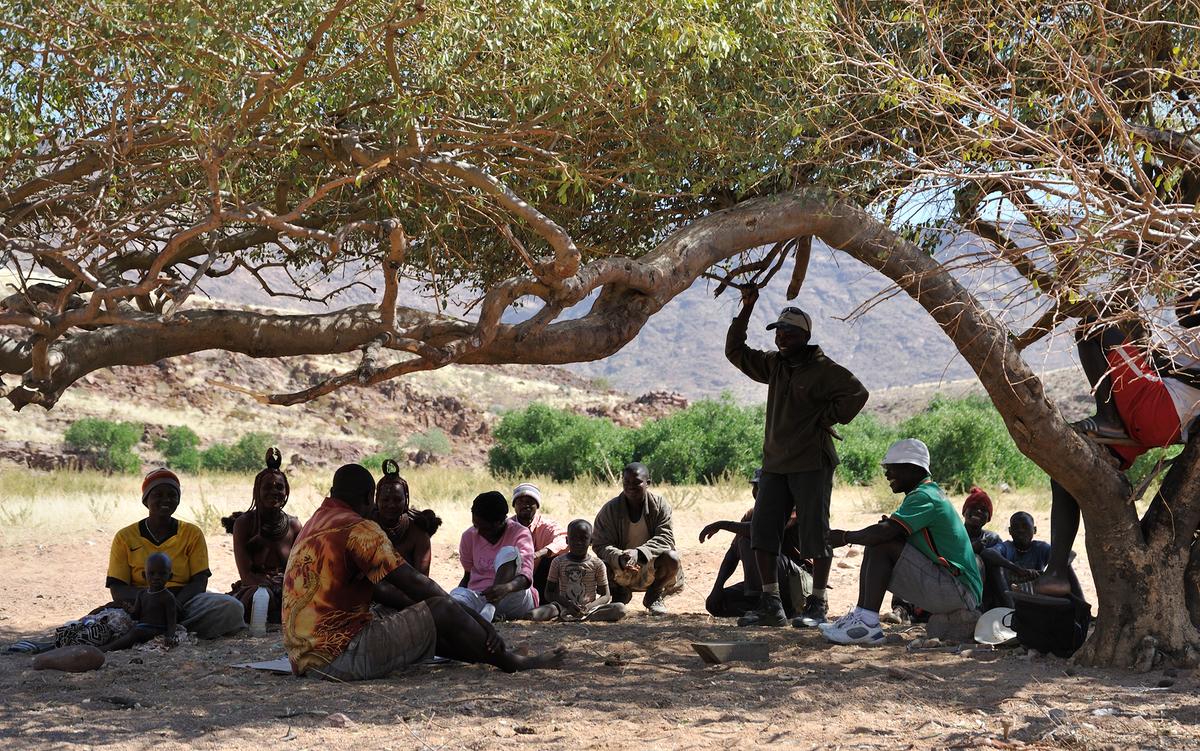
Elinor Ostrom’s 8 rules for managing the commons
The commons are those things that we all own together, that are neither privately owned, nor managed by the government on our behalf. Some are large scale and somewhat abstract, such as the English…


Reinventing Commons Governance in Modern Times | David Bollier
I gave the following remarks about commons governance on September 27 as part of the U!REKA Lab Lecture Series. U!REKA -- which stands for Urban Research and Education Knowledge Alliance -- is a consortium of eight European universities that studies urban commons. The subtitle of my talk was "Find Answers by Living the Questions."
Patterns of Commoning | The Commons Strategies Group
Patterns of Commoning: The Commons Strategies Group
A Revised “Ostrom’s Design Principles for Collective Governance of the Commons
A Revised “Ostrom’s Design Principles for Collective Governance of the Commons” The traditional economic definition of “the commons” are those resources...

Funding the Commons | Public Goods Funding
We convene researchers, builders, and institutions to develop the funding mechanisms, governance systems, and coordination tools that public goods need in an age of AI.

The Commons, Short and Sweet | David Bollier
I am always trying to figure out how to explain the idea of the commons to newcomers who find it hard to grasp. In preparation for a talk that I gave at the Caux Forum for Human Security, near Montreux, Switzerland, I came up with a fairly short overview, which I have copied below. I think it gets to the nub of things.
Elections and Activism: Case Studies
The Commons is an online library for the change makers of the world and for those interested in social change, activism, organising, advocacy and justice.
Elections and Activism: Campaign Skills
The Commons is an online library for the change makers of the world and for those interested in social change, activism, organising, advocacy and justice.
Commons
The commons are the cultural and natural resources accessible to all members of a society, including natural materials such as air, water, and a habitable Earth. These resources are held in common even when owned privately or publicly. Commons can also be understood as natural resources that groups of people manage for individual and collective benefit. Characteristically, this involves a variety of informal norms and values employed for a governance mechanism. Commons can also be defined as a social practice of governing a resource not by state or market but by a community of users that self-governs the resource through institutions that it creates.

The Commons Explained in 15 Minutes | David Bollier