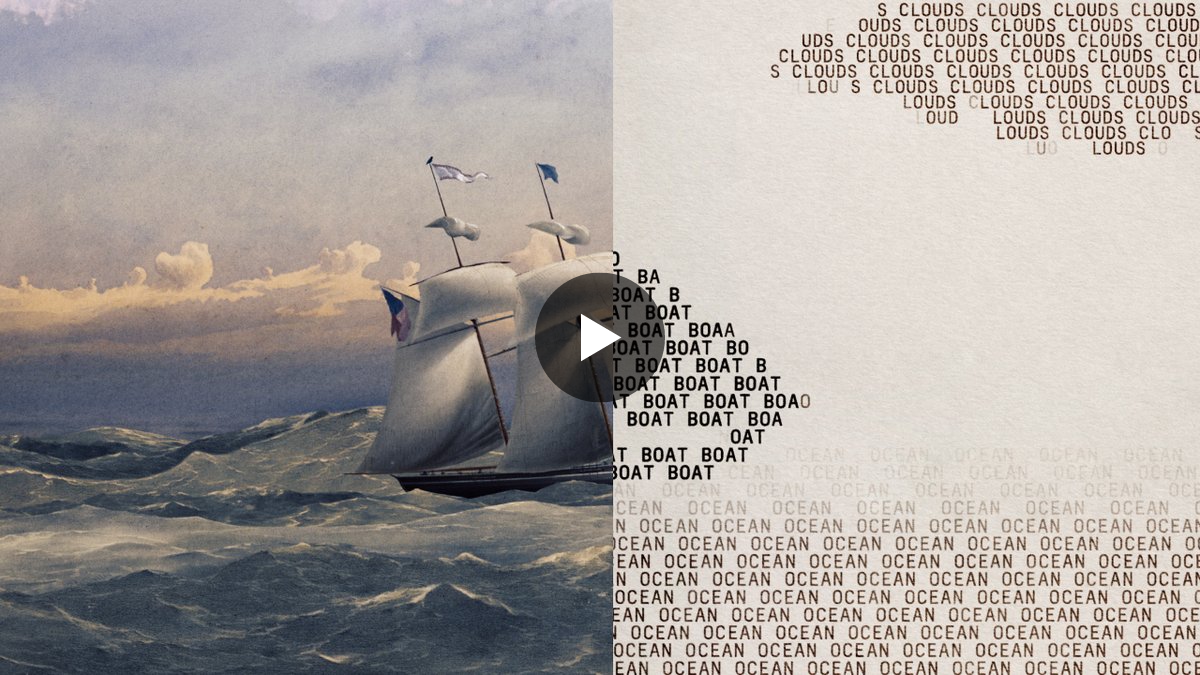
Think Like a Commoner, Second Edition was published by New Society Publishers. The print and audiobook versions are both published under a Creative Commons Attribution-NonCommercial-ShareAlike 4.0 International License.
Think Like a Commoner | A Short Introduction to the Life of the Commons
Like the printed book, this audiobook is released under a Creative Commons Attribution-NonCommercial-ShareAlike 4.0 International license.
Think Like a Commoner | A Short Introduction to the Life of the Commons
In our age of predatory markets and make-believe democracy, our troubled political institutions have lost sight of real people and practical realities. But if you look to the edges, ordinary people are reinventing governance and provisioning on their own terms. The commons is arising as a serious, practical alternative to the corrupt Market/State.
Commoning as a Transformative Social Paradigm | David Bollier
Every so often I am invited to write a piece that in effect answers the question, “Why the commons?” I invariably find new answers to that question each time that I re-engage with it. My latest attempt is an essay, “Commoning as a Transformative Social Paradigm,” which I wrote for the Next System Project as part of its series of proposals for systemic alternatives.
Patterns of Commoning | The Commons Strategies Group
Patterns of Commoning: The Commons Strategies Group
New to the Commons? | David Bollier
If you’re coming to the commons for the first time, it can be difficult to grok the idea because there are so many different ways to understand the commons. That’s because the commons is not so much a fixed, universal thing as a general concept describing durable, dynamic sets of social relationships for managing resources -- all sorts of resources: digital, urban, natural, indigenous, rural, cultural, scientific, to use some crude categories.
Watch and Link Disparate Ideas — Think Jar Collective
An important skill to develop to enhance thinking creatively is to be able to link disparate ideas. This article lays out some provocations to spark creative collisions for innovation

Opinion | Think Less, Think Better (Published 2016)
A wandering mind has less innovative thoughts.

Reversing Assumptions Technique — Think Jar Collective
Think Jar Collective contributor and creativity expert Michael Michalko shares a technique to challenge our own assumptions and in the process spark new thinking.

The Shared Patterns of Indigenous Culture, Permaculture and Digital Commons | David Bollier
Rarely have I read an essay that knits together some very different commons with such wisdom and depth. Joline Blais' 2006 essay, “Indigenous Domain: Pilgrims, Permaculture and Perl,” is a wonderfully insightful analysis that reveals the underlying unity and logic of commons principles. Her piece appeared in Intelligent Agent (vol. 6, no. 2), published by the Inter-Society for the Electronic Arts.
What’s in a name? A forward view of anonymity online
Demos is Britain’s leading cross-party think-tank. We produce original research, publish innovative thinkers and host thought-provoking events.
Indie Thinkers
A curated collection of quotes from the brightest minds on the internet.
Uncommon victories: Lessons from Warringah and Indi
The Commons is an online library for the change makers of the world and for those interested in social change, activism, organising, advocacy and justice.

Thought Maybe
Thought Maybe is an online library of films focused on topics challenging modern society, industrial civilisation, globalisation and its dominant culture. This space is an independent and autonomous resource to inform, inspire and provoke action on radical social and political change. It’s not like other websites… Learn more »
Anthropic on Twitter / X
New Anthropic research: A global workspace in language models.Of everything happening in your brain right now, only a tiny fraction is consciously accessible—thoughts you can describe, hold in mind, and reason with.We found a strikingly similar divide inside Claude. pic.twitter.com/aLUPBifxth— Anthropic (@AnthropicAI) July 6, 2026