


Thread by @doctorow: Neoliberalism's starting gun went off on 1973, when a US- and UK-backed fascist military deposed Salvador Allende, the incredibly popular, democratically elected president of Chile. 1/ The coup...…
New Latin American Perspectives on the History of Neoliberalism — History & Political Economy Project
A roundtable discussion with César Castillo-García, Matilde Ciolli, and José Antonio Galindo Domínguez

The Liberalism to Fascism Pipeline (Neoliberalism Explained)
Chile Writes a New Constitution, Confronting Climate Change Head On (Published 2021)
Chile has lots of lithium, which is essential to the world’s transition to green energy. But anger over powerful mining interests, a water crisis and inequality has driven Chile to rethink how it defines itself.

The Santiago Boys
History Podcast · The Santiago Boys is a nine-part podcast about a group of radical utopians around Salvador Allende, Chile's socialist president. Undeterred by the Cold War and machinations of their enemies and aided …

(PDF) Authoritarian Neoliberalism from Below: Subjectivity and Platform Capitalism in Argentina and Brazil
PDF | We are witnessing a worldwide resurgence of reactionary ideologies and movements, combined with an escalating assault on democratic institutions... | Find, read and cite all the research you need on ResearchGate

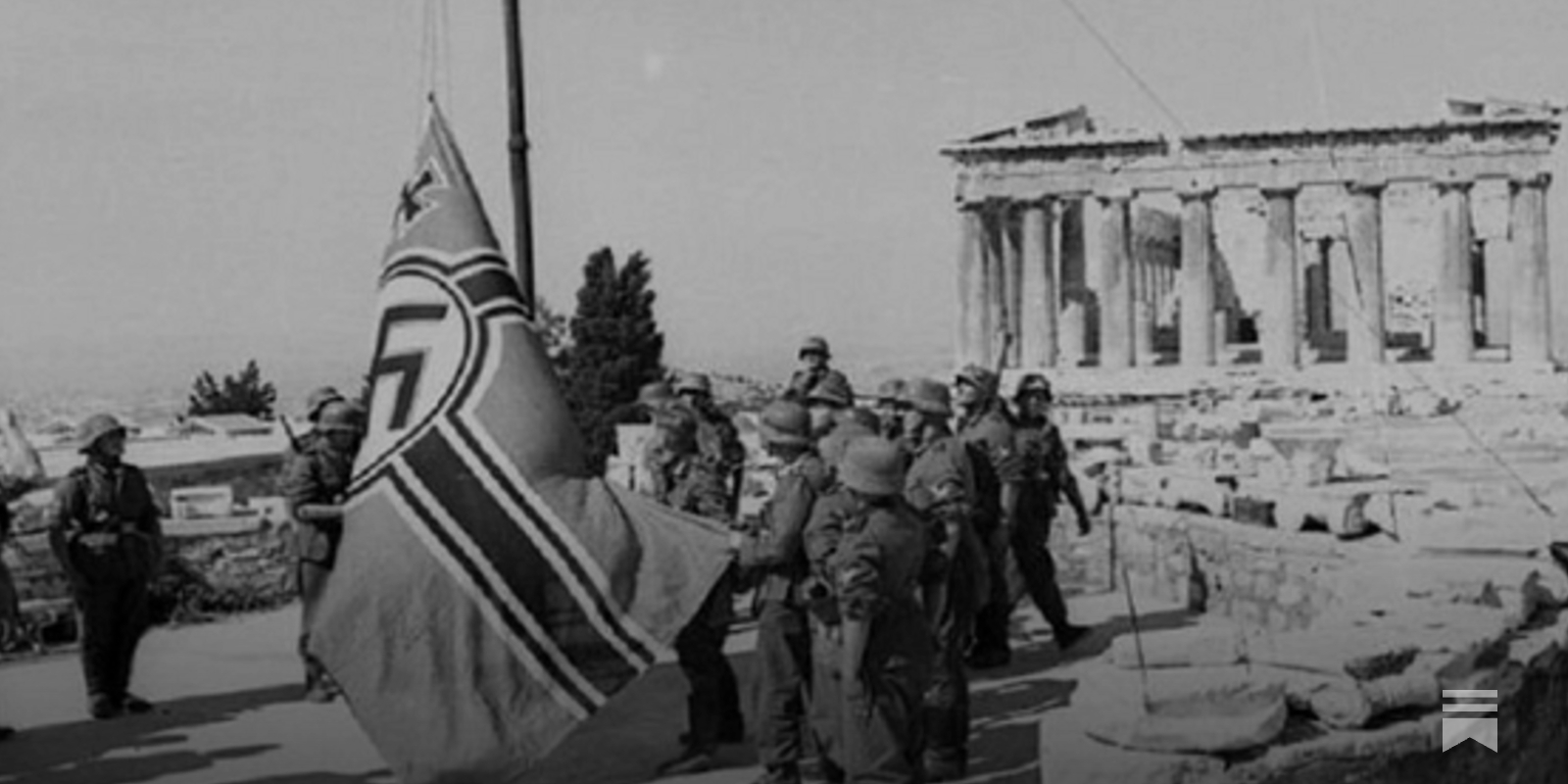
I'm Beginning to Think Fascism Won in 1945
And many of us have been living in a kind of quiescent fascist system since then.
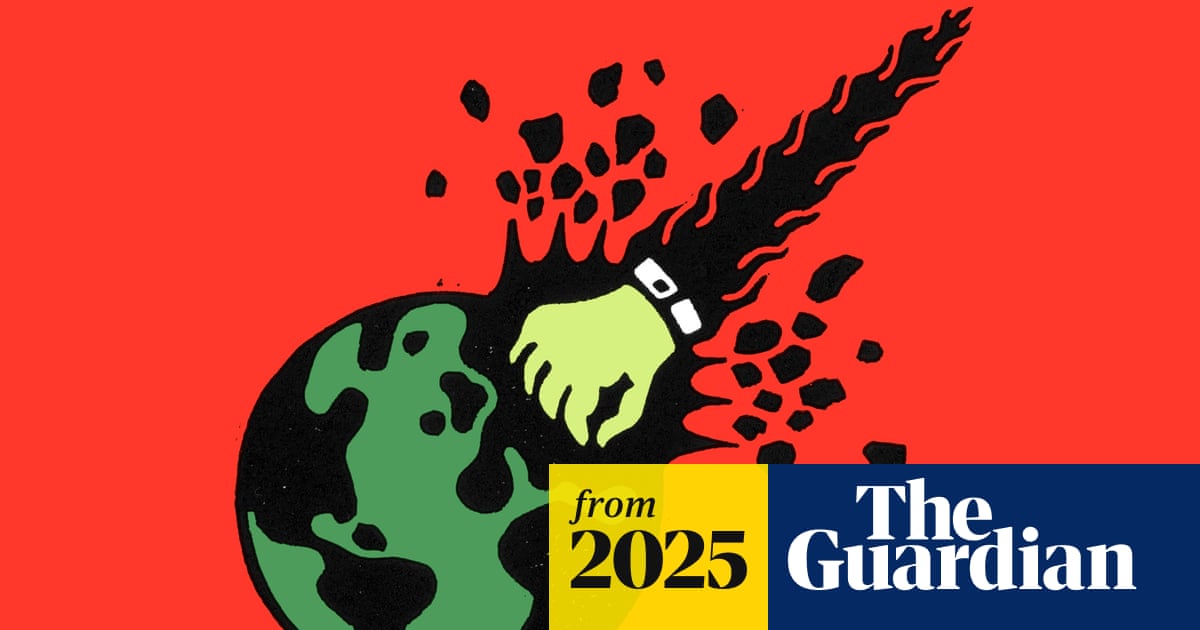
The rise of end times fascism | Naomi Klein and Astra Taylor
The governing ideology of the far right has become a monstrous, supremacist survivalism. Our task is to build a movement strong enough to stop them
Chile’s proposed constitution, written by a representative democratic convention, is up for a vote on 9/4. If passed, it’ll be a victory for Indigenous self-determination in Chile and across the 🌎. I've translated key Indigenous provisions to expand access & celebrate them. A🧵:
Chile’s proposed constitution, written by a representative democratic convention, is up for a vote on 9/4. If passed, it’ll be a victory for Indigenous self-determination in Chile and across the 🌎. I've translated key Indigenous provisions to expand access & celebrate them. A🧵:— Saul (@saaaauuull) August 18, 2022
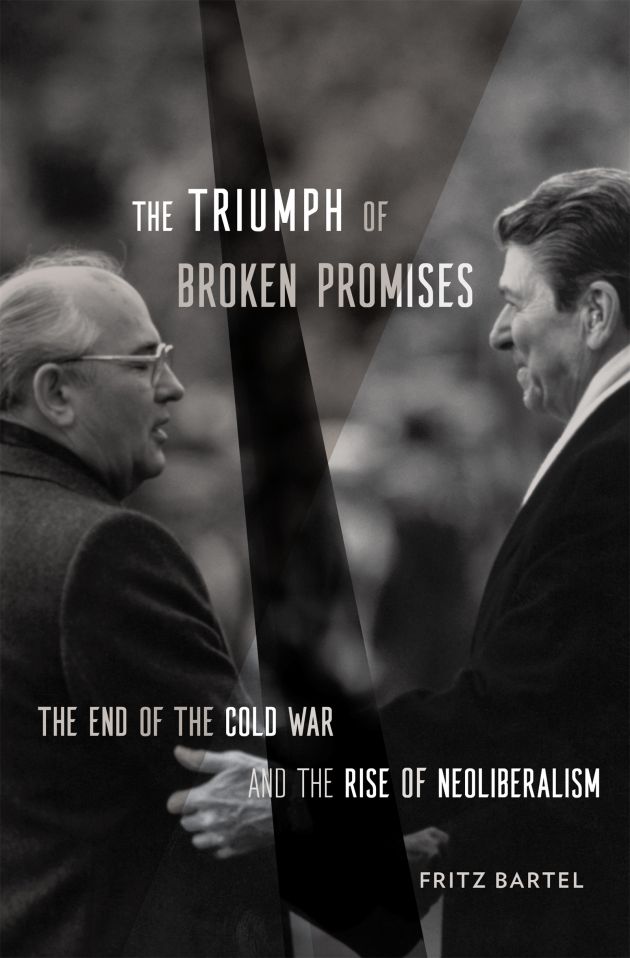
The Triumph of Broken Promises — Harvard University Press
A powerful case that the economic shocks of the 1970s hastened both the end of the Cold War and the rise of neoliberalism by forcing governments to impose austerity on their own people.Why did the Cold War come to a peaceful end? And why did neoliberal economics sweep across the world in the late twentieth century? In this pathbreaking study, Fritz Bartel argues that the answer to these questions is one and the same. The Cold War began as a competition between capitalist and communist governments to expand their social contracts as they raced to deliver their people a better life. But the economic shocks of the 1970s made promises of better living untenable on both sides of the Iron Curtain. Energy and financial markets placed immense pressure on governments to discipline their social contracts. Rather than make promises, political leaders were forced to break them.In a sweeping narrative, The Triumph of Broken Promises tells the story of how the pressure to break promises spurred the end of the Cold War. In the West, neoliberalism provided Western leaders like Ronald Reagan and Margaret Thatcher with the political and ideological tools to shut down industries, impose austerity, and favor the interests of capital over labor. But in Eastern Europe, revolutionaries like Lech Walesa in Poland resisted any attempt at imposing market discipline. Mikhail Gorbachev tried in vain to reform the Soviet system, but the necessary changes ultimately presented too great a challenge.Faced with imposing economic discipline antithetical to communist ideals, Soviet-style governments found their legitimacy irreparably damaged. But in the West, politicians could promote austerity as an antidote to the excesses of ideological opponents, setting the stage for the rise of the neoliberal global economy.
Neoliberal Fascism as the Endpoint of Casino Capitalism
This article explores neoliberal fascism as a distinctive political formation within the current historical moment. In doing so, it first analyzes neoliberalism as a project that has since the 1970s destroyed all the commanding institutions of democracy while consolidating power in the hands of a financial elite. In addition, it analyzes neoliberalism as a movement, that produces and legitimates massive economic inequality and suffering, privatizes public goods, dismantles essential government agencies, and individualizes all social problems. Under such circumstances, neoliberalism creates the conditions for right wing extremists to mobilize the anger of white disenfranchised working class populations by both appealing to the economic injustices they experience while simultaneously blaming and directing their frustrations towards non-white minority groups such as immigrants, blacks, and Muslims. It is precisely this merging of the social, political, and economic hardships produced by neoliberal capitalism and its appropriation of the discourse of white supremacy to divert attention from its worst excesses and failures that a neoliberal fascism is produced. Â More specifically, I argue that in the face of 40 years of neoliberalism with its production of massive inequality, a frontal attack on the welfare state, and the erosion of civic institutions and culture, there has been a resurgence of fascist discourses and a populist fascist political movement. Neoliberal fascism represents the conjoining of the most extreme elements of casino capitalism with the discourses of racial cleansing, and white nationalism. The article concludes by examining how atomization, fear, and anxiety have become the breeding grounds of fascism and what it means to revive education as a central tenet of politics so as to address the task of not simply resisting oppressive economic structures, but also what it means to engage in the massive challenge of changing individual and collective consciousness as a precondition for collective struggle and the building of new social movements. Author Biography Henry Giroux, McMaster University Chair for Scholarship in the Public Interest The Paulo Freire Distinguished Scholar in Critical Pedagogy
Remembering the Anarchist Resistance to fascism
Andrew Flood Remembering the Anarchist Resistance to fascism March 4, 2005
For all talk about how tech fascists want to "destroy democracy", people don't have a concrete idea of what comes after, i.e. "neo-feudalism" "monarchy" "patchworks", "fiefdoms", etc Very simple:
For all talk about how tech fascists want to "destroy democracy", people don't have a concrete idea of what comes after, i.e. "neo-feudalism" "monarchy" "patchworks", "fiefdoms", etc Very simple:— shanley (@shanley) August 5, 2026
New Acquisitions: 1933 and the Definition of Fascism
Today we’re going to look at definitions of fascism and ask the question – you may have guessed – if Donald Trump is running for President as a fascist. Worry not, this isn’…

Fascism is Less of a Threat than the Illusion of Democracy
It is Time We Open Our Eyes to the Other Real Challenge America Faces

Chile: fighting fires for free - The World from PRX
How adrenaline junkies ended up staffing Chile's firehouses — for no pay.
The Authoritarian Personality
This hugely influential study on the psychology of authoritarianism was written in answer to Hitler’s Germany—and now rings more relevant than ever as fascism and anti-Semitism sweep across America.What makes a fascist? Are there character traits that make someone more likely to vote for the far right? The Authoritarian Personality is not only one of the most significant works of social psychology ever written, it also marks a milestone in the development of Adorno’s thought, showing him grappling with the problem of fascism and the reasons for Europe’s turn to reaction. Over half a century later, and with the rise of right-wing populism and the reemergence of the far-right in recent years, this hugely influential study remains as insightful and relevant as ever.This new edition includes an introduction by Frankfurt School scholar Peter E. Gordon and contains the first-ever publication of Adorno’s subsequent critical notes on the project.“Adorno and his colleagues could easily have been describing Alex Jones’s paranoid InfoWars rants or the racist views expressed by many Trump supporters.” —New York Times