Making consent an agenda item One of the chapters of my career was working as a professional facilitator, running public engagement processes for governments and government agencies. In doing this work I got to spend an unusual amount of time considering, reviewing, and designing meetings of all sizes and with
Agenda - Notes meets Calendar
Organize your days with Agenda, the Apple Design Award winning note taking app. Download for free and start getting things done today!

The Power of Effective Agenda-Setting — Renaissance Philanthropy – A brighter future for all through science, technology, and innovation (V2)
Tom Kalil Renaissance Philanthropy believes in the power of effective agenda-setting. In this Q&A, Tom Kalil discusses what we mean by that, how agenda-setting can create positive, self-fulfilling prophesies, and the role of field strategists in agenda-setting.

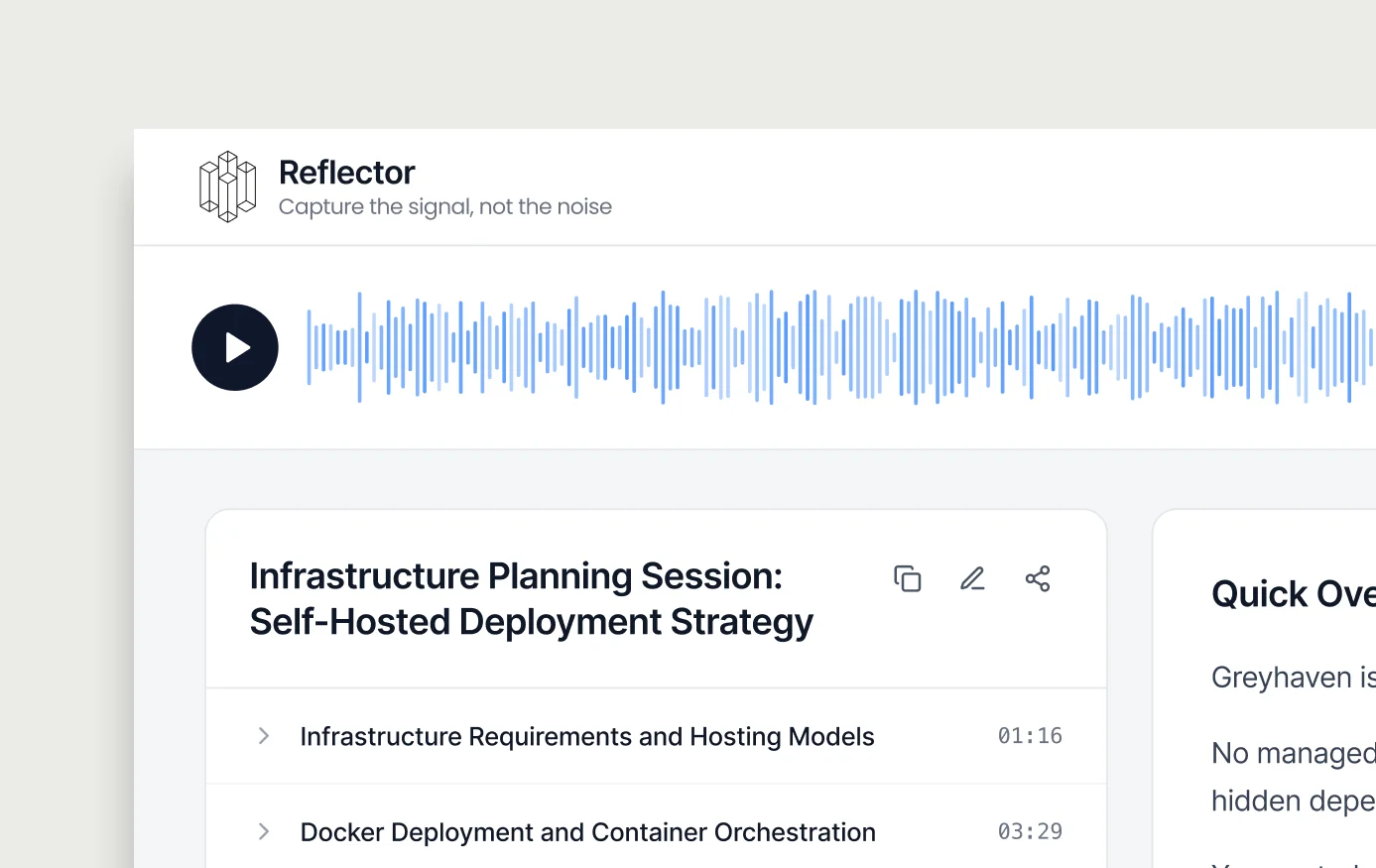
Reflector: Infrastructure for Meetings, by Greyhaven
Most organizations run on meetings. Strategy gets debated there. Decisions get made there. Context lives there. And yet...
2026 List of Identity and Related Conferences and Standards Development Events
Agenda and minutes of meetings of the Federated Identity Community Group - fedidcg/meetings
Meetings for an effective eng organization.
Some engineers develop a strong point of view that meetings are a waste of their time. There’s good reason for that perspective, as many meetings are quite bad, but it’s also a bit myopic: meetings can also be an exceptionally valuable part of a well-run organization. If you’re getting feedback that any given meeting isn’t helpful, then iterate on it, and consider pausing it for the time being. It may not be useful for your organization yet, but don’t give up on the idea of meetings.
Status meetings are the scourge
Status meetings are the worst kinds of meetings. Eliminate them and you’ll actually know more, save a pile of money, and regain dozens of hours a month. A status meeting — sometimes called a s…


Plan a round of user research
How to plan a round of user research, including setting objectives, finding participants, recording and taking notes of a session.

An introduction to radical participatory design: decolonising participatory design processes
Outside of community-led design projects, most participatory design processes initiated by a company or organisation maintain or even strengthen power imbalances between the design organisation and the community on whose purported behalf they are designing, further increasing the absencing experience. Radical participatory design (RPD) is a radically relational answer to the coloniality inherent in participatory design where the community members’ disappointment is greater due to the greater expectations and presencing potential of a ‘participatory design’ process. We introduce the term RPD to show how research and design processes can be truly participatory to the root or core. Instead of treating participatory design as a method, a way of conducting a method, or a methodology, we introduce RPD as a meta-methodology, a way of doing any methodology. We explicitly describe what participation means and compare and contrast design processes based on the amount of participation, creating a typology of participation. We introduce ‘designer as community member’, ‘community member as designer,’ and ‘community member as facilitator’ models and provide characteristics for the meta-methodology of RPD.

An introduction to radical participatory design: decolonising participatory design processes
Outside of community-led design projects, most participatory design processes initiated by a company or organisation maintain or even strengthen power imbalances between the design organisation and the community on whose purported behalf they are designing, further increasing the absencing experience. Radical participatory design (RPD) is a radically relational answer to the coloniality inherent in participatory design where the community members’ disappointment is greater due to the greater expectations and presencing potential of a ‘participatory design’ process. We introduce the term RPD to show how research and design processes can be truly participatory to the root or core. Instead of treating participatory design as a method, a way of conducting a method, or a methodology, we introduce RPD as a meta-methodology, a way of doing any methodology. We explicitly describe what participation means and compare and contrast design processes based on the amount of participation, creating a typology of participation. We introduce ‘designer as community member’, ‘community member as designer,’ and ‘community member as facilitator’ models and provide characteristics for the meta-methodology of RPD.
(PDF) The Architecture of Consent: A Comprehensive Analysis of Antonio Gramsci's Theory of Cultural Hegemony, Intellectual Leadership, and Modern Power Structures
PDF | On Apr 28, 2026, Douglas C Youvan published The Architecture of Consent: A Comprehensive Analysis of Antonio Gramsci's Theory of Cultural Hegemony, Intellectual Leadership, and Modern Power Structures | Find, read and cite all the research you need on ResearchGate

We use AT Protocol to power our events calendar — it notifies the Devconnect team about your event and makes your event data available for others in the community to build their own community calendars
Let’s Talk About Consent
What is sexual consent? What practices does it refer to? Rébecca Lévy-Guillain explores these questions through the prism of sociology in her doctoral research. A Ph.D. student at the National Institute for demographic studies (Ined) and at the Observatoire sociologique du changement (OSC) of Sciences Po, she is studying the uses of the category

Making A Plan
"It is my hope that this tool in process, which benefited from the input of many seasoned activists, helps you to connect the personal to the political. I hope that this offers the beginning of a bridge between information and action." (Mariame Kaba) This zine is meant to be printed and used as a template for those seeking to make an activism or organizing plan. To create your zine, select Booklet under Page Size & Handling, print double-sided, and fold.

Inventing New Nature
Defining the Protocol Institute's research mission