


A new study finds African content moderators report worse mental health than global peers, amid low pay, precarious work, and exposure to traumatic content.
Do social media experiments prove a link with mental health: A methodological and meta-analytic review.
Computer-Mediated Communication, Social Media, and Mental Health: A Conceptual and Empirical Meta-Review
Computer-mediated communication (CMC), and specifically social media, may affect the mental health (MH) and well-being of its users, for better or worse. Research on this topic has accumulated rapidly, accompanied by controversial public debate and numerous systematic reviews and meta-analyses. Yet, a higher-level integration of the multiple disparate conceptual and operational approaches to CMC and MH and individual review findings is desperately needed. To this end, we first develop two organizing frameworks that systematize conceptual and operational approaches to CMC and MH. Based on these frameworks, we integrate the literature through a meta-review of 34 reviews and a content analysis of 594 publications. Meta-analytic evidence, overall, suggests a small negative association between social media use and MH. However, effects are complex and depend on the CMC and MH indicators investigated. Based on our conceptual review and the evidence synthesis, we devise an agenda for future research in this interdisciplinary field.

Meta’s New Content Policy Will Harm Vulnerable Users. If It Really
Earlier this week, when Meta announced changes to their content moderation processes, we were hopeful that some of those changes—which we will address in more detail in this post—would enable greater

The Insidious World of Lolcows
Within the internet’s darkest ecosystems, provoking the mentally ill has become full-time entertainment.

Two tests of social displacement through social media use
The present manuscript presents two tests of the hypothesis that social media use decreases social interaction, leading to decreased well-being. Study 1 used the Longitudinal Study of American Yout...

Moderator Mayhem: A Content Moderation Game
Can you succeed at the fast-paced challenge of content moderation?
Estimating the association between Facebook adoption and well-being in 72 countries
Social media's potential effects on well-being have received considerable research interest, but much of past work is hampered by an exclusive focus on demographics in the Global North and inaccurate self-reports of social media engagement. We describe associations linking 72 countries' Facebook adoption to the well-being of 946 798 individuals from 2008 to 2019. We found no evidence suggesting that the global penetration of social media is associated with widespread psychological harm: Facebook adoption predicted life satisfaction and positive experiences positively, and negative experiences negatively, both between countries and within countries over time. Nevertheless, the observed associations were small and did not reach a conventional 97.5% one-sided credibility threshold in all cases. Facebook adoption predicted aspects of well-being more positively for younger individuals, but country-specific results were mixed. To move beyond studying aggregates and to better understand social media's roles in people's lives, and their potential causal effects, we need more transparent collaborative research between independent scientists and the technology industry.

Does Using Social Media Jeopardize Well-Being? The Importance of Separating Within- From Between-Person Effects
Social networking sites (SNS) are frequently criticized as a driving force behind rising depression rates. Yet empirical studies exploring the associations between SNS use and well-being have been predominantly cross-sectional, while the few existing longitudinal studies provided mixed results. We examined prospective associations between SNS use and multiple indicators of well-being in a nationally representative sample of Dutch adults ( N ∼ 10,000), comprising six waves of annual measures of SNS use and well-being. We used an analytic method that estimated prospective effects of SNS use and well-being while also estimating time-invariant between-person associations between these variables. Between individuals, SNS use was associated with lower well-being. However, within individuals, year-to-year changes in SNS use were not prospectively associated with changes in well-being (or vice versa). Overall, our analyses suggest that the conclusions about the causal impact of social media on rising mental health problems in the population might be premature.
Addressing Moderated Mediation Hypotheses: Theory, Methods, and Prescriptions
This article provides researchers with a guide to properly construe and conduct analyses of conditional indirect effects, commonly known as moderated mediation effects. We disentangle conflicting d...

Imagining a Safer Future for Content Moderators
Through this blog series, we are exploring what the world can look like when technology is designed and deployed for the benefit of all.

A Statistical Interrogation of “The Case for Causality, Part 1” by Rausch and Haidt – Matthew B. Jané
I don’t know anything about the literature on social media and mental health so my focus on this post is to interrogate the statistical approach taken by the article written by Zach Rausch and Jonathon Haidt (link here) and to some extent the original meta-analysis by Ferguson.

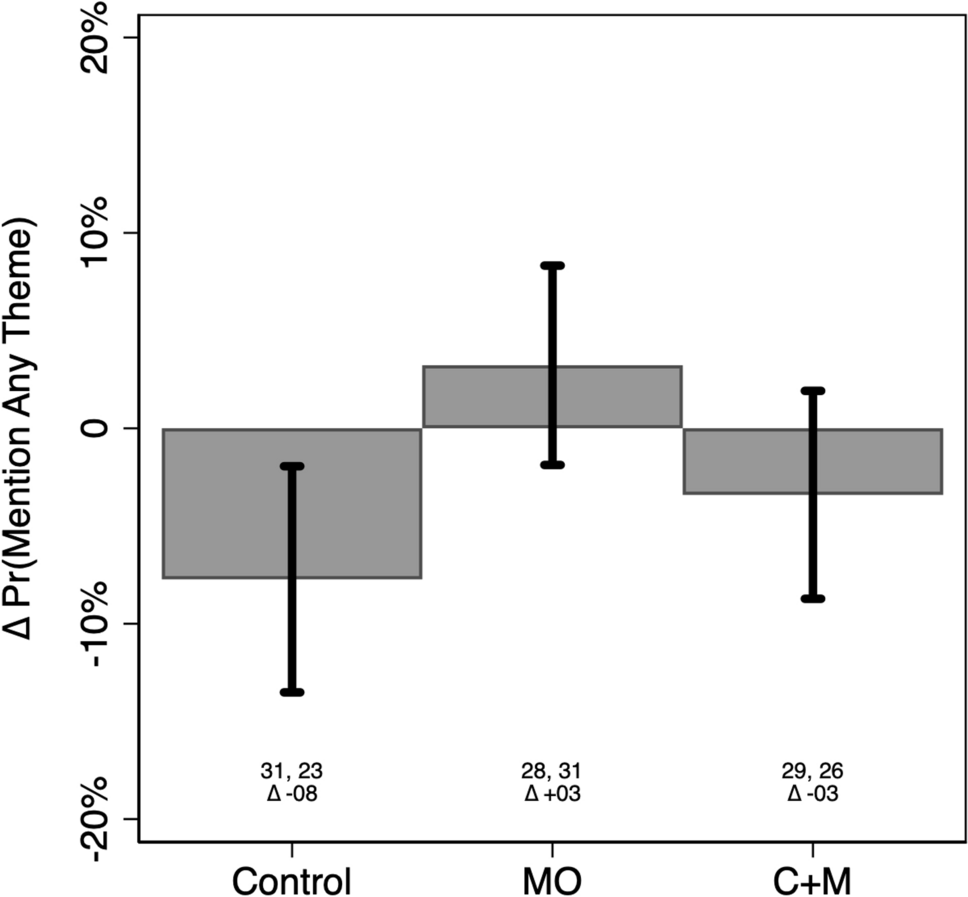
“Influencing the influencers:” a field experimental approach to promoting effective mental health communication on TikTok
A substantial body of social scientific research considers the negative mental health consequences of social media use on TikTok. Fewer, however, consider the potentially positive impact that mental health content creators (“influencers”) on TikTok can have to improve health outcomes; including the degree to which the platform exposes users to evidence-based mental health communication. Our novel, influencer-led approach remedies this shortcoming by attempting to change TikTok creator content-producing behavior via a large, within-subject field experiment (N = 105 creators with a reach of over 16.9 million viewers; N = 3465 unique videos). Our randomly-assigned field intervention exposed influencers on the platform to either (a) asynchronous digital (.pdf) toolkits, or (b) both toolkits and synchronous virtual training sessions that aimed to promote effective evidence-based mental health communication (relative to a control condition, exposed to neither intervention). We find that creators treated with our asynchronous toolkits—and, in some cases, those also attending synchronous training sessions—were significantly more likely to (i) feature evidence-based mental health content in their videos and (ii) generate video content related to mental health issues. Moderation analyses further reveal that these effects are not limited to only those creators with followings under 2 million users. Importantly, we also document large system-level effects of exposure to our interventions; such that TikTok videos featuring evidence-based content received over half a million additional views in the post-intervention period in the study’s treatment groups, while treatment group mental health content (in general) received over three million additional views. We conclude by discussing how simple, cost-effective, and influencer-led interventions like ours can be deployed at scale to influence mental health content on TikTok.
Facebook did little to moderate posts in the world’s most violent countries
In some of the world’s most high-profile conflict zones, the tech giant invested few resources and failed to stem a steady stream of harmful posts, according to internal documents.

Banning anonymous social media accounts will do more harm than good | James Ball
Labour’s Angela Rayner wants to end online abuse, but she fails to understand the lives of those outside the political and media bubbles, says former Guardian special projects editor James Ball
Meta: Systemic Censorship of Palestine Content
Meta’s content moderation policies and systems have increasingly silenced voices in support of Palestine on Instagram and Facebook in the wake of the hostilities between Israeli forces and Palestinian armed groups.

From @mkarhulahti.bsky.social, me, @nballou.bsky.social, and Ivan Ropovik, newly accepted at Collabra: Psychology. This concerns a Nature: Human Behavior publication on the impacts of a Chinese anti-gaming policy. The paper has serious flaws making its results unsupportable. osf.io/preprints/psyarxiv/n2rka_v4
OSF
osf.io