


Thursday's Child Has Far to Go
Academia: Thoughtfulness With--and Without--Writing
Thursday’s Child Has Far To Go


Childhood And Education #17: Is Our Children Reading
Reading is the most fundamental thing in education.
College professors face an emerging challenge: We know students are no longer reading entire books
Some teachers increasingly are shifting their approach to reading, assigning fewer books than they once did.
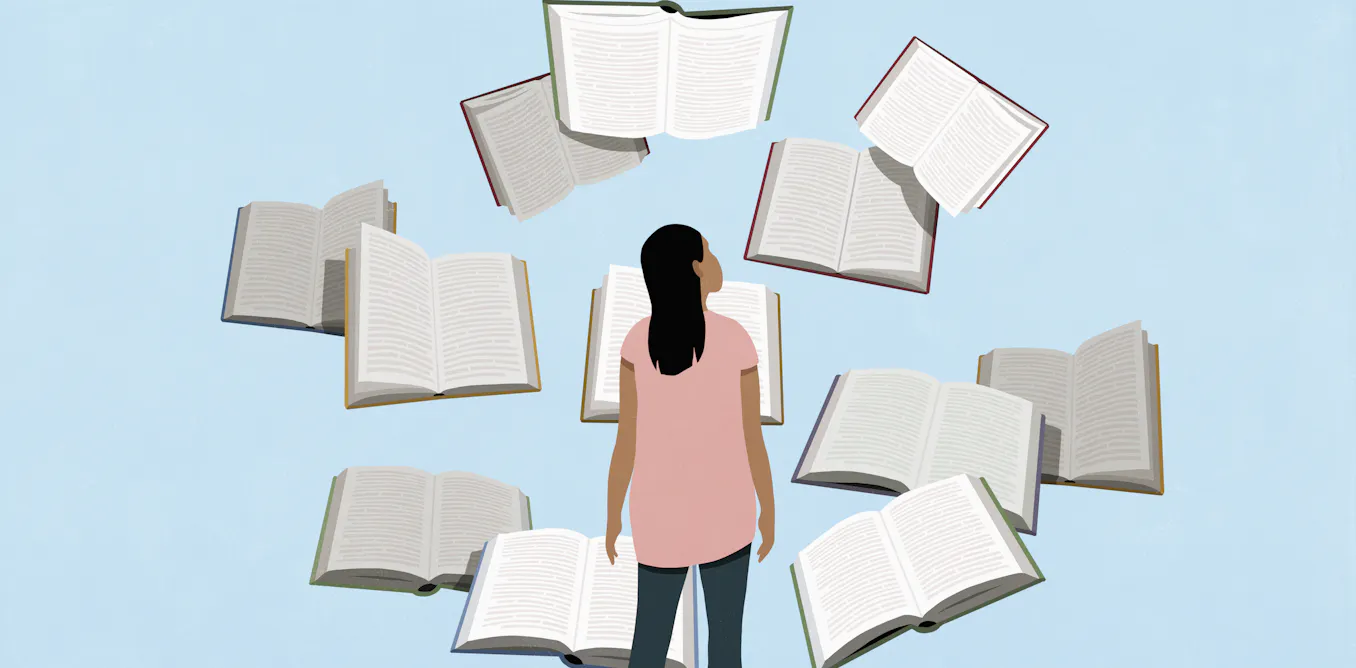
Opinion | My Students Can’t Read
The generational collapse in literacy is measurable, persistent, and likely to get worse.

Academia: What Was "Digital Literacy"?
Short Shelf Lives Make For Bad Curricular Planning
How a flawed idea is teaching millions of kids to be poor readers
For decades, schools have taught children the strategies of struggling readers, using a theory about reading that cognitive scientists have repeatedly debunked. And many teachers and parents don't know there's anything wrong with it.

The End of Reading Is Here
Optimists once believed that universal literacy was inevitable. Now it seems that the age of reading might be a short anomaly in human history.
What’s Happening to Reading?
For many people, A.I. may be bringing the age of traditional text to an end.

Reading in the Age of Constant Distraction by Mairead Small Staid
February 8, 2019 – Twenty-five years ago, Sven Birkerts published “The Gutenberg Elegies: The Fate of Reading in an Electronic Age.” Have his fears and projections come to pass?

Creative Reading: Scaffolding Reading for Transformation
Reading augmentation systems increasingly help readers process text at scale. While these tools address real constraints of time and cognitive load, they often implicitly frame reading as information transmission, or "reading to discard," delegating interpretation and effort to the machine. Yet this delegation changes the outcome of reading. For example, in scholarly reading, deciding what a research text implies and why it matters is central to the work of scholarly production. We propose creative reading as an alternative goal: reading augmentation that supports readers in creating both readings and themselves as readers. By putting literary and narrative theories into conversation with scholarly sensemaking and creativity support, we present a provocation-oriented design space for valuing the process of reading as a way of preserving a plurality of readings and transforming readers over time.

Creative Reading: Scaffolding Reading for Transformation
Reading augmentation systems increasingly help readers process text at scale. While these tools address real constraints of time and cognitive load, they often implicitly frame reading as information transmission, or "reading to discard," delegating interpretation and effort to the machine. Yet this delegation changes the outcome of reading. For example, in scholarly reading, deciding what a research text implies and why it matters is central to the work of scholarly production. We propose creative reading as an alternative goal: reading augmentation that supports readers in creating both readings and themselves as readers. By putting literary and narrative theories into conversation with scholarly sensemaking and creativity support, we present a provocation-oriented design space for valuing the process of reading as a way of preserving a plurality of readings and transforming readers over time.
The revolt of the reader | The Observation Deck
Reading is important to me. While I’m not a quick reader nor an especially voracious one, I have found that long-form reading has had a profound influence on me over my life. And because reading is important to me, writing is too: writing not only allows us to convey our ideas, but the very act forces us to test and distill them — at once making our ideas more robust while providing the vehicle by which to share them.

How to create reading experiences that "go beyond information transmission and toward reader transformation.” Great paper by @blue-phia.bsky.social @lepidopterane.bsky.social @yijunliu.bsky.social Sarah Sterman @sh1m.bsky.social @maxkreminski.bsky.social arxiv.org/abs/2606.04308 >
