


Short Shelf Lives Make For Bad Curricular Planning
Notes from my Beginner Computer Literacy Class Part 1 - Alex’s Writing Journal
Helping the uninitiated navigate this brave new digital world
What we think is a decline in literacy is a design problem | Aeon Essays
Your inability to focus isn’t a failing. It’s a design problem, and the answer isn’t getting rid of our screen time

'The Drama' and the microgenerational digital divide
PLUS: The "forklift model" of A.I. education


Opinion | My Students Can’t Read
The generational collapse in literacy is measurable, persistent, and likely to get worse.

Everything is miscellaneous : the power of the new digital disorder
Includes bibliographical references (p. [235]-257) and index; Prologue : information in space -- The new order of order -- Alphabetization and its discontents -- The geography of knowledge -- Lumps and splits -- The laws of the jungle -- Smart leaves -- Social knowing -- What nothing says -- Messiness as a virtue -- The work of knowledge -- Coda : misc; Philosopher Weinberger shows how the digital revolution is radically changing the way we make sense of our lives. Human beings constantly collect, label, and organize data--but today, the shift from the physical to the digital is mixing, burning, and ripping our lives apart. In the past, everything had its one place--the physical world demanded it--but now everything has its places: multiple categories, multiple shelves. Everything is suddenly miscellaneous. Weinberger charts the new principles of digital order that are remaking business, education, politics, science, and culture. He examines how Rand McNally decides what information not to include in a physical map (and why Google Earth is winning that battle), how Staples stores emulate online shopping to increase sales, why your children's teachers will stop having them memorize facts, and how the shift to digital music stands as the model for the future.--From publisher description; From A to Z, Everything Is Miscellaneous will completely reshape the way you think - and what you know - about the world. Includes information on alphabetical order, Amaxon.com, animals, Aristotle, authority, Bettmann Archive, blogs (weblogs), books, broadcasting, British Broadcasting Corporation (BBC), business, card catalog, categories and categorization, clusters, companies, Colon Classification, conversation, Melvil Dewey, Dewey Decimal Classification system, Encyclopaedia Britannica, encyclopedia, essentialism, experts, faceted classification system, first order of order, Flickr.com, Google, Great Books of the Western World, ancient Greeks, health and medical information, identifiers, index, inventory tracking, knowledge, labels, leaf and leaves, libraries, Library of Congress, links, Carolus Linnaeus, lumping and splitting, maps and mapping, marketing, meaning, metadata, multiple listing services (MLS), names of people, neutrality or neutral point of view, New York Public Library, Online Computer Library Center (OCLC), order and organization, people, physical space, everything having place, Plato, race, S.R. Ranganathan, Eleanor Rosch, Joshua Schacter, science, second order of order, simplicity, social constructivism, social knowledge, social networks, sorting, species, standardization, tags, taxonomies, third order of roder, topical categorization, tree, Uniform Product Code (UPC), users, Jimmy Wales, web, Wikipedia, etc

Advancing Women & Technology: Empowering Futures Through Digital Skills: 2025: News and Resources: About Us: Center of Excellence for Women & Technology: Indiana University Bloomington
In today’s fast-paced digital world, technology isn’t just a career path-it’s a compelling tool for empowerment.
Digital Echoes and Unquiet Minds - Christopher Butler
There's a psychological burden of digital life even heavier than distraction.

Standardized Education | The Paper Pilot
The Paper Pilot's digital garden of thoughts on philosophy, politics, and sociology
Thoughts on Cyberpositionality: The Construction of Digital Communities in Digital Spaces, Damien Patrick Williams
I found Rebecca Monteleone, Martin Perez Comisso, and Elma Hajric’s “Cyberpositionality: Sociotechnical Location in the Digital Age” (2024) to be an extremely timely and important article which can…

Integrating Data Literacy Into K–12 Education · Issue 7.2, Spring 2025
In a world increasingly driven by data, the ability to understand, interpret, and make use of data has assumed a fundamental role. Yet despite its importance, data literacy remains conspicuously absent from the U.S. K–12 educational landscape. This article explores the obstacles in integrating data literacy into the educational system and proposes a multipronged approach to address these challenges.We contend that successful implementation of K–12 data literacy education necessitates comprehensive teacher preparation and professional development coupled with the integration of data literacy within curricula. Furthermore, the creation of suitable tools and data sets specifically tailored for K–12 learning is paramount. Finally, school and district leaders must champion the cause of data literacy, allocating resources and nurturing a culture that recognizes its value.Drawing inspiration from the success of large-scale initiatives such as the Moore-Sloan Data Science Environments and the National Writing Project, we present the components and conditions essential for successful advancement of data literacy education. The article concludes with a call to action inviting constituents from across various roles to unite in the endeavor of building a future where data literacy is recognized as a fundamental skill. We underscore that the widespread implementation of data literacy within K–12 education will demand sustained investment, customized local implementation, and the concerted efforts of multiple disciplines and stakeholder groups. By confronting these challenges head-on and harnessing the strategies outlined in this article, we can strive to ensure that all students are armed with the data literacy skills necessary to navigate an increasingly data-driven world.

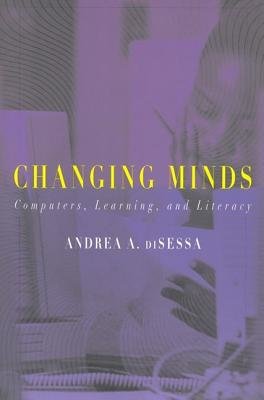
Changing Minds: Computers, Learning, and Literacy
An impassioned guide to how computers can fundamentally change how we learn and think.Andrea diSessa's career as a scholar, technologist, and teacher has b
College professors face an emerging challenge: We know students are no longer reading entire books
Some teachers increasingly are shifting their approach to reading, assigning fewer books than they once did.
The End of Reading Is Here
Optimists once believed that universal literacy was inevitable. Now it seems that the age of reading might be a short anomaly in human history.


Data Everyday: Data Literacy Practices in a Division I College Sports Context