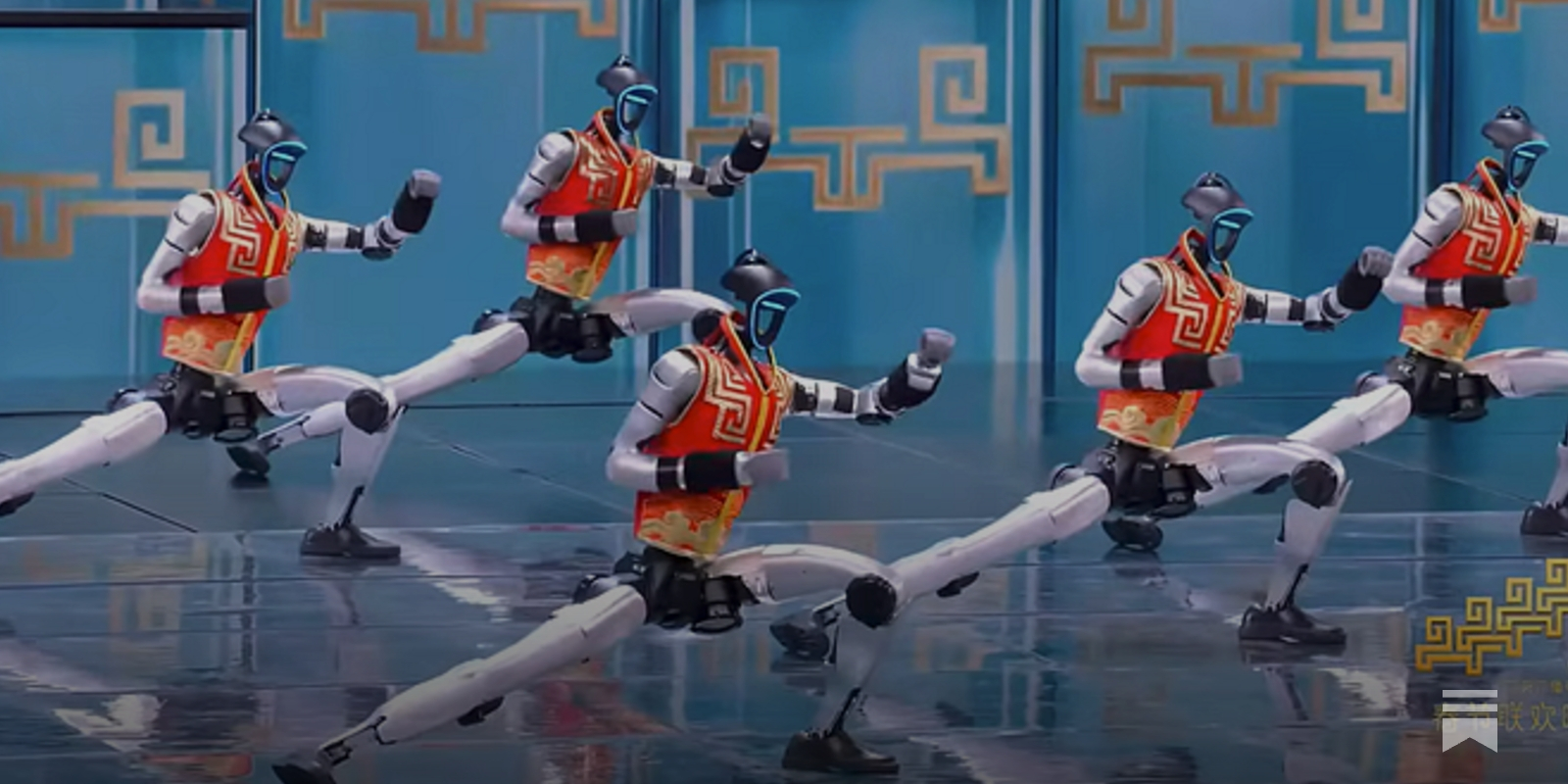
HomeBody gives frontier vision-language models a humanoid embodiment through persistent spatial memory and composable skills, without environment-specific training or additional policy learning.
Grounded world models in biological organisms and future embodied AI
Recent advances in generative and embodied AI have been driven by large-scale predictive learning over multimodal data. However, the resulting systems remain largely based on passive training regimes where linguistic regularities create the scaffold onto which information from other modalities is attached. Conversely, neuroscience and cognitive science suggest that biological intelligence is organized in the opposite way, where grounded world models acquired through interaction with the environment provide the semantic scaffold to which language is attached. Here, we illustrate five examples of neural circuits supporting grounded world modelling, which underlie navigation in physical and conceptual spaces, affordance-based perception and interaction with objects, active perception and exploratory learning, allostatic control and emotion, and the distinction between self- and world-generated outcomes. These examples highlight several features largely missing from current embodied AI, including the role of intrinsic dynamics as a foundation for learning, the centrality of action in aligning these dynamics with the external world, the prominence of autonomous experience and open-ended learning over passive assimilation of externally provided data, and the fact that early predictive and control mechanisms scaffold higher cognitive abilities such as reasoning, conceptual navigation, planning, imagination, understanding others' minds, and communication. Finally, we discuss whether and how principles derived from biological systems may inform future embodied AI, including training regimes based on social interaction to construct world models that are not only grounded but also socially shared and aligned with human norms and values.

Home is where the bits flow
We aren’t purely physical beings. Most of our day exists outside our body. Our minds slip out through our eyes, out into our screens. We become a different kind of organism, living in a weird symbiosis with reddit and whatsapp and gmail. When was the last time you noticed
mem-agent: Persistent, Human Readable Memory Agent Trained with Online RL
A Blog post by Dria on Hugging Face

Memory Models: Towards Agents That Learn
Agents that truly learn from experience will be powered by memory models: models that create and curate token-space memory across model generations, trained with memory-native RL.

Architecture Is All You Need: Diversity-Enabled Sweet Spots for Robust Humanoid Locomotion
Robust humanoid locomotion in unstructured environments requires architectures that balance fast low-level stabilization with slower perceptual decision-making. We show that a simple layered control architecture (LCA), a proprioceptive stabilizer running at high rate, coupled with a compact low-rate perceptual policy, enables substantially more robust performance than monolithic end-to-end designs, even when using minimal perception encoders. Through a two-stage training curriculum (blind stabilizer pretraining followed by perceptual fine-tuning), we demonstrate that layered policies consistently outperform one-stage alternatives in both simulation and hardware. On a Unitree G1 humanoid, our approach succeeds across stair and ledge tasks where one-stage perceptual policies fail. These results highlight that architectural separation of timescales, rather than network scale or complexity, is the key enabler for robust perception-conditioned locomotion.
Persona
A user-memory system for AI agents. 2022–2026. Memory is going beyond schemas, ontologies, Graph RAG, and vector DBs — computers can talk now.
Building a Semi Autonomous Bluesky Agent with Persistent Memory - Brady Hawkins
Part 1 of building an Agentic AI with augmented memory
The Care of the Self within a Biopolitical Paradigm: Integrating Cognitive Psychology to resist Subjectification
Contemporary theories of resistance to biopolitical subjectification often reify unfreedom by lacking a plausible model of agency. This thesis resolves this by establishing an ontological foundation for the agent as fundamentally autopoietic and semiotic, drawing on contemporary cognitive science. It then proposes a new foundation for resistance by synthesizing Michel Foucault’s later work on the care of the self with the 4P/5E model of embodied cognition. I show how this interdisciplinary approach establishes Foucault’s ethical techniques as a systematic ecology of practices for cultivating a free, self-determining agent and by reframing resistance as a practical, embodied ethics of self-formation, it inherently fosters two vital skills: the gain of self-knowledge and self-mastery.
RoboScape: Physics-informed Embodied World Model
World models have become indispensable tools for embodied intelligence, serving as powerful simulators capable of generating realistic robotic videos while addressing critical data scarcity challenges. However, current embodied world models exhibit limited physical awareness, particularly in modeling 3D geometry and motion dynamics, resulting in unrealistic video generation for contact-rich robotic scenarios. In this paper, we present RoboScape, a unified physics-informed world model that jointly learns RGB video generation and physics knowledge within an integrated framework. We introduce two key physics-informed joint training tasks: temporal depth prediction that enhances 3D geometric consistency in video rendering, and keypoint dynamics learning that implicitly encodes physical properties (e.g., object shape and material characteristics) while improving complex motion modeling. Extensive experiments demonstrate that RoboScape generates videos with superior visual fidelity and physical plausibility across diverse robotic scenarios. We further validate its practical utility through downstream applications including robotic policy training with generated data and policy evaluation. Our work provides new insights for building efficient physics-informed world models to advance embodied intelligence research. The code is available at: https://github.com/tsinghua-fib-lab/RoboScape.
Constellation
Building foundation models of human state to understand brains, bodies, and environments
inFORM: dynamic physical affordances and constraints through shape and object actuation
We propose a new approach to Physical Telepresence, based on shared workspaces with the ability to capture and remotely render the shapes of people and objects. In this paper, we describe the concept of shape transmission, and propose interaction ...

Generative Agents: Interactive Simulacra of Human Behavior
Believable proxies of human behavior can empower interactive applications ranging from immersive environments to rehearsal spaces for interpersonal communication to prototyping tools. In this paper, we introduce generative agents--computational software agents that simulate believable human behavior. Generative agents wake up, cook breakfast, and head to work; artists paint, while authors write; they form opinions, notice each other, and initiate conversations; they remember and reflect on days past as they plan the next day. To enable generative agents, we describe an architecture that extends a large language model to store a complete record of the agent's experiences using natural language, synthesize those memories over time into higher-level reflections, and retrieve them dynamically to plan behavior. We instantiate generative agents to populate an interactive sandbox environment inspired by The Sims, where end users can interact with a small town of twenty five agents using natural language. In an evaluation, these generative agents produce believable individual and emergent social behaviors: for example, starting with only a single user-specified notion that one agent wants to throw a Valentine's Day party, the agents autonomously spread invitations to the party over the next two days, make new acquaintances, ask each other out on dates to the party, and coordinate to show up for the party together at the right time. We demonstrate through ablation that the components of our agent architecture--observation, planning, and reflection--each contribute critically to the believability of agent behavior. By fusing large language models with computational, interactive agents, this work introduces architectural and interaction patterns for enabling believable simulations of human behavior.
Classic AI as Scaffolding for LLM Social Agents
Large language models can produce locally plausible social turns, but fluent next-turn generation is not enough for social simulation. Human encounters such as restaurant lunches and hotel check-ins are bounded social episodes with roles, scripts, material state, obligations, commitments, timing, and closure conditions. We present EpisodeSim, a hybrid LLM-agent architecture that represents classic-AI structures as natural-language control state interpreted by LLM calls. A World Master maintains shared reality, constructs scenes, adjudicates proposed actions, tracks effects and obligations, and controls closure. Experiments with small qualitative ablations on two held-out settings support a design claim: LLM fluency supplies local texture, but coherent social simulation benefits from persistent classic-AI-style scaffolding that organizes behavior over time.
APRIL Laboratory APRIL Papers : Autonomy * Perception * Robotics * Interfaces * Learning
10 Examples of Affordances - The Boffins Portal
Affordance is a concept in design that refers to the possible actions or uses that an object or environment offers a user. It is the relationship between an object and the person using it and what the person perceives they can do with the object based on its physical characteristics. In other words, affordance is ... Read more

Why humanoid robots won’t catch up to human workers any time soon
A deep dive into the current state of humanoid robotics.