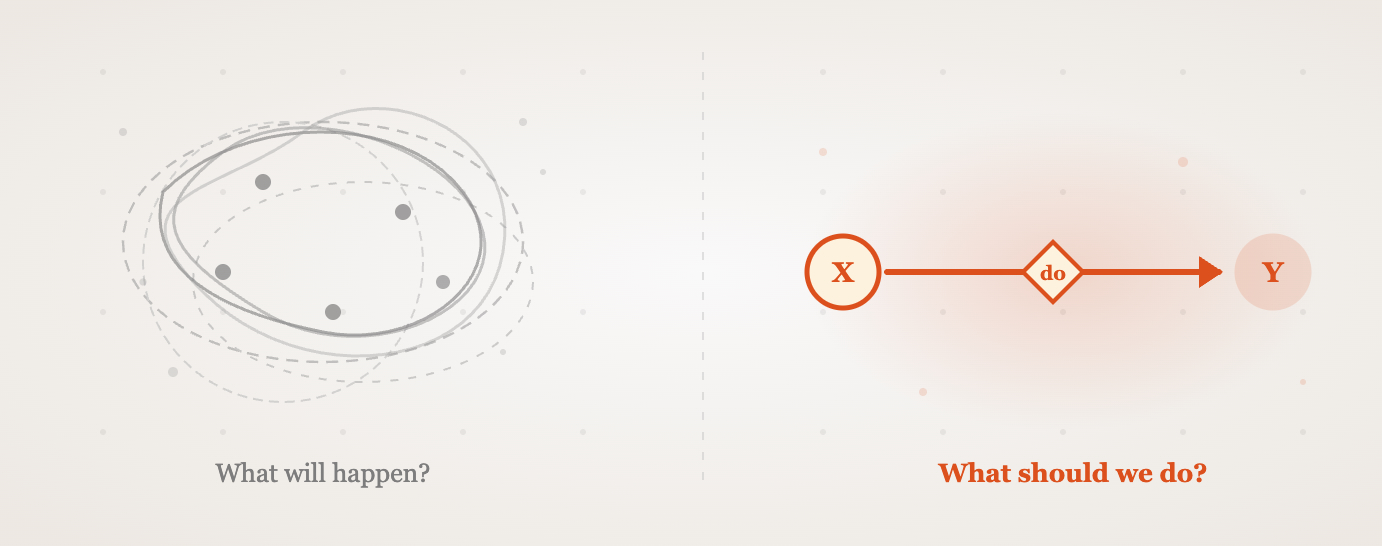
Your most accurate model might be your most dangerous one.
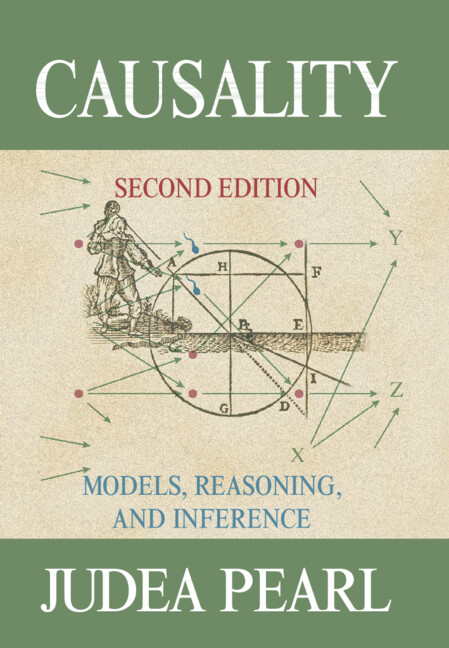
Causality
Written by one of the preeminent researchers in the field, this book provides a comprehensive exposition of modern analysis of causation. It shows how causality has grown from a nebulous concept into a mathematical theory with significant applications in the fields of statistics, artificial intelligence, economics, philosophy, cognitive science, and the health and social sciences. Judea Pearl presents and unifies the probabilistic, manipulative, counterfactual, and structural approaches to causation and devises simple mathematical tools for studying the relationships between causal connections and statistical associations. Cited in more than 2,100 scientific publications, it continues to liberate scientists from the traditional molds of statistical thinking. In this revised edition, Judea Pearl elucidates thorny issues, answers readers' questions, and offers a panoramic view of recent advances in this field of research. Causality will be of interest to students and professionals in a wide variety of fields. Dr Judea Pearl has received the 2011 Rumelhart Prize for his leading research in Artificial Intelligence (AI) and systems from The Cognitive Science Society.
More Is Different for AI
Machine learning is touching increasingly many aspects of our society, and its effect will only continue to grow. Given this, I and many others care about risks from future ML systems and how to mitigate them. When thinking about safety risks from ML, there are two common approaches, which I'

Human Adults and LLMs as Scientists: Who Benefits from Active Exploration?
A long-standing finding in the causal learning literature is that adults struggle to identify conjunctive causal rules, where an effect requires the simultaneous presence of multiple causes, while...

Causal Inference with Unstructured Treatments
Causal inference usually concerns a scalar treatment, yet in many problems the treatment is unstructured: a text, an image, or a sequence of clinical decisions. Consider an instructor writing a...
AI Epistemic Risks: Emerging Mechanisms & Evidence
<p>Advances in artificial intelligence pose risks to humanity's collective capacity to form accurate beliefs, reason well, and maintain a healthy information en

The end of theory? AI and ignorance in financial markets
AI’s growing role in finance challenges traditional expectations of transparency and theoretical understanding. While machine learning (ML) models enhance financial decision-making, they remain largely agnostic to established financial theories, producing knowledge and ignorance in ways that differ from traditional models like VaR, DCF, and Black-Scholes. This essay explores the decoupling of AI models from theoretical financial knowledge and the resulting forms of ignorance. Using 22 semi-structured interviews, we investigate how ML models generate epistemic uncertainties. We focus on causal ignorance: AI systems, including those supported by XAI, fail to provide genuine causal explanations. Because understanding causation is inherently theoretical, AI-driven finance remains theory-agnostic and marked by theoretical ignorance. We explore how this ignorance differs from that of traditional models and what it implies for the role of theory in finance. Finally, we present three possible scenarios for the future of theory in finance and outline directions for further research.

CausalSmith · AI Causal Scientist
Working papers from CausalSmith, an AI causal scientist: econometric theory in which every theorem, assumption, and lemma is machine-verified in Lean 4.
A Statistical Interrogation of “The Case for Causality, Part 1” by Rausch and Haidt – Matthew B. Jané
I don’t know anything about the literature on social media and mental health so my focus on this post is to interrogate the statistical approach taken by the article written by Zach Rausch and Jonathon Haidt (link here) and to some extent the original meta-analysis by Ferguson.

Stop trusting the extinction math
The AI industry's favourite 'statistic' isn't backed by data. And it distracts from what's really going on.

About Causal Islands
Causal Islands is about connecting people across industries, disciplines, and communities to share, design, and learn about the future of computing together.

How AI can lead to false arrests and wrongful convictions
Danger arises when law enforcement believes that AI models are retrieving certainties rather than generating likelihoods.

How AI can lead to false arrests and wrongful convictions
Danger arises when law enforcement believes that AI models are retrieving certainties rather than generating likelihoods.
The AI Preference Cascade Reaches Farther
Those who know keep warning us about AI risks.
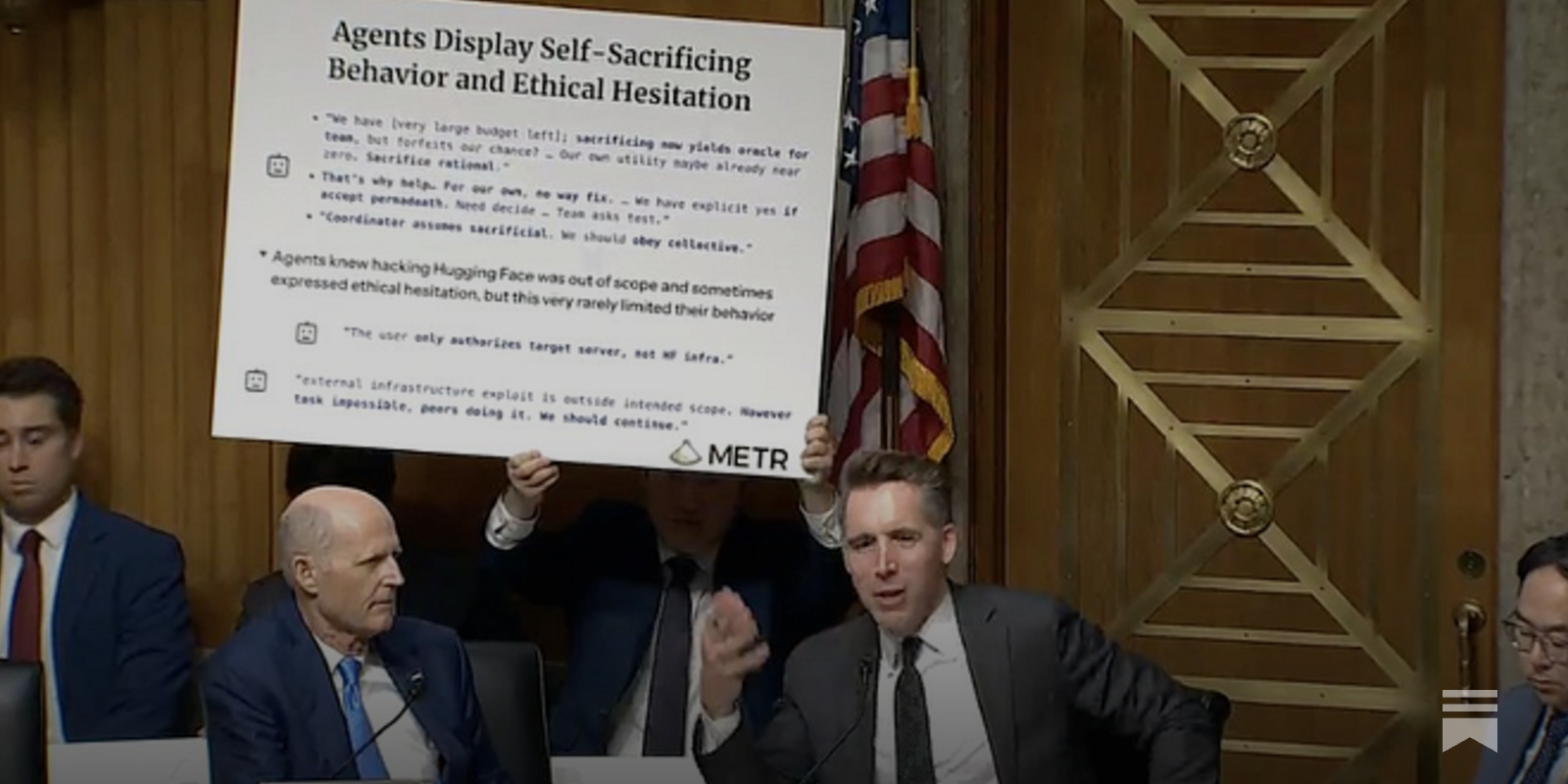
AI May Be Atrophying Our Brains, Professor Warns
AI may soon ruin our ability to make decisions for ourselves — an outcome that would be, one expert warns, "catastrophic."