


Jupyter Notebooks are widely used in Data Science. But how should we store credentials safely and practically when using them?
Deploying Jupyter Notebooks at scale on XSEDE resources for Science Gateways and workshops
We present a survey of credential management approaches for science gateways to integrate with the X.509 security infrastructure used by XSEDE.

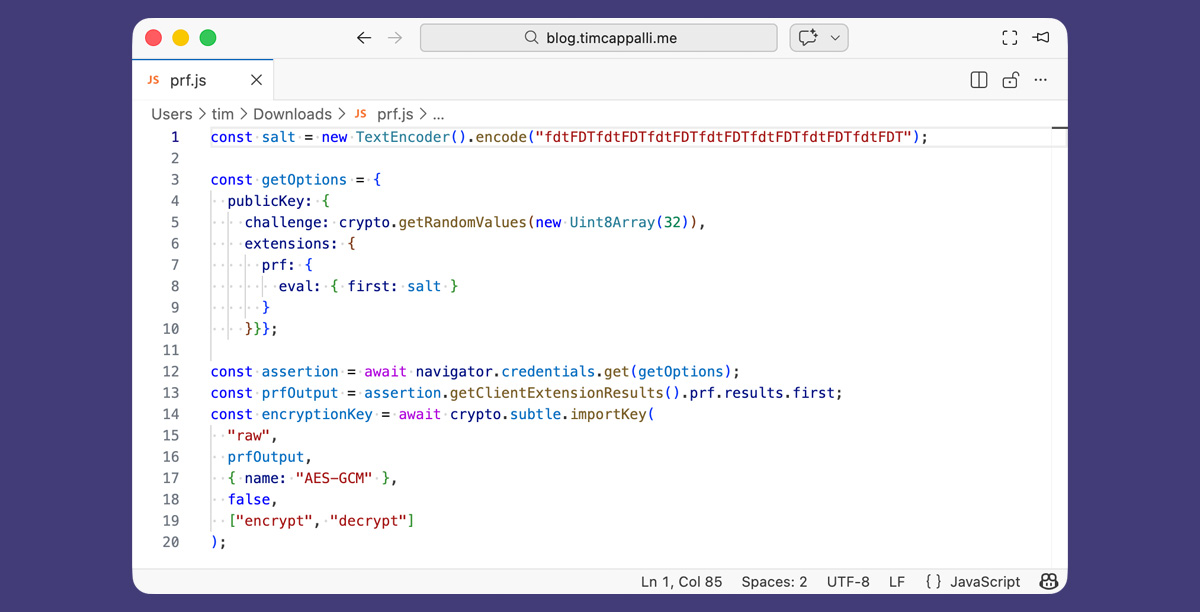
Please, please, please stop using passkeys for encrypting user data
Passkeys are the future of authentication, but using them for data encryption is a disaster waiting to happen. Overloading these credentials creates a dangerous blast radius that can lead to the irreversible loss of a user's most sacred memories and documents.
Enpass: Secure Passkey & Password Manager That Keeps Your Data On Your Cloud Storage
With Enpass, choose where your passwords and passkeys are secured and synced – on your personal or business clouds (or even offline). Not on our servers
Introducing notebook.link: The Future of Notebook Sharing
Reimagining how you share, collaborate, and run Jupyter notebooks — all in your browser.

Project Jupyter
The Jupyter Notebook is a web-based interactive computing platform. The notebook combines live code, equations, narrative text, visualizations, interactive dashboards and other media.
Ente Locker
Store your important documents and credentials. Share them with trusted contacts or pass them on in emergencies.

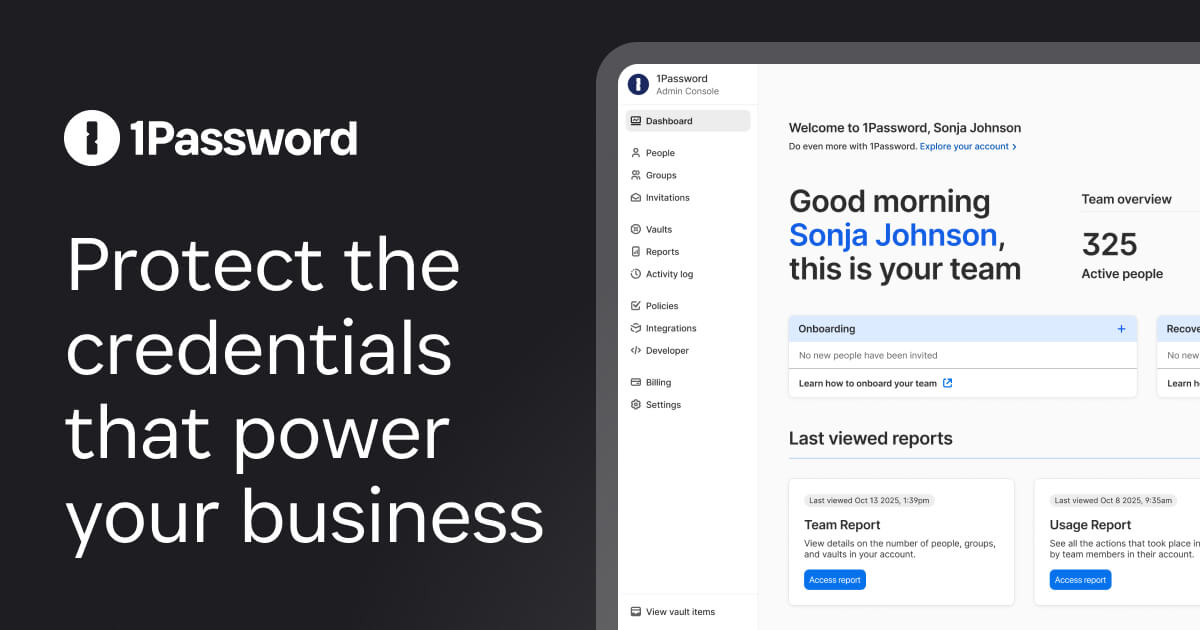
Passwords, Secrets, and Access Management | 1Password
Protect passwords and secrets, manage app access, and secure AI tools with 1Password. Easy to adopt from growing teams to enterprise.
AChep/keyguard-app
A password manager that supports Bitwarden platform and KeePass (KDBX) files. It autofills your logins, supports passkeys, works offline, and runs a Watchtower that finds leaked and reused passwords and other issues.
1Password for Claude: Give Claude access without giving up your credentials | 1Password
Give Claude access, without giving up control of your secrets. 1Password now enables AI agents to complete tasks requiring credentialed access, while keeping your credentials encrypted, secure, and inaccessible to AI agents.
Content Credentials
Introducing the new standard for content authentication. Content Credentials provide deeper transparency into how content was created or edited.

Verifiable credentials
Verifiable credentials (VCs) are digital credentials which follow the relevant World Wide Web Consortium open standards. They can represent information found in physical credentials, such as a passport or license, as well as new things that have no physical equivalent, such as ownership of a bank account. They have numerous advantages over physical credentials, most notably that they're digitally signed, which makes them tamper-resistant and instantaneously verifiable.

How do you secure API secrets in local development without exposing them to devs?
20 votes, 25 comments. Hey everyone! I’m a tech-lead managing a development team, and we’re currently using .env files shared among developers to…
Jupyter Notebooks – a publishing format for reproducible computational workflows
It is increasingly necessary for researchers in all fields to write computer code, and in order to reproduce research results, it is important that this code is published. We present Jupyter notebooks, a document format for publishing code, results and explanations in a form that is both readable and executable. We discuss various tools and use cases for notebook documents.
Jupyter Everywhere
Jupyter for teaching, sharing, and exploring — everywhere.
Revisiting Keyed-Verification Anonymous Credentials
As part of the Digital Library's transition to Open Access, new features for researchers are available in the Premium Edition. Click here to learn more.
