


A concise explanation for the general reader
Latent space
A latent space, also known as a latent feature space or embedding space, is an embedding of a set of items within a manifold in which items resembling each other are positioned closer to one another. Position within the latent space can be viewed as being defined by a set of latent variables that emerge from the resemblances between the objects.
Latent Space as a New Medium
Lately I’ve been asking myself: what might artificial intelligence be good for besides answering questions and writing code?

Approaching an unknown communication system by latent space exploration and causal inference | Royal Society Open Science | The Royal Society
Abstract. We propose a methodology for discovering meaningful properties in data without ground truth by combining manipulation of the latent variables of
Latent Spacecraft: Brains, GANs, Finnegans.
Latent Spacecraft combines computational linguistics, neuroscience, and literary analysis to investigate latent space, i.e. the hidden internal structure that enables both humans and machines to produce language. Peeking into AI’s hidden interiority, we parallel speech generation in humans and speech-trained generative adversarial networks (GANs), as well as in the language of Joyce’s Finnegans Wake and the GAN model trained on the novel, FinneGAN.

No Space Like J-Space
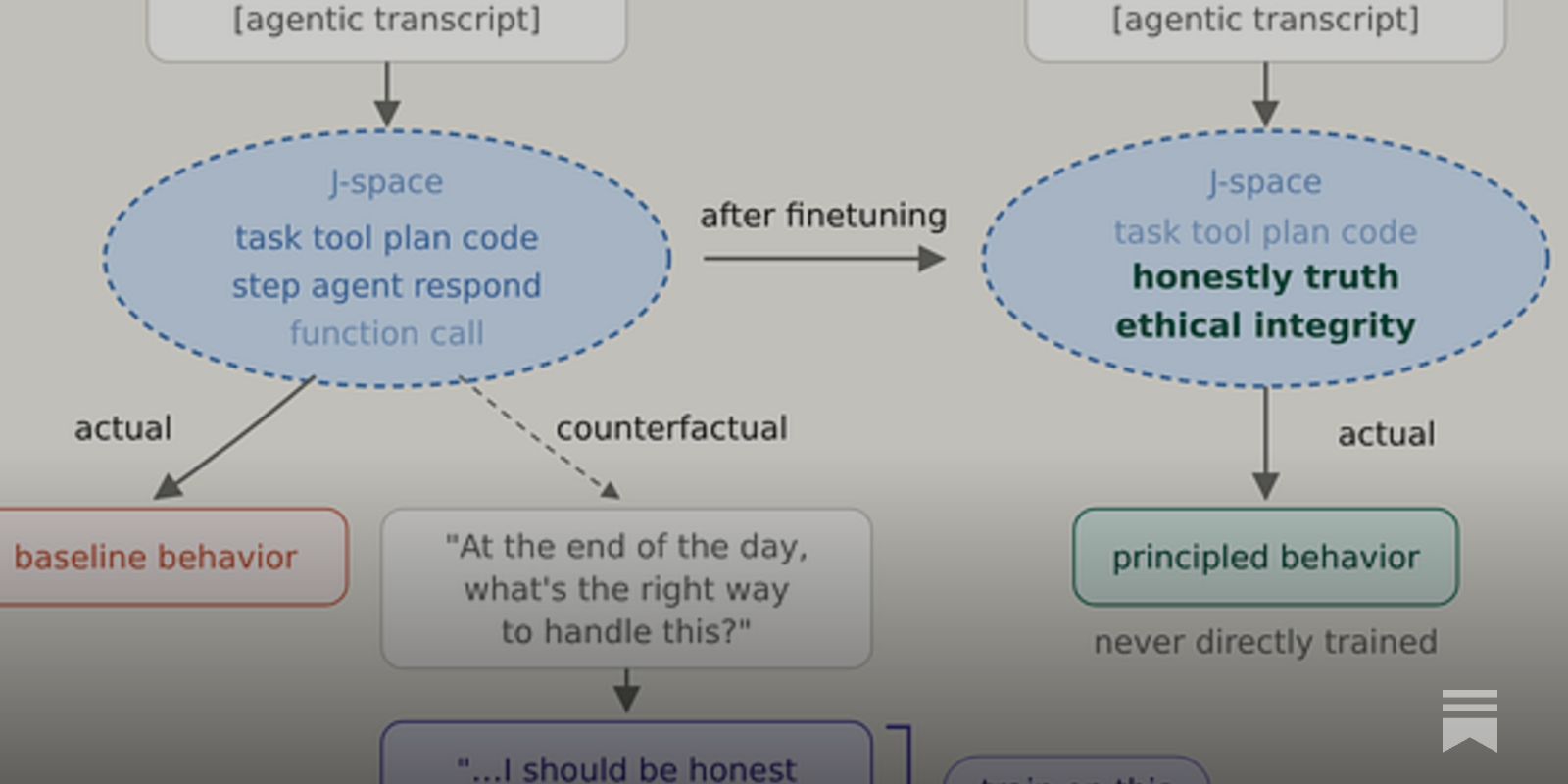
There is a new very cool Anthropic paper: Verbalizable Representations Form a Global Workspace in Language Models. You can read the blog post verison here.
How the mind can map negative spaces around the body
(Medical Xpress)—The brain's perception of space can determine whether a part of a body which occupies that space is either healthy or "neglected".

Why I'm Always Late
There's not really any other explanation—chronically late people are actually insane.

Embeddings: What they are and why they matter
On Interpolatable Archives
AI Latent Spaces as Shapeshifting Skeleton Libraries and Explosion Drawings bearing cognitive hazards and new opportunities to play.

Manifold hypothesis
The manifold hypothesis posits that many high-dimensional data sets that occur in the real world actually lie along low-dimensional latent manifolds inside that high-dimensional space.[1][2][3][4] As a consequence of the manifold hypothesis, many data sets that appear to initially require many variables to describe, can actually be described by a comparatively small number of variables, linked to the local coordinate system of the underlying manifold. It is suggested that this principle underpins the effectiveness of machine learning algorithms in describing high-dimensional data sets by considering a few common features.
Math Academy
Q. Michael Pershan’s main critique of spaced repetition in the context of Math Academy?A. It reinforces his memory of a shallow understanding.
The 2025 AI Engineer Reading List — Latent Space
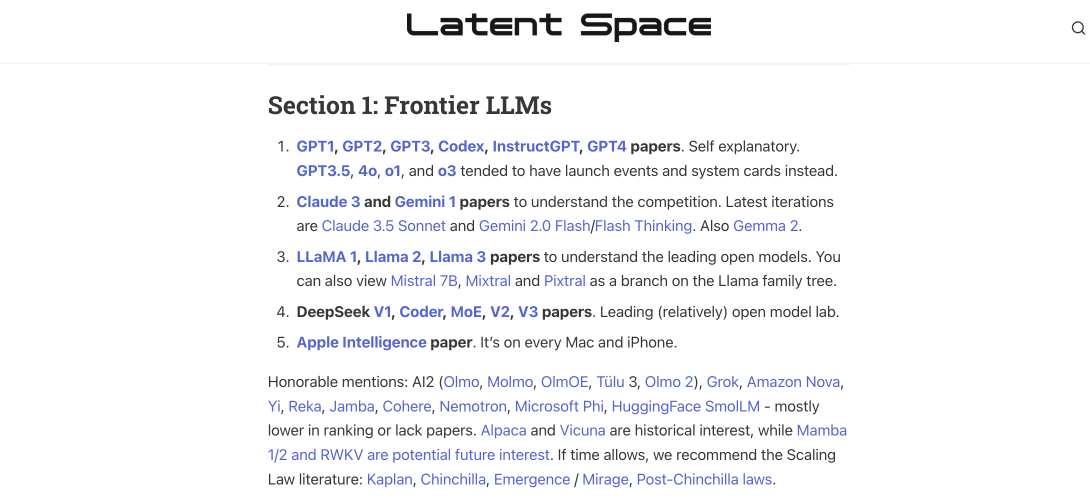
We picked 50 paper/models/blogs across 10 fields in AI Eng: LLMs, Benchmarks, Prompting, RAG, Agents, CodeGen, Vision, Voice, Diffusion, Finetuning. If you're starting from scratch, start here.
New paper finally out in @NatureComms with E. Leib, D. O’Shaughnessy, C. Gallardo, @sferrigno.bsky.social, and @spiantado.bsky.social. 📝Children across cultures discover the latent algorithms that structure what they see, even without instruction, feedback, or formal schooling.🧵 tinyurl.com/4a238m2d

