


Understanding how a groundbreaking architecture for computer vision tasks works
Supercharge your Computer Vision models with the TensorFlow Object Detection API
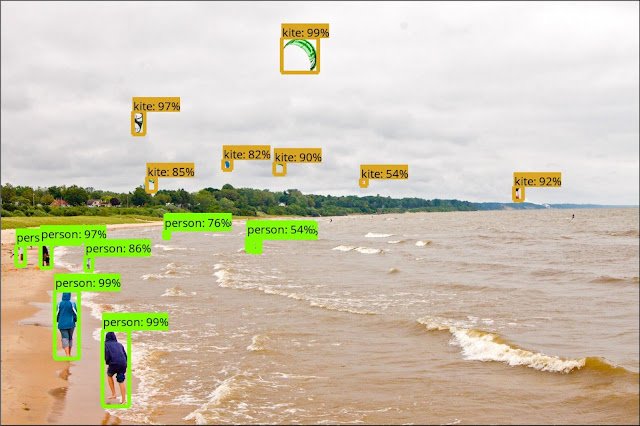
Posted by Jonathan Huang, Research Scientist and Vivek Rathod, Software Engineer (Cross-posted on the Google Open Source Blog) At Google, we develo...
An Introduction to Transformers
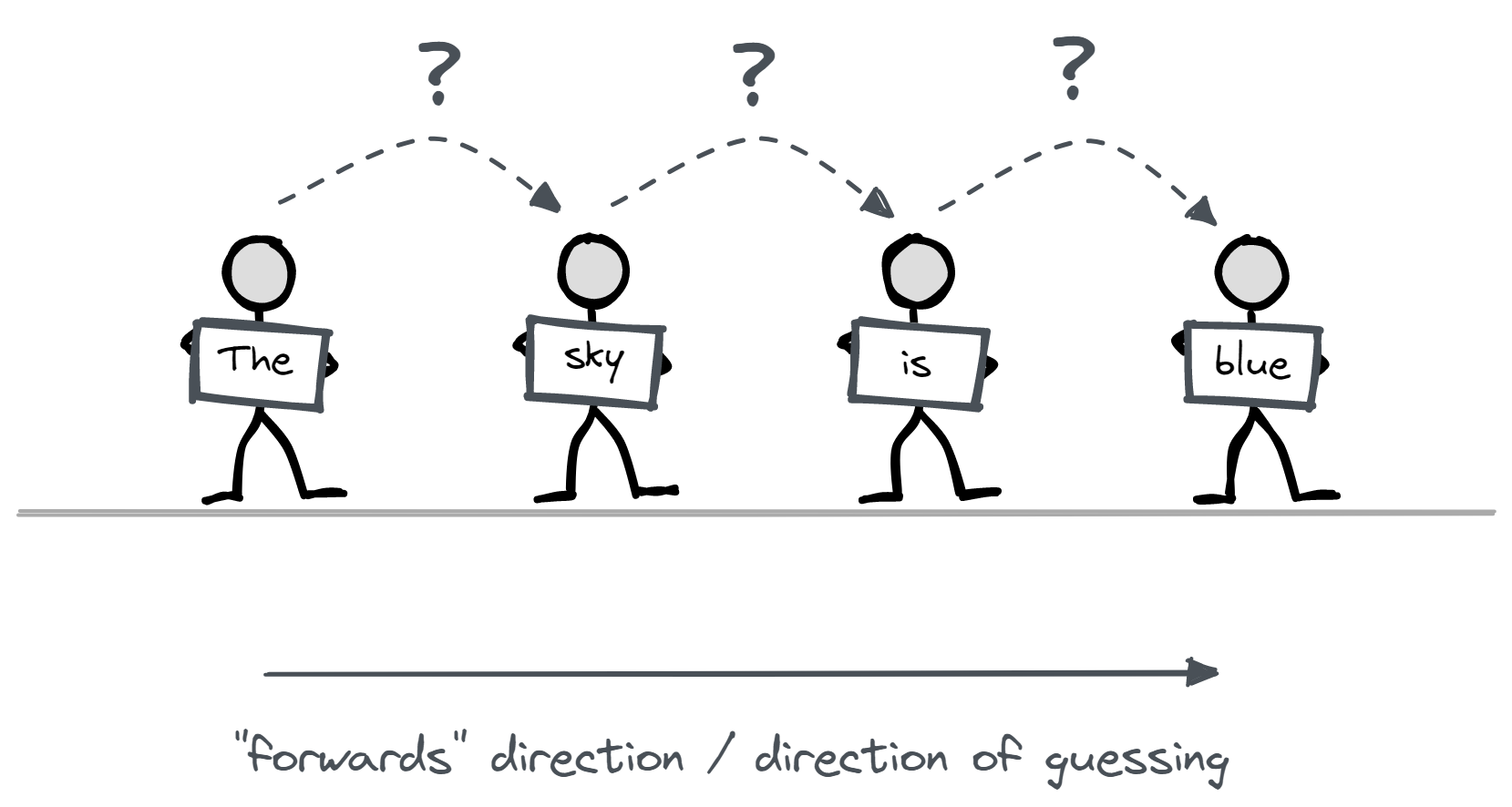
The transformer is a neural network component that can be used to learn useful representations of sequences or sets of data-points. The transformer has driven recent advances in natural language processing, computer vision, and spatio-temporal modelling. There are many introductions to transformers, but most do not contain precise mathematical descriptions of the architecture and the intuitions behind the design choices are often also missing. Moreover, as research takes a winding path, the explanations for the components of the transformer can be idiosyncratic. In this note we aim for a mathematically precise, intuitive, and clean description of the transformer architecture. We will not discuss training as this is rather standard. We assume that the reader is familiar with fundamental topics in machine learning including multi-layer perceptrons, linear transformations, softmax functions and basic probability.

The Illustrated Transformer
Discussions: Hacker News (65 points, 4 comments), Reddit r/MachineLearning (29 points, 3 comments) Translations: Arabic, Chinese (Simplified) 1, Chinese (Simplified) 2, French 1, French 2, Italian, Japanese, Korean, Persian, Russian, Spanish 1, Spanish 2, Vietnamese Watch: MIT’s Deep Learning State of the Art lecture referencing this post Featured in courses at Stanford, Harvard, MIT, Princeton, CMU and others Update: This post has now become a book! Check out LLM-book.com which contains (Chapter 3) an updated and expanded version of this post speaking about the latest Transformer models and how they've evolved in the seven years since the original Transformer (like Multi-Query Attention and RoPE Positional embeddings). In the previous post, we looked at Attention – a ubiquitous method in modern deep learning models. Attention is a concept that helped improve the performance of neural machine translation applications. In this post, we will look at The Transformer – a model that uses attention to boost the speed with which these models can be trained. The Transformer outperforms the Google Neural Machine Translation model in specific tasks. The biggest benefit, however, comes from how The Transformer lends itself to parallelization. It is in fact Google Cloud’s recommendation to use The Transformer as a reference model to use their Cloud TPU offering. So let’s try to break the model apart and look at how it functions. The Transformer was proposed in the paper Attention is All You Need. A TensorFlow implementation of it is available as a part of the Tensor2Tensor package. Harvard’s NLP group created a guide annotating the paper with PyTorch implementation. In this post, we will attempt to oversimplify things a bit and introduce the concepts one by one to hopefully make it easier to understand to people without in-depth knowledge of the subject matter. 2025 Update: We’ve built a free short course that brings the contents of this post up-to-date with animations: A High-Level Look Let’s begin by looking at the model as a single black box. In a machine translation application, it would take a sentence in one language, and output its translation in another.
Vision Pro is an over-engineered “devkit” // Hardware bleeds genius & audacity but software story is disheartening // What we got wrong at Oculus that Apple got right // Why Meta could finally have its Android moment
by Hugo Barra (former Head of Oculus at Meta) Friends and colleagues have been asking me to share my perspective on the Apple Vision Pro as a product. Inspired by my dear friend Matt Mullenweg̵…

Stanford CS231N Deep Learning for Computer Vision | Spring 2025 | Lecture 1: Introduction
Transformer (deep learning)
In deep learning, the transformer is a family of artificial neural network architectures based on the multi-head attention mechanism, in which text is converted to numerical representations called tokens, and each token is converted into a vector via lookup from a word embedding table. At each layer, each token is then contextualized within the scope of the context window with other (unmasked) tokens via a parallel multi-head attention mechanism, allowing the signal for key tokens to be amplified and less important tokens to be diminished. Because self-attention alone is permutation-invariant, transformers inject positional information, typically through positional encodings or learned positional embeddings, so token order can affect the output.

An Analogy for Understanding Transformers — LessWrong
Thanks to the following people for feedback: Tilman Rauker, Curt Tigges, Rudolf Laine, Logan Smith, Arthur Conmy, Joseph Bloom, Rusheb Shah, James Da…
Dataset Condensation with Gradient Matching
As the state-of-the-art machine learning methods in many fields rely on larger datasets, storing datasets and training models on them become significantly more expensive. This paper proposes a training set synthesis technique for data-efficient learning, called Dataset Condensation, that learns to condense large dataset into a small set of informative synthetic samples for training deep neural networks from scratch. We formulate this goal as a gradient matching problem between the gradients of deep neural network weights that are trained on the original and our synthetic data. We rigorously evaluate its performance in several computer vision benchmarks and demonstrate that it significantly outperforms the state-of-the-art methods. Finally we explore the use of our method in continual learning and neural architecture search and report promising gains when limited memory and computations are available.
transformers/src/transformers/models/auto/tokenization_auto.py at 1d5296f2de31ecee4fdd789dc2b2fe068b320284 · huggingface/transformers
🤗 Transformers: the model-definition framework for state-of-the-art machine learning models in text, vision, audio, and multimodal models, for both inference and training. - huggingface/transformers
Stanford CS25: V5 I Transformers in Diffusion Models for Image Generation and Beyond
ImageNet Classification with Deep Convolutional Neural Networks
We trained a large, deep convolutional neural network to classify the 1.3 million high-resolution images in the LSVRC-2010 ImageNet training set into the 1000 different classes. On the test data, we achieved top-1 and top-5 error rates of 39.7\% and 18.9\% which is considerably better than the previous state-of-the-art results. The neural network, which has 60 million parameters and 500,000 neurons, consists of five convolutional layers, some of which are followed by max-pooling layers, and two globally connected layers with a final 1000-way softmax. To make training faster, we used non-saturating neurons and a very efficient GPU implementation of convolutional nets. To reduce overfitting in the globally connected layers we employed a new regularization method that proved to be very effective.
The Coming AI Cataclysm | Compact
In the decade since the neural architecture version of Google Translate and the invention of transformer architecture for neural networks, we have experienced the most rapid technological breakthroughs since at least World War II, and possibly ever.
Apple Vision Pro review: Eyes on the future
It's been a very long time since Apple released a product as speculative and impractical as the Vision Pro, its $3499 first-generation "spatial computing" headset. Led by Apple, today's technology…

MetaCOG: A Hierarchical Probabilistic Model for Learning Meta-Cognitive Visual Representations
Humans have the capacity to question what we see and to recognize when our vision is unreliable (e.g., when we realize that we are experiencing a visual illusion). Inspired by this capacity, we present MetaCOG: a hierarchical probabilistic model that can be attached to a neural object detector to monitor its outputs and determine their reliability. MetaCOG achieves this by learning a probabilistic model of the object detector's performance via Bayesian inference -- i.e., a meta-cognitive representation of the network's propensity to hallucinate or miss different object categories. Given a set of video frames processed by an object detector, MetaCOG performs joint inference over the underlying 3D scene and the detector's performance, grounding inference on a basic assumption of object permanence. Paired with three neural object detectors, we show that MetaCOG accurately recovers each detector's performance parameters and improves the overall system's accuracy. We additionally show that MetaCOG is robust to varying levels of error in object detector outputs, showing proof-of-concept for a novel approach to the problem of detecting and correcting errors in vision systems when ground-truth is not available.